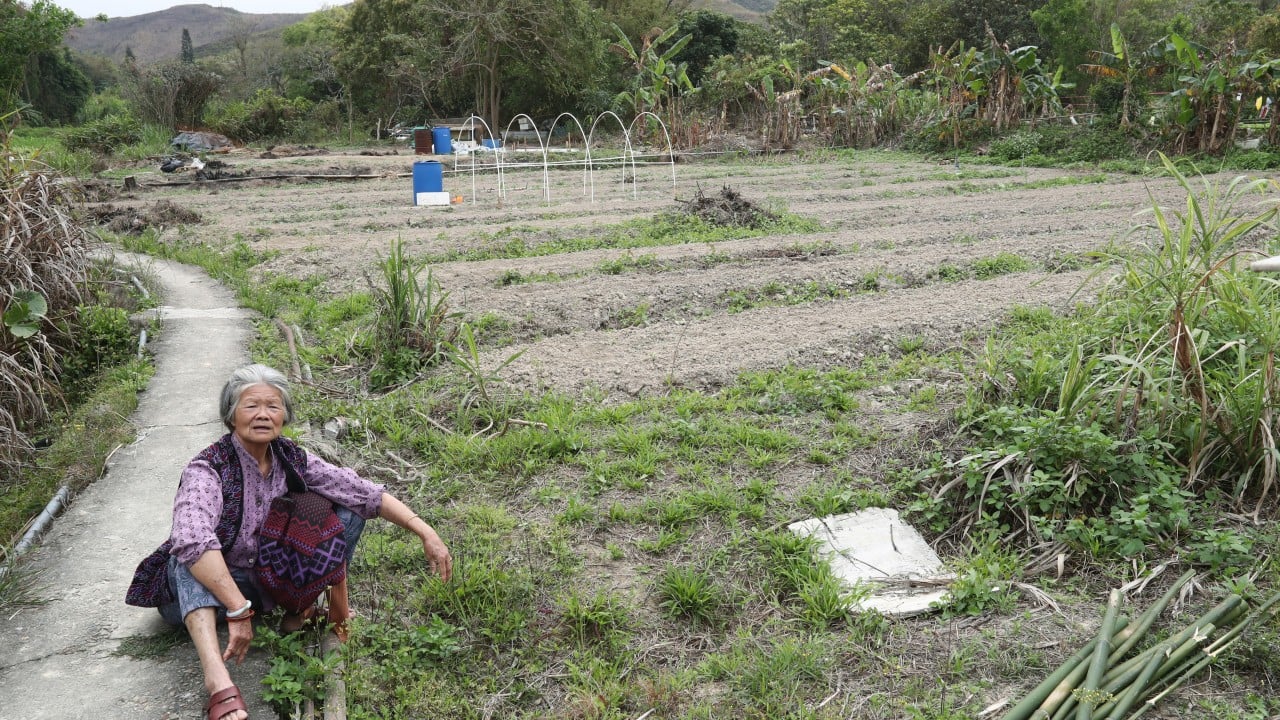
Mr. Chan’s hands do not look like the hands of a modern Hong Konger. They are thick-skinned, lined with dark soil that no amount of scrubbing quite removes, and calloused from decades of gripping a hoe. For sixty years, his family has tended a small patch of land in the New Territories, growing the kind of sweet, crisp choy sum that disappears from wet market stalls by eight in the morning. To most people, this northern strip of Hong Kong looks like a waiting room for the future. To Chan, it is a living entity.
Now, look past his shoulder. A few kilometers away, the skyline of Shenzhen gleams with metallic brilliance. Between Chan’s quiet furrows and that towering wall of glass lies the Northern Metropolis.
It is the city’s grandest dream in a generation. The plan aims to transform 30,000 hectares of land into a sprawling technological hub, providing homes for 2.5 million people and creating a silicon valley to bridge the gap between Hong Kong and mainland China. It is ambitious. It is necessary. It is also threatening to erase the last remaining pockets of local agriculture with the swift stroke of a bulldozer.
We often view progress as a zero-sum game. We assume that for skyscrapers to rise, fields must fall. But this is a profound misunderstanding of what makes a city resilient. In our rush to build a high-tech tomorrow, we are on the verge of paving over an irreplaceable safety net.
The Illusion of the Border
Walk into any supermarket in Central or Tsim Sha Tsui. The shelves groan under the weight of imported goods. Strawberries from Japan, beef from Australia, and mountains of vegetables trucked in from mainland Guangdong province. Hong Kong imports over 90 percent of its food. It is a system built on the fragile assumption that the supply lines will never break.
Consider what happens when they do. During the pandemic, a handful of cross-border truck drivers tested positive for a virus. Within forty-eight hours, wet market shelves were bare. The price of a single head of lettuce skyrocketed to levels usually reserved for fine dining. People panicked. It was a brief, terrifying glimpse into the vulnerability of a hyper-globalized city.
Local farms like Chan’s are not mere relics of a simpler past. They are insurance policies. Currently, local agriculture accounts for an incredibly small fraction of Hong Kong’s daily vegetable consumption. Yet, the Northern Metropolis project presents a rare opportunity to change that trajectory, rather than end it.
The blueprints for this mega-development speak at length about innovation, financial technology, and high-density housing. They rarely mention the soil. When agriculture is brought up, it is often viewed as a hurdle—a patch of green that needs to be cleared or, at best, a small park where urbanites can look at a manicured garden on Sundays.
But true agriculture is not a museum piece. It is a dynamic industry that, if integrated correctly, can coexist with the grandest technological ambitions.
When Technology Meets the Mud
The debate is usually framed as a battle between two opposing factions: the developers who want to pour concrete and the conservationists who want to freeze time. This binary choice is false. The real magic happens when these two worlds collide.
Imagine a high-tech metropolis where the data centers and the greenhouses share the same footprint. This is not a utopian fantasy; it is a logical engineering solution. Data centers generate immense amounts of waste heat, requiring massive cooling systems that drain electricity. Across the street, automated hydroponic vertical farms require controlled warmth to optimize crop yields during cooler months. By linking the two, the waste of the digital world becomes the lifeblood of the agricultural one.
The Northern Metropolis is explicitly designed to be a hub for innovation. Why should that innovation be limited to financial algorithms and microchips?
Agricultural technology—AgTech—is one of the fastest-growing sectors globally. By embedding smart greenhouses, automated irrigation systems, and urban farming initiatives into the very design of the new city, Hong Kong could pioneer a new model for Asian urbanism. We could witness multi-story vertical farms integrated into the bases of residential towers, providing hyper-local food that travels meters, not kilometers, to reach the consumer's plate.
This requires a shift in how we value land. Land value in Hong Kong is traditionally calculated by the square foot of real estate yield. If we only use that metric, a field of bok choy will lose to a luxury high-rise every single time. But if we factor in environmental cooling, food security, carbon sequestration, and waste reduction, the economic calculus changes entirely.
The Human Cost of a Nameless Suburb
There is a psychological weight to living in a city made entirely of glass and steel. Hong Kong is already one of the most densely populated places on earth. The pressure is palpable in the crowded MTR cars and the tiny apartments.
The New Territories have historically functioned as a lung for the territory. The green expanses provide a visual and psychological break from the relentless verticality of the urban core. If the Northern Metropolis becomes an unbroken sea of concrete from Yuen Long to the border, we lose more than just farms; we lose our connection to the seasons, to the earth, and to our own heritage.
Chan often talks about the texture of the soil. He can tell you if it has rained too much three villages away just by the feel of the earth between his fingers. That localized, generational knowledge is an intangible cultural asset. Once a farmer sells their land to a developer and takes a job as a security guard in a new shopping mall, that knowledge vanishes forever. It cannot be recovered by reading a textbook or downloading an app.
The Northern Metropolis needn't choose between being a tech hub or a farming community. It can be both. By creating dedicated agricultural zones that are legally protected from future real estate speculation, the government can encourage young entrepreneurs to enter the farming sector. These aren't the farms of the 1950s. These are businesses run by young Hong Kongers utilizing drones for crop monitoring, closed-loop water systems, and organic methods to produce premium, healthy food for a discerning urban population.
This approach creates a completely different kind of city. A city that is self-aware. A city that understands that its survival depends as much on its primary producers as it does on its investment bankers.
The Final Acre
The trucks are already idling near the edges of the construction zones. The dust is rising. The transformation of the northern districts is well underway, and the momentum is unstoppable. The towers will be built, the roads will be laid, and the region will change forever.
But as the concrete pours, the planners must leave room for the dirt.
On a quiet evening, the sun sinks behind the hills of the New Territories, casting a long golden light across Chan’s small plot. The neon signs of Shenzhen are starting to blink awake in the distance, a fierce grid of artificial light. Chan bends down, pulls a stray weed from the base of a choy sum plant, and tosses it aside. He does not hate the skyscrapers. He just knows that people cannot eat glass.