There is a specific kind of quiet that lives at the bottom of a vanity drawer.
It is the quiet of things forgotten, of translucent plastic compacts dusted with a fine, chalky film that smells faintly of pressed gardenias and childhood dress-up games. For generations, that translucent dust was the invisible anchor of our morning routines. It set the liquid foundation. It absorbed the midday shine. It blurred the lines between skin and shadow, promising an immaculate, velvety matte finish that felt weightless against the cheek.
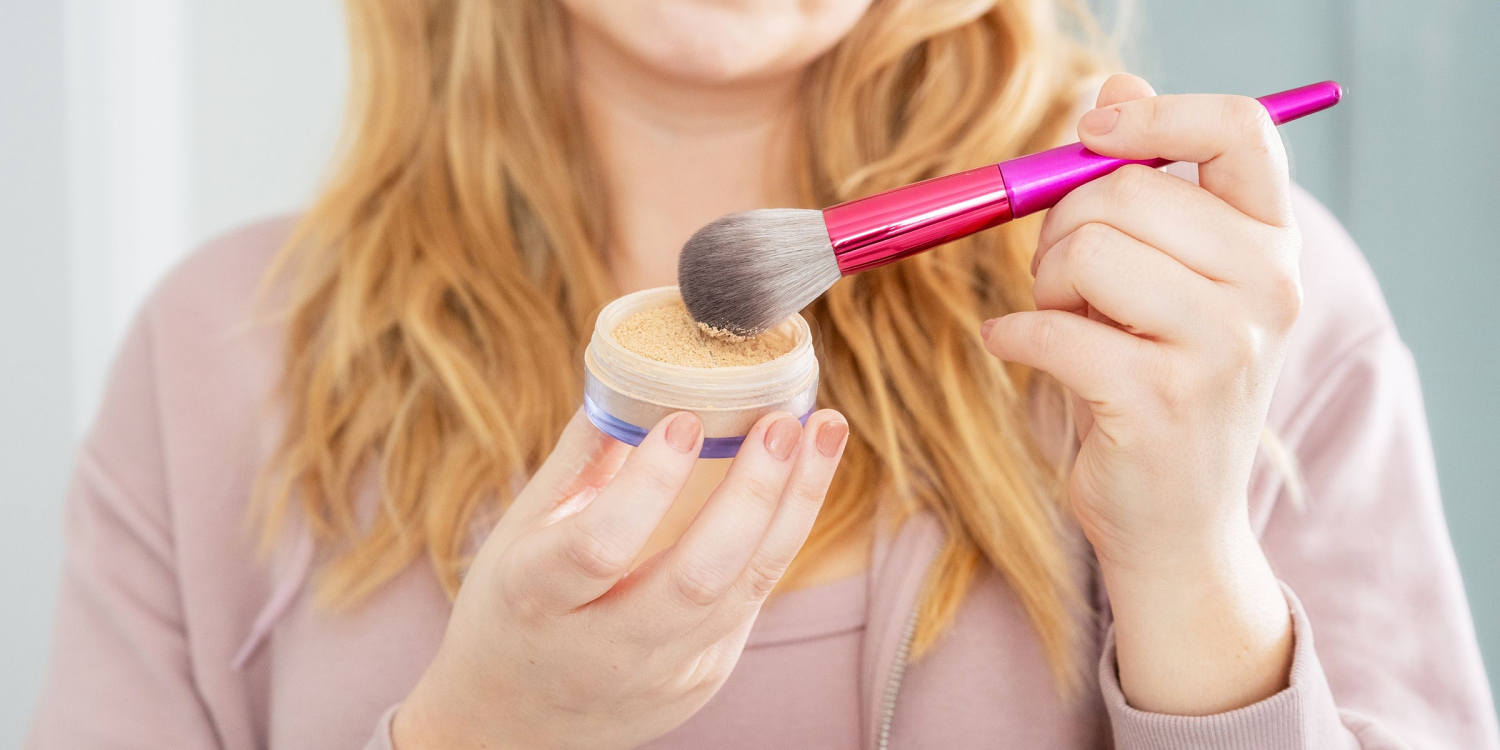
We patted it onto our noses with soft powder puffs. We swept it across our foreheads with fluffy goat-hair brushes. We never questioned what it was. It felt as natural as flour on a baker's hands or cornstarch in a pantry tin.
Yet, behind the vanity mirror, a quiet reckoning has been unfolding. Walk down the cosmetics aisle of any pharmacy or luxury department store today, and you will notice a subtle shift in the vocabulary of beauty. Look at the ingredient labels on newly reformulated face powders, blushes, and setting sprays. The word is missing. Where a staple mineral used to anchor half the product line, there is now a blank space, filled instead by tapioca starch, mica, rice powder, or kaolin clay.
Our favorite brands are quietly ditching talc. And the story of why they are doing so is not just a corporate pivot or a marketing trend. It is a cautionary tale about how we mine the earth for our vanities, how science slowly catches up to our habits, and how difficult it is to let go of the things we have trusted without question.
To understand the weight of this shift, we have to look backward to the origins of the mineral itself.
Talc is not a synthetic creation cooked up in a beaker by scientists in white lab coats. It is a gift from deep within the earth’s crust. Geologically speaking, it is a hydrous magnesium silicate, born deep underground through the metamorphism of ancient rocks rich in magnesium and silica under intense heat and pressure. It is the softest mineral known to humanity. On the Mohs hardness scale, where a diamond sits proudly at a jagged ten, talc is a humble one. You can scratch it with your fingernail.
That softness is precisely why our ancestors fell in love with it. When ground down into a micro-fine powder, talc behaves like a million microscopic ball bearings. Instead of grinding against one another, the tiny plates slide effortlessly over human skin, creating that signature silky, frictionless glide that luxury consumers equate with quality. It repels moisture. It reduces friction. It absorbs excess oil like a dry sponge.
For more than a century, we invited this ancient stone into our most intimate spaces. We dusted it over the tender skin of newborns to prevent diaper rash. We shook it into our gym shoes after a long run. We patted it over our eyelids before stepping out into the humidity of a summer evening.
The problem, however, is not talc in its pure, idealized laboratory state. The problem is real estate.
Deep in the earth, talc deposits do not exist in solitary isolation. They form cozy, geological neighborhoods right alongside other minerals. Most notably, talc frequently forms in close proximity to asbestos.
Asbestos, as modern medical history has taught us through decades of painful litigation and public health warnings, is a silicate mineral composed of long, thin, fibrous crystals. When inhaled or ingested over time, those microscopic fibers lodge themselves deep within human lung tissue or internal linings, sparking inflammation, scarring, and eventually, catastrophic cellular mutations like mesothelioma and lung cancer.
When mining companies extract talc from the ground, they are hunting for magnesium silicate. But because talc and asbestos are geological cousins, the crude ore pulled from the earth can sometimes be contaminated with asbestos fibers.
For decades, the cosmetics industry insisted that the talc used in consumer products was thoroughly purified, screened, and certified safe. And technically, cosmetic-grade talc was held to high standards. But investigative reporting, independent laboratory tests, and mounting courtroom battles began to pull back the curtain on a deeply unsettling reality: trace amounts of asbestos have occasionally been found hiding inside popular consumer dusting powders, eyeshadows, and blushes sitting on store shelves.
Imagine sitting in a courtroom, listening to scientists explain how a mineral mined from a mountain range in Vermont or China wound up in a pink blush compact, and from that compact, into the air of a steamy bathroom, and from that air, deep into a human lung.
The human element of this story is not found in regulatory statutes or chemical formulas. It is found in the consumer who spent twenty years applying a specific brand of sparkling body powder, only to receive a diagnosis that felt entirely disconnected from their daily life. It is found in the quiet panic of parents realizing that the comforting, nursery-fresh scent of baby powder masked a hazard they never could have anticipated.
Science operates on a timeline of accumulating evidence, which often moves much slower than human anxiety. For years, epidemiological studies wrestled with mixed data. Was the risk real? Was it statistically significant? Was it isolated to specific mines or widespread across the global supply chain?
While the scientists debated the nuance in sterile university lecture halls, the court of public opinion delivered a swift, unsparing verdict. Consumers no longer wanted to gamble. When you look at your face in the mirror every morning, the last thing you want to ponder is a geological cross-contamination probability matrix.
Beauty brands are, at their core, responsive to desire and fear. When consumer confidence fractures, corporate strategy pivots with astonishing speed.
Consider what happens inside a product development laboratory when a staple ingredient becomes toxic to a brand's reputation. Chemists do not simply wave a magic wand and replace a foundational mineral overnight. Formulating a cosmetic product is a delicate balancing act of chemistry, physics, and sensory psychology.
Take away talc from a pressed powder, and the entire architecture of the product collapses. Without talc, the powder might shatter the moment you drop your makeup bag onto the bathroom tile. Without talc, it might apply streaky, clinging to dry patches of skin rather than floating smoothly across the surface. Without talc, it might cake under the harsh fluorescent lights of an office hallway by two o'clock in the afternoon.
Cosmetic chemists spent years frantically testing alternatives. They turned to plant-derived starches like corn and tapioca, though these organic materials brought their own headaches, such as a tendency to absorb ambient humidity and harbor bacteria if not properly preserved. They experimented with synthetic fluorphlogopite—laboratory-created mica that mimics the shimmer of minerals without any risk of natural contamination. They embraced sericite, kaolin clay, and boron nitride, engineering complex blends designed to mimic the luxurious slip and slide of the banned mineral of the past.
This is the hidden cost of the clean beauty revolution. Every time we banish a traditional ingredient because of safety concerns or ethical anxieties, an army of scientists must invent a brand-new wheel.
Yet, as we sweep these new, talc-free powders across our skin, a deeper question lingers about our relationship with perfection.
Why did we demand a matte finish that defies human biology in the first place? Human skin is alive. It secretes natural oils. It has texture, pores, peach fuzz, and micro-variations in tone. For decades, the cosmetics industry sold us an impossible ideal: a porcelain smoothness that required mineral armor to maintain. We wanted our faces to look like filtered photographs before filters even existed on screens.
The flight from talc is part of a broader, cultural awakening. We are slowly beginning to realize that the products we put on our bodies do not exist in a vacuum. Everything we mine from the earth, refine in a factory, and swipe across our cheeks interacts with our bodies and our environment in ways we are only just beginning to comprehend.
When you open your makeup bag tomorrow morning, take a close look at the ingredient labels. Notice the absence. Notice the shift toward plant-based starches and transparent mineral sources.
That empty space on the label is more than just a marketing adjustment. It is a testament to our collective demand for safety, our growing intolerance for invisible risks, and our willingness to change old habits—even when those habits have been sitting quietly in our drawers for a lifetime.
The dust is settling. And for the first time, we are breathing a little easier.