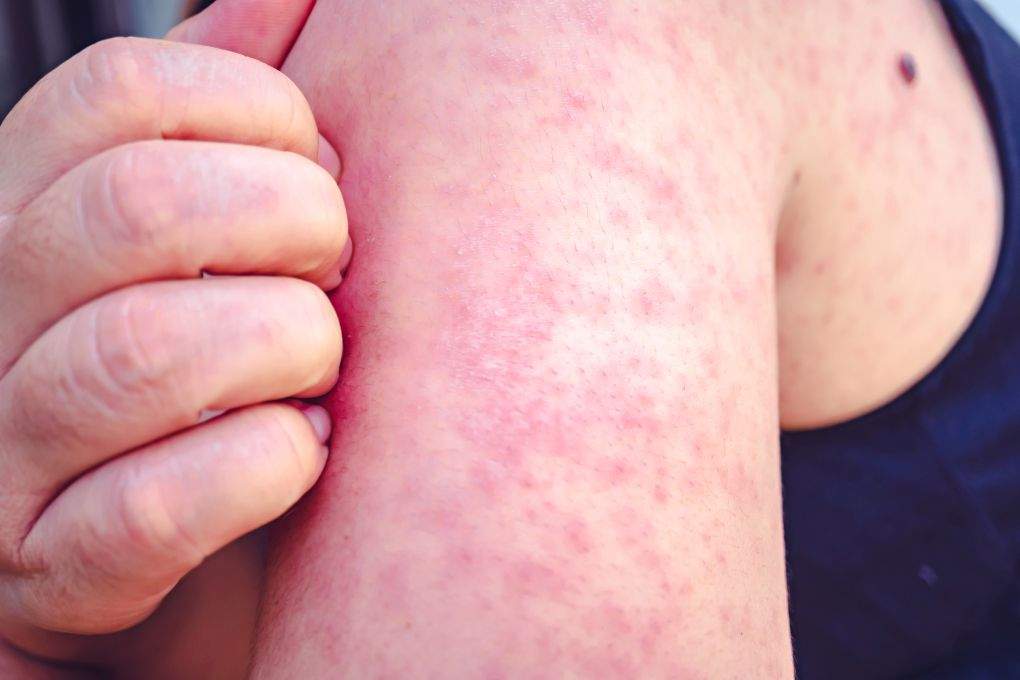
The Public Health Agency of Canada declared its two-year multi-jurisdictional measles outbreak officially over on October 19, 2026. More than 6,400 people were infected across ten provinces and territories before transmission of the outbreak strain finally stopped.
Do not mistake a press release for a victory lap. Ending a single outbreak chain is a procedural checkpoint, not a return to normal, and the structural vulnerabilities that allowed wild-type measles to tear across the country for twenty-four months remain wide open.
Routine news coverage treats the October declaration as a tidy bookend. It is not. What happened between October 2024 and October 2026 exposed deep fractures in Canada’s immunization coverage, cross-border surveillance, and public trust that a quiet calendar month cannot erase.
How a Single Spark Became a Two-Year Burn
Measles is one of the most contagious respiratory viruses known to medicine. One infected person in a susceptible room can infect roughly nine out of ten unprotected contacts, and the virus can linger in the air for up to two hours after an infectious individual leaves.
This outbreak started with an international exposure in New Brunswick in October 2024. A single imported case is nothing unusual in an interconnected country; Canada had held measles elimination status since 1998 precisely because imported sparks usually fizzled out quickly.
This time, the spark landed in dry timber. Pockets of under-vaccinated communities, combined with broader declines in routine childhood vaccination between 2019 and 2023, gave the genotype D8 virus room to jump from household to household and province to province.
Once a virus finds uninterrupted chains of transmission lasting twelve months or longer, the math changes. In November 2025, an independent commission under the Pan American Health Organization confirmed that sustained transmission had crossed that one-year threshold, stripping Canada of its 27-year measles elimination designation.
Why Ending the Outbreak Does Not Restore Elimination
Public health announcements often blur the line between an outbreak ending and a disease being eliminated. They are not the same thing.
Measles elimination does not mean zero cases forever. It means the absence of continuous, domestic transmission of a measles virus strain for at least twelve consecutive months.
Even after the Public Health Agency of Canada closed the book on the October 2024 to October 2026 multi-jurisdictional event, isolated cases continued to pop up. Federal surveillance reported new confirmed cases in early October 2026 that were not linked to the two-year outbreak chain, underscoring how easily imported or sporadic infections can still enter the country.
To win back its elimination status, Canada has to clear a strict set of hurdles:
- Twelve full months without sustained transmission: Canada must document a full year free of continuous domestic spread from the outbreak strain or another strain.
- A formal corrective action plan: Under Pan American Health Organization oversight, countries that lose elimination status must lay out concrete steps to boost vaccination coverage, tighten surveillance, and speed up outbreak response.
- Independent verification: An expert commission must review the epidemiological and laboratory evidence before recommending that elimination status be restored.
That clock is not a formality. In November 2026, the Pan American Health Organization announced that the United States, Mexico, and Bolivia had also lost their measles elimination status after twelve months or more of uninterrupted spread.
Regional re-verification now depends on multiple countries interrupting sustained transmission and proving it on paper and in lab data. When neighboring countries struggle with measles at the same time, borderless travel means a quiet spell in one jurisdiction can be tested at any moment by an imported case from another.
The Herd Immunity Gap Nobody Can Spin Away
Ask any seasoned epidemiologist what keeps measles out of a community, and they will point to a stubborn number: roughly 95 percent two-dose coverage with a measles-containing vaccine. Below that threshold, the virus finds enough susceptible hosts to keep moving.
Canada is not at 95 percent for two doses. A 2025 study estimated that about 92 percent of children had received one dose, while only 79 percent had received the recommended two doses of the measles-mumps-rubella vaccine.
That gap between one dose and two doses matters enormously. A single dose offers strong protection, typically around 93 percent, while two doses push protection closer to 97 percent and close immunity gaps in people who did not mount a full response to the first shot.
Consider a hypothetical example to see how small percentages turn into big outbreaks. Imagine a mid-sized school district with 2,000 students where two-dose coverage sits at 79 percent instead of 95 percent. That difference is 320 extra students who are not fully protected. If one contagious student attends classes before a rash appears, those extra susceptible contacts give the virus plenty of runway to spark a cluster that spills into younger siblings at home, including infants too young to be vaccinated.
Infants under one year old, pregnant people, and people with weakened immune systems rely on high community immunity because they cannot always take full advantage of routine immunization schedules. When coverage slips into the 70s or low 80s, herd immunity weakens and the most vulnerable carry the heaviest cost.
Pandemic Backlogs, Distrust, and Fragmented Follow-Through
Blaming this two-year crisis on a single cause is lazy reporting. The drop in routine immunization coverage reflects overlapping pressures that built up over several years.
During the height of the COVID-19 pandemic, clinics closed, appointments were postponed, and parents juggled lockdowns, remote schooling, and shifting guidance. Catch-up programs were launched in many places, yet catching millions of missed routine shots across sprawling provinces and territories proved far harder than pausing them.
Misinformation and eroded trust in public institutions added fuel to the fire. Over the past decade, online rumors about vaccine safety have hardened into identity markers for some families, making routine reminders from health authorities less persuasive than they once were.
There is also a practical friction point that gets less airtime than ideological debates: access and record-keeping. Even parents who support vaccination sometimes lose track of schedules, move across provinces, or face hurdles booking timely appointments outside standard clinic hours.
Here is where the gray areas sit. Mandates and school entry checks can nudge compliance upward, yet heavy-handed enforcement can backfire if families feel cornered rather than supported. Meanwhile, public health messaging that talks down to hesitant parents rarely changes minds, while staying silent lets bad information fill the vacuum.
What Comes Next for Surveillance and Public Health
Declaring the multi-jurisdictional outbreak over removes a major label from federal updates, not the workload from frontline public health teams. Measles is still circulating globally, and travel-related cases will keep knocking on Canada’s door.
Surveillance has to stay sharp long after headline case counts fall. Rapid contact tracing, fast laboratory genotyping to tell whether a new case is an isolated import or part of a local chain, and clear alerts to emergency departments and clinics are what stop a single case from becoming a ten-province headache.
Federal and provincial agencies also have to align their data and action plans so gaps do not hide inside averages. A province can look respectable on paper while harboring specific neighborhoods or pockets with dangerously low uptake.
For individuals and families, the immediate takeaway is straightforward rather than flashy. Check your own and your children’s immunization records against two-dose recommendations, especially before international travel, and talk with a trusted healthcare provider or local public health unit if records are missing or doses are overdue.
Elimination status is earned over a full year of quiet surveillance and verified immunization work, starting with every missed dose that gets booked today.