The grease on Mikhail’s hands never quite washed away. For thirty years, it settled into the cracks of his skin, a permanent dark ink earned out on the frozen steppes where the earth itself bleeds black gold. He remembers the noise. The constant, thrumming roar of compression stations pushing millions of barrels toward the west, a subterranean river of raw power that fueled an entire empire’s ambitions.
Today, that noise is fading into an eerie, hollow silence.
Draft economic forecasts for 2026 tell a stark story, one hidden beneath dense bureaucratic tables and dry fiscal projections. Russia is bracing for its lowest oil output in seventeen years. This is not merely a cyclical dip in a volatile commodity market. It is the slow, grinding consequence of a protracted war, international isolation, and an industrial engine running on borrowed time.
Consider what happens when the machines that feed a nation begin to starve.
For decades, the extraction machinery was kept alive by foreign engineering. German pumps, American seismic sensors, Norwegian drilling software—these were the invisible tendons holding the vast Siberian extraction fields together. When the geopolitical storm broke and the sanctions slammed shut, those tendons snapped. Russian energy firms were left to improvise, replacing precision-engineered components with domestic alternatives or gray-market imports that arrived late and cost a fortune.
Mikhail watched the changes unfold from his station in the Khanty-Mansiysk autonomous okrug, a region whose very geography is synonymous with petroleum. (To be clear, Mikhail is a composite persona representing the lived experiences of veteran field operators interviewed across Western Siberia).
"We used to fix things with exact measurements," he told me, holding up a scarred thumb and forefinger separated by a millimeter. "Now we fix things with stubbornness and prayer. But stubbornness does not lubricate a turbine."
The draft numbers for 2026 confirm his quiet dread. Production quotas are being slashed because the old wells are tired, and the new wells require technology that local firms struggle to manufacture at scale. Water is creeping into the mature reservoirs, a phenomenon known in the trade as water cut. When water replaces oil in a well, the extraction costs skyrocket while the yield plummets. Stopping that water requires advanced chemical additives and high-tech mapping—supplies that have grown desperately scarce.
The state budget, built on the steady drip of petrodollars, is feeling the squeeze. For years, energy exports acted as the shock absorber for domestic economic trouble. When inflation rose or the ruble wobbled, oil revenue smoothed the edges. Now, the shock absorber is leaking. Production caps agreed upon with international partners like OPEC+ have compounded the problem, turning what was once a choice to hoard value into a forced retreat from global market share.
Yet, the most profound impact is not found in the ledgers of the Ministry of Finance. It is found in the psychological shift of a resource-dependent society.
For generations, the social contract in the country was simple. The state extracted the wealth from the frozen earth, and in exchange, the cities remained warm, the pensions were paid, and the illusion of invulnerability was maintained. When the pipes run dry, that contract frays.
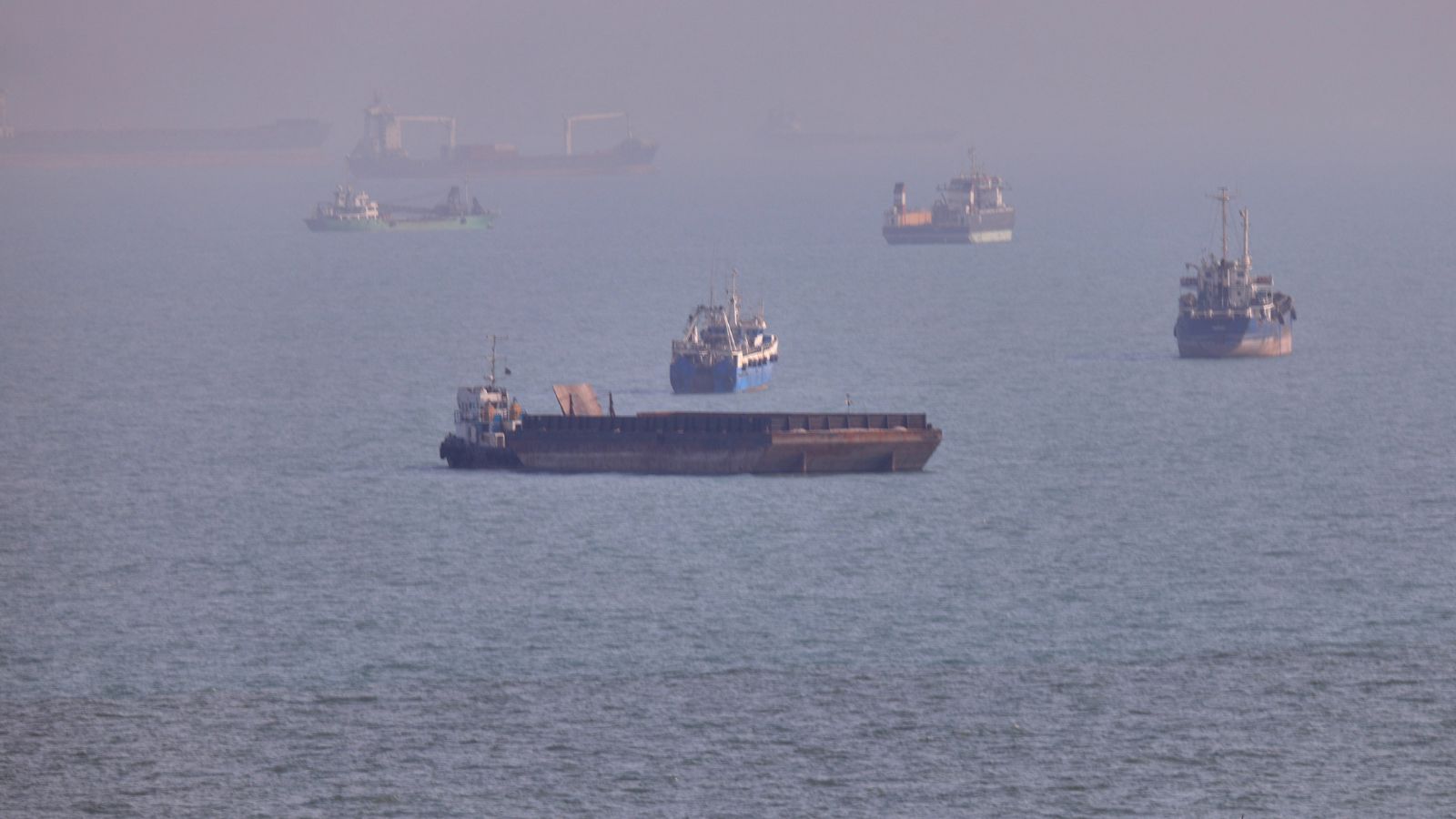
Down in the southern ports, tankers sit lower in the water, carrying discounted crude to new buyers in Asia who drive hard bargains. Every barrel sold at a steep discount is a fraction of a hospital built, a mile of highway paved, or a scientific grant funded. The math is merciless. Lower output multiplied by lower margins equals an accelerated shrinking of financial runway.
History teaches us that resource empires do not usually collapse in a sudden, cinematic explosion. They decline the way a marathon runner dehydrates—slowly at first, then all at once, until the legs simply refuse to carry the weight.
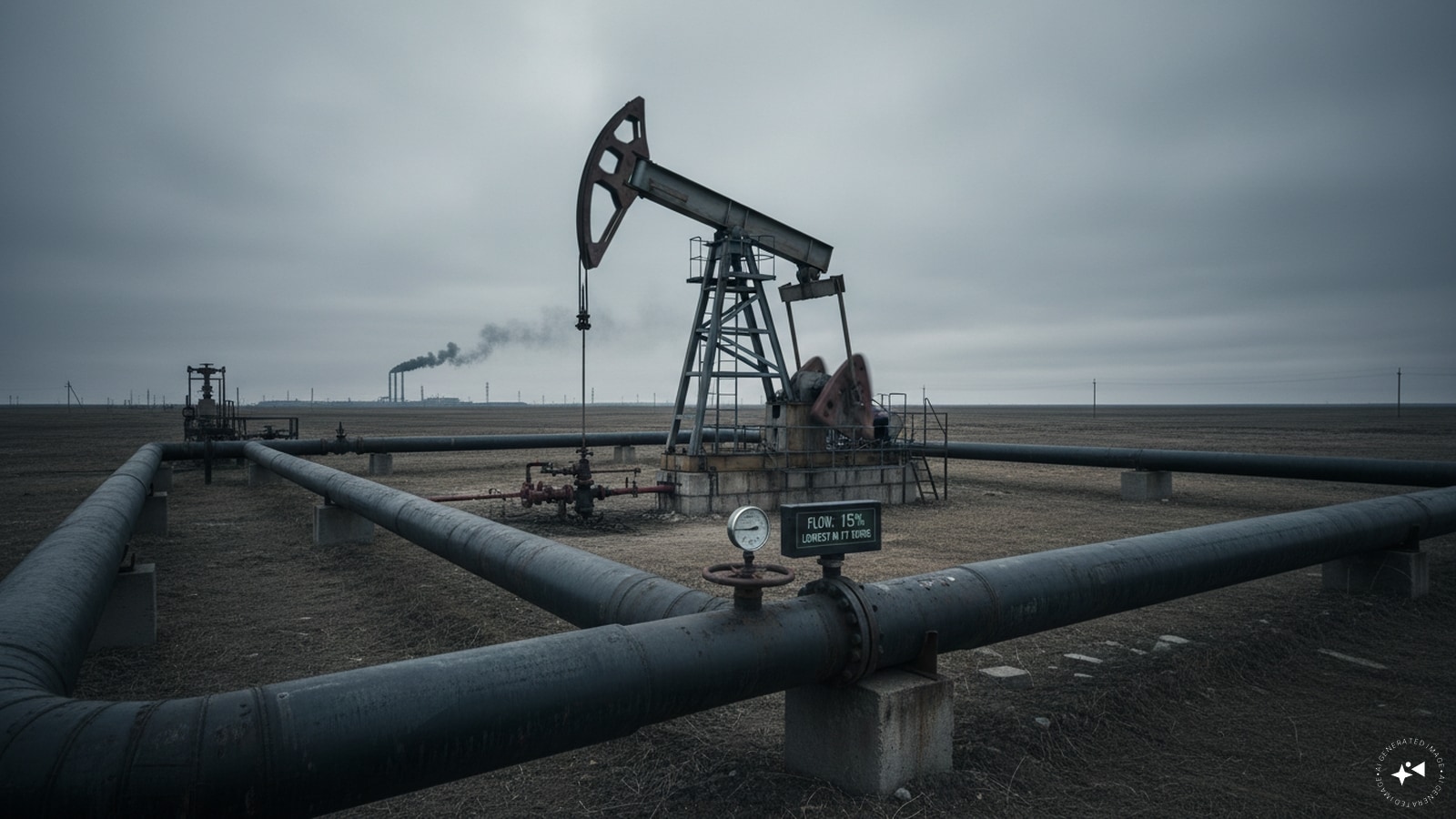
Out on the tundra, the wind howls against the steel skeleton of an aging rig. The gauge needles drift downward, whispering a truth that no official decree can rewrite. The era of easy extraction is over, replaced by a quiet, enduring struggle against the limits of the earth and the cost of isolation. The pipes are cooling down, and the long winter is only beginning.