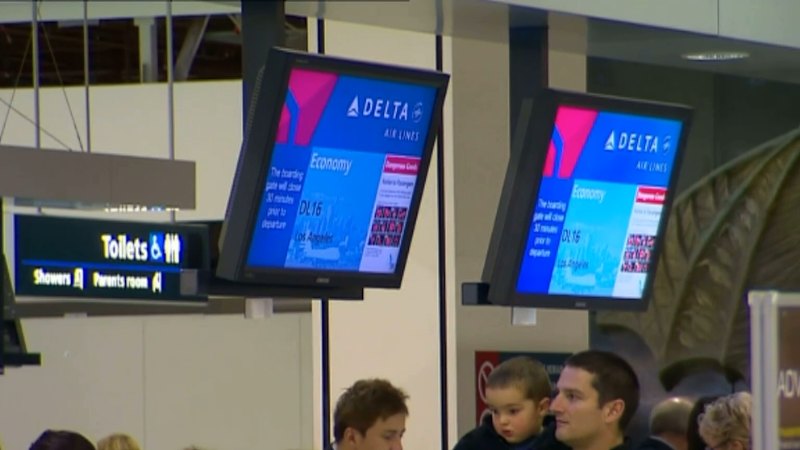
Over 1,600 Delta Air Lines flights suffered delays driven by persistent equipment failures, exposing deep structural vulnerabilities in modern commercial aviation. When an airline celebrated for operational reliability suddenly buckles under mechanical strain, the immediate blame usually falls on isolated maintenance hiccups or unpredictable weather patterns. The reality is far more systemic. Aging narrowbody fleets, severe supply chain bottlenecks for replacement components, and aggressive aircraft utilization schedules have collided to create an operational bottleneck that no amount of gate-agent apologizing can resolve.
To understand how a premier carrier ends up stalling more than sixteen hundred departures, you have to look past the departure boards and examine the mechanics of airline scheduling. Modern hub-and-spoke networks operate like tightly wound watch springs. When a single aircraft experiences an unexpected mechanical issue in Atlanta or Detroit, the resulting delay does not stay localized. It ripples outward across the entire route map, stranding flight crews, missing connection windows, and forcing dispatchers into a desperate game of tail-number musical chairs.
The Anatomy of an Equipment Delay
In airline parlance, "equipment problems" is a broad umbrella term that covers everything from a faulty auxiliary power unit to a cracked windshield or a malfunctioning lavatory sensor. While passengers often assume a mechanical delay means an engine is falling off the wing, the vast majority of these disruptions stem from minor components that render an aircraft legally unairworthy under Federal Aviation Administration regulations.
An aircraft cannot push back from the gate if a critical system fails to meet the Minimum Equipment List (MEL) standards. Consider a hypothetical scenario involving a Boeing 737 waiting at a gate in Minneapolis. During pre-flight checks, the captain notices an erratic reading on a bleed-air valve indicator. The plane is structurally sound, and the engines are fine, yet aviation law strictly prohibits takeoff until a certified mechanic inspects the valve, consults the maintenance manual, and either repairs the part or formally defers the issue under strict safety guidelines. That single sensor check takes ninety minutes. By the time the paperwork clears, the flight crew hits their federally mandated duty time limit, turning a ninety-minute mechanical hiccup into a six-hour cancellation.
The numbers tell a stark story about how these micro-failures compound.
- Crew timeout cascades occur when pilots and flight attendants exceed their maximum legal working hours while waiting for mechanics to clear a plane.
- Gate congestion builds up because broken aircraft occupy physical tarmac space needed by incoming flights, forcing arriving planes to sit idle on taxiways.
- Maintenance base bottlenecks happen when multiple aircraft require specialized diagnostics at a hub simultaneously, overwhelming the available licensed technicians on duty.
Delta has historically prided itself on maintaining one of the highest completion factors in the domestic industry, frequently touting its operational reliability to justify premium ticket prices. Yet that very reputation makes a wave of over 1,600 equipment-related delays particularly jarring for loyal flyers. When customers pay a premium for dependability, a breakdown in basic fleet readiness erodes brand equity faster than a fare hike ever could.
The Aging Fleet Dilemma
A major driver behind these mechanical disruptions is the sheer age of the aircraft flying domestic routes. Delta has long operated a distinct fleet strategy compared to competitors like Southwest or Ryanair, which rely heavily on single-model fleets. Delta’s hangars house a complex mix of Boeing 717s, 737s, 757s, and 767s alongside Airbus A220s, A320s, A330s, and A350s. Maintaining parts inventories and specialized mechanic certifications across such a diverse hardware lineup requires immense logistical precision.
For decades, Delta’s maintenance division—Delta TechOps—turned this complexity into a competitive advantage. By buying used aircraft at steep discounts and refurbishing them in-house, the airline saved billions in capital expenditures while keeping debt low. That strategy worked brilliantly when parts were abundant and turnaround times in maintenance hangars were predictable.
Today, that equation has flipped. Many of the workhorses in Delta’s domestic fleet, particularly the Boeing 757s and older A320 variants, are well past their twentieth year of commercial service. Older airframes naturally require more frequent heavy maintenance, structural inspections, and component replacements. Metal fatigue, wiring degradation, and hydraulic wear do not care about an airline's quarterly earnings targets. When you push older machines to fly maximum daily block hours to meet surging passenger demand, mechanical failure rates inevitably climb.
The Hidden Cost of High Aircraft Utilization
Airlines make zero money when aluminum sits parked on the tarmac. To maximize profitability, network planners design schedules that keep planes in the air for twelve to fourteen hours a day, leaving razor-thin buffers between flights for cleaning, catering, refueling, and routine checks.
In an ideal operating environment, a forty-five-minute turnaround at a major hub is plenty of time to swap passengers and inspect the cabin. In the real world, that forty-five-minute window leaves zero margin for error. If a technician discovers a worn tire or a leaky hydraulic seal during a quick walkaround, there is no spare aircraft sitting nearby to absorb the scheduled flight. Airlines eliminated most of their "hot spare" reserve aircraft years ago to cut fixed costs and boost load factors. Consequently, every mechanical glitch directly translates into a delayed departure.
Supply Chain Bottlenecks in the Hangar
Even the best mechanics in the world cannot fix a broken airplane without the right spare parts. Across the global aerospace sector, manufacturing bottlenecks continue to choke the flow of replacement components, turning routine repairs into multi-day ordeals.
Tier-one and tier-two aerospace suppliers have struggled to rebuild their skilled workforces and secure raw materials like titanium and specialized alloys. When a Delta Airbus A321 requires a replacement avionics module or a specific actuator, TechOps might find that the part is backordered for weeks. To keep planes flying, maintenance teams are sometimes forced to cannibalize parts from other aircraft already sitting in heavy maintenance checks, a labor-intensive process that doubles the workload for mechanics and delays multiple airframes simultaneously.
The shortage of experienced Airframe and Powerplant (A&P) mechanics compounds this hardware deficit. A massive wave of veteran technicians retired over the past few years, taking decades of institutional troubleshooting knowledge with them. While airlines have aggressively hired new graduates from aviation maintenance schools, a rookie technician simply cannot diagnose an intermittent electrical fault on a twenty-five-year-old Boeing 757 as quickly as a mechanic with thirty years on the line. Slower diagnostics mean longer delays at the gate.
Weather vs. Mechanical Blame Games
Passengers tracking their flights through third-party apps or airline notifications often notice a frustrating pattern. A flight initially marked as delayed due to maintenance suddenly shifts to an air traffic control or weather delay, or vice versa. This ambiguity fuels deep skepticism among travelers, particularly when compensation and hotel vouchers are on the line.
Under Department of Transportation (DOT) guidelines, airlines are generally required to provide meal vouchers, hotel accommodations, and rebooking assistance when a significant delay or cancellation is deemed "controllable"—a category that explicitly includes mechanical failures and crew scheduling errors. Delays caused by severe weather or federal airspace restrictions are classified as "uncontrollable," leaving passengers to cover their own overnight expenses.
When over 1,600 flights experience equipment issues, the financial liability for the carrier skyrockets. Putting thousands of stranded travelers into airport hotels and distributing meal credits eats directly into operating margins. Furthermore, extreme heat waves in summer or deep freezes in winter actively degrade aircraft performance, blurring the line between weather and mechanics. High ambient temperatures cause electronic components to overheat and trigger fault warnings, while sub-zero conditions freeze potable water lines and stiffen hydraulic seals. Is a frozen water valve a weather delay or an equipment failure? The airline's operations center and the stranded passenger in terminal B rarely agree on the answer.
What Flyers Must Do When Equipment Fails
Relying on passive patience at the gate is the worst strategy a traveler can employ during a widespread mechanical meltdown. When an airline experiences systemic equipment delays, gate agents are overwhelmed, customer service phone lines back up for hours, and available seats on alternative flights vanish within minutes.
- Monitor incoming aircraft immediately. Use flight tracking tools to check the status of the specific plane assigned to your route hours before you leave for the airport. If your inbound aircraft is still sitting on the ground three states away with an active maintenance hold, your flight will not leave on time, regardless of what the departure board currently claims.
- Identify alternative routings before speaking to an agent. Do not walk up to a rebooking desk and ask the agent what options exist. Search for open seats on partner airlines or alternative connections through different hubs on your phone first, then give the agent the exact flight numbers you want.
- Demand written confirmation of the delay reason. If your flight is delayed overnight due to an equipment issue, politely ask the gate agent to verify that the delay is coded as a controllable mechanical event in the reservation system, which unlocks mandatory hotel and meal protections under Delta's customer service commitment.
- Leverage credit card trip delay insurance. Many premium travel credit cards automatically reimburse expenses for meals, lodging, and ground transportation once a common carrier delay exceeds six or twelve hours due to equipment failure, bypassing the need to haggle with exhausted airline staff.
The Myth of Seamless Recovery
Airlines spend millions on marketing campaigns showcasing gleaming new cabin interiors, artisanal snacks, and high-speed Wi-Fi, projecting an image of effortless modern travel. Yet behind the curtain, the physical infrastructure of commercial aviation is running closer to its mechanical redline than ever before.
When over 1,600 Delta flights grind to a halt because of equipment failures, it serves as a blunt reminder that software updates and loyalty perks cannot replace basic hardware integrity. Until aerospace supply chains stabilize, older jets are retired in greater numbers, and airlines rebuild meaningful buffer capacity into their daily schedules, travelers will remain vulnerable to the sudden, cascading chaos of a broken part. Pack a charger, book the earliest flight of the morning before delays compound, and never assume a scheduled departure time is a guarantee.