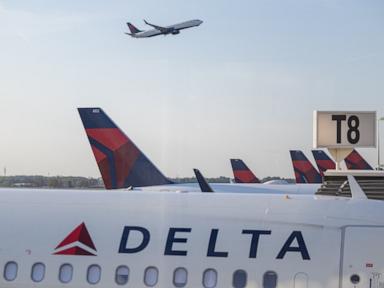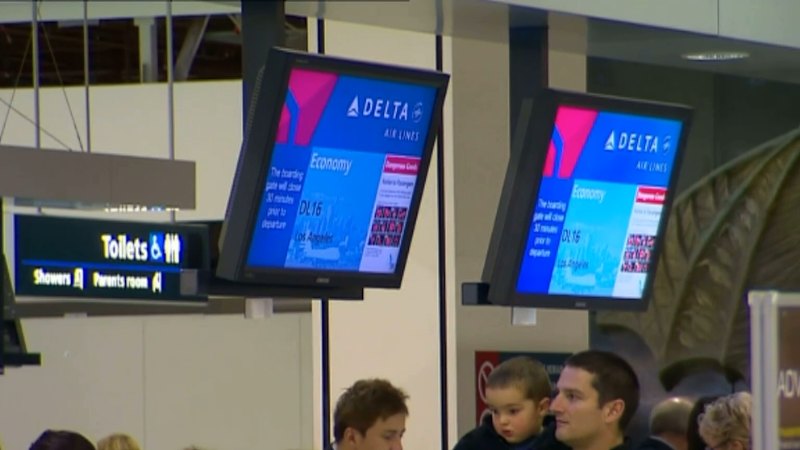
You're sitting at Gate B14, coffee getting cold, watching the departure board flip from "On Time" to "Delayed" to a blinking red "Canceled." The gate agent looks just as confused as you do. When an outage hits a US airline, it rarely starts with a dramatic explosion in a server room. Most of the time, it begins with a single corrupted configuration file, a third-party vendor glitch, or an aging mainframe that finally chokes under peak summer volume.
And within twenty minutes, the entire domestic airspace feels it. Read more on a similar subject: this related article.
If you've ever been stranded on a terminal floor wondering why a single computer crash takes four days to fix, you aren't alone. Most travelers assume airlines run on sleek, modern cloud networks. They don't. Underneath the glossy mobile apps and biometric boarding gates sits a tangled web of 1970s-era reservation code stitched together with modern APIs. When one thread snaps, the whole sweater unravels.
Why US Airline IT Systems Break So Easily
Let's get something straight about aviation technology. Airlines are safety-first organizations, which makes them terrified of touching core systems that technically still work. Because of that caution, major US carriers still rely heavily on legacy Passenger Service Systems (PSS) and mainframe architectures built decades ago. More reporting by Travel + Leisure highlights similar views on the subject.
When you book a ticket, check a bag, and get assigned a seat, dozens of separate databases have to talk to each other in milliseconds. You've got crew scheduling software, weight-and-balance calculators, maintenance logs, and Federal Aviation Administration (FAA) flight plan filers all running simultaneously.
If the crew scheduling database loses sync with the flight operations platform, the airline suddenly doesn't know where its pilots are. Literally. Under strict FAA duty-time regulations, a pilot can't legally fly a plane if the system can't verify how many hours they rested the night before.
I've watched operations centers grind to a complete halt not because the planes were broken, but because the software tracking pilot rest periods froze. The aircraft are sitting right there at the gate. The pilots are standing in the jet bridge. Nobody is allowed to push back.
The Domino Effect of a Ground Stop
When an outage hits a US airline, the carrier usually requests an immediate ground stop through the FAA Air Traffic Control System Command Center. This prevents any more of their planes from taking off while engineers scramble to reboot or isolate the failing system.
Sounds clean in theory. In practice, it's brutal.
Airlines operate on tight hub-and-spoke networks. That Boeing 737 stuck on the tarmac in Chicago was supposed to fly to Dallas, pick up a fresh crew, and continue to Phoenix before overnighting in Seattle. Hold that plane in Chicago for three hours, and you just broke four consecutive flights across four time zones.
Here's what actually breaks down during those first few hours:
- Gate congestion spirals out of control. Incoming flights land, only to find their assigned gates still occupied by grounded departures. Passengers sit trapped on the tarmac for hours while ground crews run out of parking spots.
- Crews "time out" legally. FAA rules strictly cap flight crew duty hours. While planes sit waiting for IT systems to reboot, pilots and flight attendants hit their legal work limits and must legally walk off the jet.
- Baggage tracking goes blind. Automated baggage sorters rely on real-time passenger manifest data. When the database drops, bags get routed to empty gates or piled manually on warehouse floors.
- Call centers collapse immediately. Tens of thousands of stranded flyers dial the 1-800 number at the exact same second, crashing the telecom queues before human agents even receive internal updates from headquarters.
We saw textbook examples of how fragile this ecosystem is during major aviation disruptions over the past few years—from the January 2023 FAA NOTAM system outage that halted all US domestic departures for the first time since 9/11, to the July 2024 CrowdStrike kernel crash that crippled Delta Air Lines for nearly a week, canceling over 7,000 flights while competitors recovered in under forty-eight hours.
Why did one airline recover in two days while another took almost seven? Architecture and redundancy. Carriers that isolate critical crew-tracking tools from general corporate Windows networks can reboot manually and keep flying. Carriers with tightly coupled dependencies end up manually calling pilots on their personal cell phones just to figure out which city they're sleeping in.
What Most Travelers Get Wrong About Airline Outages
People love to blame front-line workers when an IT meltdown happens. That's a mistake. When the system goes down, gate agents are often working off the exact same delayed information you're seeing on Twitter or FlightAware. Sometimes they have even less.
Another massive misconception is thinking an airline will automatically rebook you on the best available flight. Automated rebooking algorithms optimize for seat inventory across the entire network, not your personal schedule. If an outage wipes out 800 flights, the computer might auto-assign you a seat leaving three days later because it's trying to keep families together or prioritize elite status tiers.
Don't accept the default automated rebooking if you need to get home.
You also shouldn't assume every disruption qualifies as "weather" or "air traffic control" just because an agent says so in the heat of the moment. Under US Department of Transportation (DOT) rules, a failure of an airline's own internal IT infrastructure is considered a controllable delay or cancellation. That distinction matters enormously when it's time to demand hotel vouchers, meal credits, and cash refunds.
Your Rights Under DOT Rules During a Tech Meltdown
The Department of Transportation draws a hard line between events outside an airline's control (like blizzards or FAA radar failures) and events inside their control (like internal software crashes, maintenance issues, or crew scheduling meltdowns).
If an outage hits a US airline's internal systems and cancels or significantly delays your flight, you have concrete leverage. Most major US carriers have committed to specific standards in the DOT Airline Customer Service Dashboard:
- Free rebooking on the same airline at no additional cost, regardless of fare class (even Basic Economy).
- Rebooking on partner or competing airlines if the carrier can't get you out within a reasonable timeframe—most legacy carriers like Delta, United, and American commit to interline rebooking for controllable disruptions.
- Meal vouchers when a controllable delay forces you to wait three hours or more past your scheduled departure time.
- Complimentary hotel accommodations and ground transportation to and from the hotel if a controllable cancellation strands you overnight away from home.
- Full cash refunds to your original payment method—not travel credits—if your flight is canceled or significantly changed and you choose not to travel.
Read that fifth point again. Airlines love pushing e-credits because credits expire and keep your cash on their balance sheet. Under federal rules enforced by the DOT, if your flight is canceled for any reason and you decide to skip the trip, they owe you a full refund in actual money.
How to Survive an Airline Outage Without Sleeping at the Gate
When the screens go red and hundreds of people sprint toward the customer service desk, standing in that physical line is the single worst move you can make. You'll wait four hours only to be told the agent's terminal is still frozen.
Instead, execute this exact sequence the second you suspect a system-wide outage:
1. Check FlightAware Before You Panic
Open FlightAware or Flightradar24 and check the "MiseryMap" or airport delay board. Look at whether all airlines at your airport are delayed, or just yours. If competitors are taking off normally while every flight on your carrier shows a ground stop, you're dealing with an internal airline outage. Move immediately before everyone else realizes what's happening.
2. Attack Multiple Channels at Once
While standing near—not in—the customer service line, open the airline's mobile app to see if self-service rebooking is still functioning. Sometimes the mobile API runs on separate cloud servers from the gate terminals. Simultaneously, open X (formerly Twitter) and send a direct message with your six-character confirmation code, or call the airline's international customer service line (like their UK, Canadian, or Australian support numbers via Wi-Fi calling). International desks share the same reservation backend with a fraction of the hold times.
3. Book a Backup Seat on a Competitor
If you absolutely cannot miss a wedding, a cruise, or a critical meeting, buy a fully refundable one-way ticket on a competing airline right from your phone. Seats vanish within fifteen minutes of a major ground stop. You can always cancel that backup ticket for a full refund if your original airline recovers, or keep it and demand a cash refund from your original carrier once the dust settles.
4. Document Everything for Reimbursement
If the airline's voucher system is down alongside their main network—which happens constantly during IT outages—agents won't be able to print hotel or meal passes. Book a reasonably priced airport hotel yourself, keep every single itemized receipt (not just credit card summaries), and take screenshots of the flight status board showing the cancellation. File a reimbursement claim through the airline's customer relations portal within forty-eight hours, explicitly referencing that the disruption was a controllable IT outage under DOT guidelines.
Why These Outages Keep Happening
You might wonder why billion-dollar corporations can't just modernize their software once and for all. Honestly, migrating an active airline off a legacy mainframe is like trying to rebuild a jet engine while the plane is cruising at 35,000 feet.
You can't shut down a major US carrier for two weeks to install new servers. Every transition has to happen incrementally, running old systems and new cloud microservices side by side in real time. Those translation layers between old and new code are often where the worst bugs hide.
Add aggressive cost-cutting, lean IT staffing, and heavy reliance on third-party software vendors, and you get an industry operating with almost zero margin for digital error. When things run smoothly, modern aviation logistics look like magic. When a single database stalls, the magic vanishes fast.
Next time you're heading to the airport during peak travel season, download your airline's app beforehand, save your six-character record locator in your phone's notes, and know which competing carriers fly your route. If the departure board suddenly turns red, you won't be standing in line wondering what happened—you'll already be on the next plane out.