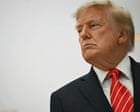
Domestic political survival and global realpolitik rarely overlap without inflicting collateral damage. When the White House abruptly announced an agreement to import hundreds of thousands of tons of Russian diesel fuel to manage domestic pump prices, the shockwave went far beyond standard diplomatic friction. Ukrainian President Volodymyr Zelenskyy did not mince words, condemning the arrangement as a birthday present for Vladimir Putin while his country reeled from renewed aerial bombardments.
The transaction exposes the structural limits of economic warfare. For years, Western sanctions architecture was built on a singular premise: squeeze Moscow’s hydrocarbon revenues until the Kremlin’s war machine starves. Yet, when domestic energy costs bite into consumer patience ahead of critical elections, theoretical purity tends to evaporate. Washington authorized a temporary Treasury license permitting millions of barrels of Russian refined product to flow back into global distribution channels. The justification was straightforward price relief. The secondary effect, however, was an immediate injection of liquidity into an adversary's federal budget.
Strategic miscalculation rarely announces itself with a warning siren. It usually arrives dressed in the mundane clothing of administrative necessity. By lifting restrictions on Russian diesel exports, the administration inadvertently signaled that sanctions compliance remains entirely negotiable when domestic political pressures peak. Moscow reads these adjustments not as acts of economic pragmatism, but as behavioral fatigue. Every time an enforcement mechanism is paused for short-term relief, the collective deterrent value of the entire sanctions regime degrades.
Kyiv's frustration stems from a deeper structural betrayal. Ukrainian military planners had spent months absorbing systematic infrastructure strikes while simultaneously executing targeted drone campaigns against Russian refining capacity to degrade the enemy's logistical supply chains. To watch Washington grant a temporary reprieve to those exact fuel markets while bilateral talks were actively underway in Miami felt less like diplomacy and more like a tactical blindside. As Ukrainian officials noted, using their delegation as a functional smoke screen while oil arrangements were finalized behind closed doors damages the core trust required for any coalition.
The economic mechanics driving this decision are unglamorous. Diesel functions as the circulatory fluid of modern commerce. Haulage, agriculture, manufacturing, and heavy logistics depend entirely on its baseline affordability. When middle-class voters experience persistent friction at the fuel station, political fallout accumulates fast. Traditional statecraft struggles to reconcile long-term geopolitical strategy with short-term electoral mathematics. The temptation to reach for any available barrel to smooth out price curves usually overwhelms long-term strategic coherence.
Yet the illusion that energy markets can be compartmentalized from military conflict has repeatedly proven false. Financial inflows to state-backed energy conglomerates in Russia translate directly into fiscal runway for missile production lines and troop rotations. When external pressure eases, domestic military output stabilizes. The correlation between relaxed export enforcement and intensified aerial campaigns against urban centers is direct and observable.
History suggests that transactional diplomacy with an expansionist power rarely yields sustainable stability. Temporary accommodations tend to harden into permanent precedents. By creating a formalized carve-out for Russian fuel products, the architecture of international isolation acquires structural loopholes. Other trading partners watching from the sidelines take precise note of how easily enforcement waivers can be secured through sustained market pressure.
The political fallout extended immediately into Capitol Hill, dividing lawmakers along predictable partisan lines while alienating key international partners who had spent years aligning their own economic sacrifices with declared Western policy. Legislative intent written into recent sanction packages was brushed aside through executive discretion, proving that legal frameworks are only as durable as the political will behind them.
Short-term market interventions often store up structural crises for tomorrow. As the fuel flows resume and initial price pressures subside domestically, the underlying geopolitical ledger remains unbalanced. Trust, once expended to buy a brief respite at the pump, is exceptionally difficult to replenish.