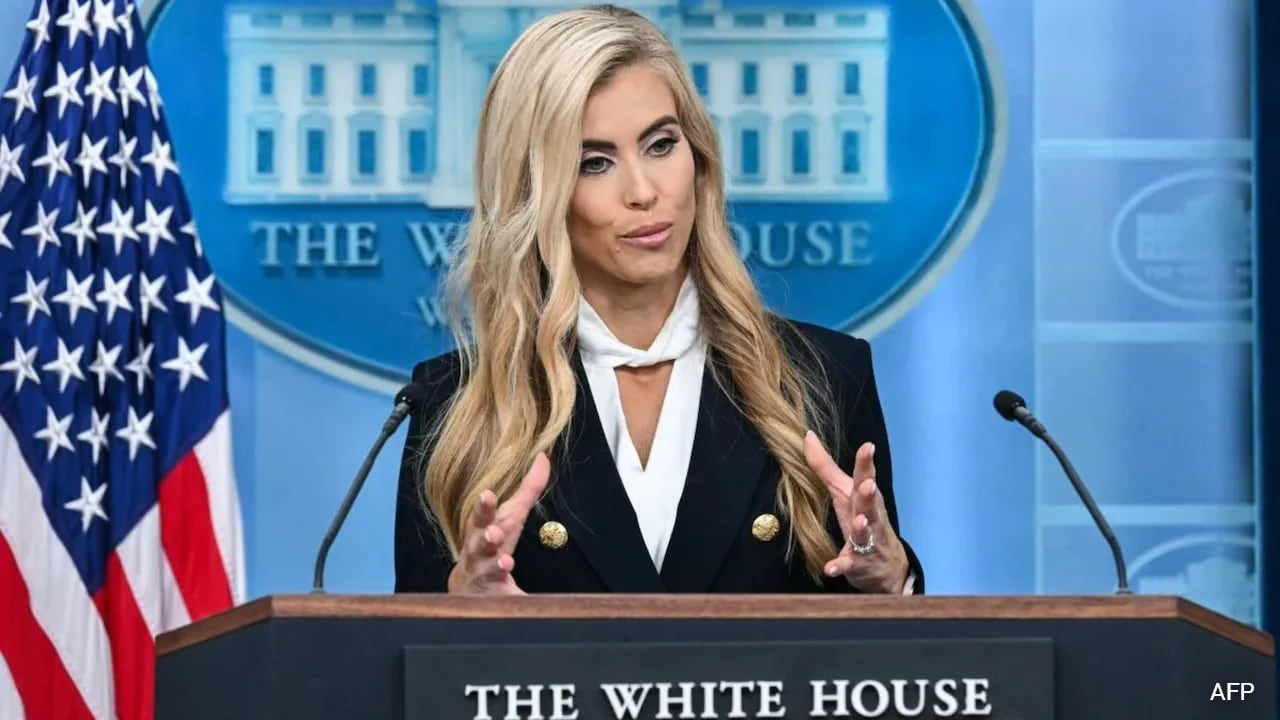
When former White House press secretary Katie Zacharia dismissed China's development by claiming the country lacked "proper toilets" in an October 2026 podcast interview, Beijing answered with dry, disarming poise. Chinese Foreign Ministry spokesperson Mao Ning smiled through a brief retort, welcoming Zacharia to "visit China more often when she has the opportunity". On the surface, it looked like a throwaway cable-news clip. Beneath the banter, a five-day communications stint in Washington collided with years of state-backed sanitation spending and high-stakes trade diplomacy in Beijing.
Disposable jokes travel fast. Statecraft lingers.
The exchange unfolded on October 16, 2026, barely a week into Zacharia's tenure as President Donald Trump's press secretary, drawing on an interview that aired the day prior with commentator Jack Posobiec. Looking back at earlier warnings about American decline and Chinese ascent, Zacharia reached for a blunt shorthand about living standards: that China did not even have proper toilets. Coming from someone who had previously lived in China and was slated to travel there the following month—and whose brief turn at the podium was already under scrutiny over her first briefing and legal credentials—the remark landed with a thud.
The Anatomy of a Five-Day Press Meltdown
Great power friction rarely turns on plumbing. Usually, plumbing shows up when a spokesperson is trying to fill air without a doctrine behind the line.
In Washington's press corps, a new press secretary's opening days function like a stress test of message discipline. Zacharia stepped into a role where every offhand comparison to Beijing gets parsed by diplomats, traders, and rivals alike. By framing China's trajectory around bathroom fixtures rather than industrial supply chains, export controls, or military capacity, she handed her critics an easy target while flattening a complex strategic rival into a caricature.
Even more striking was the timing. Reporting around the episode noted that Zacharia had lived in China before and had a trip lined up for November. When a messenger claims a place lacks basic facilities they have personally experienced—and plan to visit again soon—credibility takes an immediate hit.
That vulnerability was compounded by the broader turbulence around her appointment. Questions over her 14-minute debut briefing, her unretaken bar exam after returning to the United States following the birth of her first child, and a short-lived stint that ended after roughly five days turned a single podcast line into a symbol of White House communications whiplash.
Why Beijing Answered With a Smile Instead of Fury
For years, Beijing's diplomatic posture often leaned toward sharp, theatrical pushback—what observers long called "wolf warrior" rhetoric. Here, Mao Ning chose something sharper and far harder to counter: polite mockery.
"We welcome her to visit China more often when she has the opportunity," Mao told reporters, visibly holding back a smile. That single sentence did three things at once. First, it refused to treat a dismissive barb as a serious critique of Chinese statecraft. Second, it turned Zacharia's own prior residence and upcoming travel plans back on the White House. Third, it projected calm confidence at a moment when the official U.S. messenger looked off-balance.
A seasoned spokesperson knows that anger elevates a joke into a grievance; a gentle invitation treats the speaker like a tourist who missed the bus.
There is also a practical reason Beijing did not let a restroom quip derail its broader posture. Around the same period, Washington and Beijing were navigating high-stakes economic and geopolitical realities, including tariff negotiations and leadership engagements. Escalating a late-night podcast clip into a formal diplomatic rupture would have given an ephemeral media moment disproportionate weight. Letting Mao Ning deliver a cool, amused brush-off kept the focus on Washington's internal churn rather than China's external pressure points.
The Real History Behind China's Toilet Revolution
Jokes about public restrooms in China tap into an older western stereotype—one rooted in decades of rapid urbanization and rural poverty that Chinese officials themselves spent years trying to erase.
Starting in 2015, Beijing launched a widely publicized "toilet revolution" aimed at upgrading public restrooms at tourist sites, cities, and rural communities. State media, local governments, and urban planners treated sanitation not merely as a convenience issue, but as a visible marker of modernization, public health, and civic order. In major cities like Beijing, sleek municipal facilities—including solar-powered street restrooms and modern commercial complexes—became commonplace alongside older neighborhood lanes.
Yet acknowledging that campaign does not mean pretending every disparity vanished overnight. Urban centers and high-profile corridors look radically different from under-resourced rural districts or aging alleys, where maintenance, plumbing standards, and regional inequalities still vary. A fair-minded analyst sees both sides of that ledger: massive physical investment and uneven local execution existing side by side.
| Dimension | Western Media Shorthand | Observable Reality on the Ground |
|---|---|---|
| Urban Infrastructure | Treated as uniformly primitive or backward | Major cities feature modern transit, commercial, and municipal facilities alongside older pockets |
| State Policy | Ignored in favor of punchlines | Multi-year "toilet revolution" pushed sanitation upgrades as a pillar of modernization and tourism |
| Regional Variance | Flattened into a single national stereotype | Sharp gaps persist between wealthy coastal hubs, tourist zones, and less-developed rural areas |
| Diplomatic Impact | Seen as a trivial viral moment | Highlights message discipline in Washington and calibrated restraint from Beijing |
What Caricatures Cost in Great Power Competition
Using bathroom fixtures as a proxy for national power is a lazy habit, no matter which capital indulges it.
Infrastructure quality matters. Plumbing, water treatment, and public health systems genuinely affect daily life and economic productivity. Still, reducing a rival superpower of more than 1.4 billion people to a single generalization misses where real leverage lies—in advanced manufacturing, industrial scale, supply-chain bottlenecks, technology ecosystems, and diplomatic endurance.
When officials trade in caricatures, they also dull their own analytical edge. If you assume a competitor cannot compete because of an outdated image in your head, you tend to underprice their strengths until a shock forces a scramble. Meanwhile, the other side gets free propaganda simply by pointing out the gap between the stereotype and reality.
What to Watch Next
Watch how Washington disciplines its messaging around upcoming high-level travel and negotiations with Beijing—and whether short-lived media skirmishes bleed into serious policy talks. Pay close attention, too, to how Beijing calibrates its public tone: when Chinese officials opt for dry irony over outrage, it is usually a sign they feel comfortable letting an opponent's unforced errors speak for themselves.
In diplomacy, the sharpest counterpunch is often an open door and a straight face.
Mao Ning's China foreign ministry briefing clip shows how Beijing framed its response to the remarks during the October 2026 press exchange.