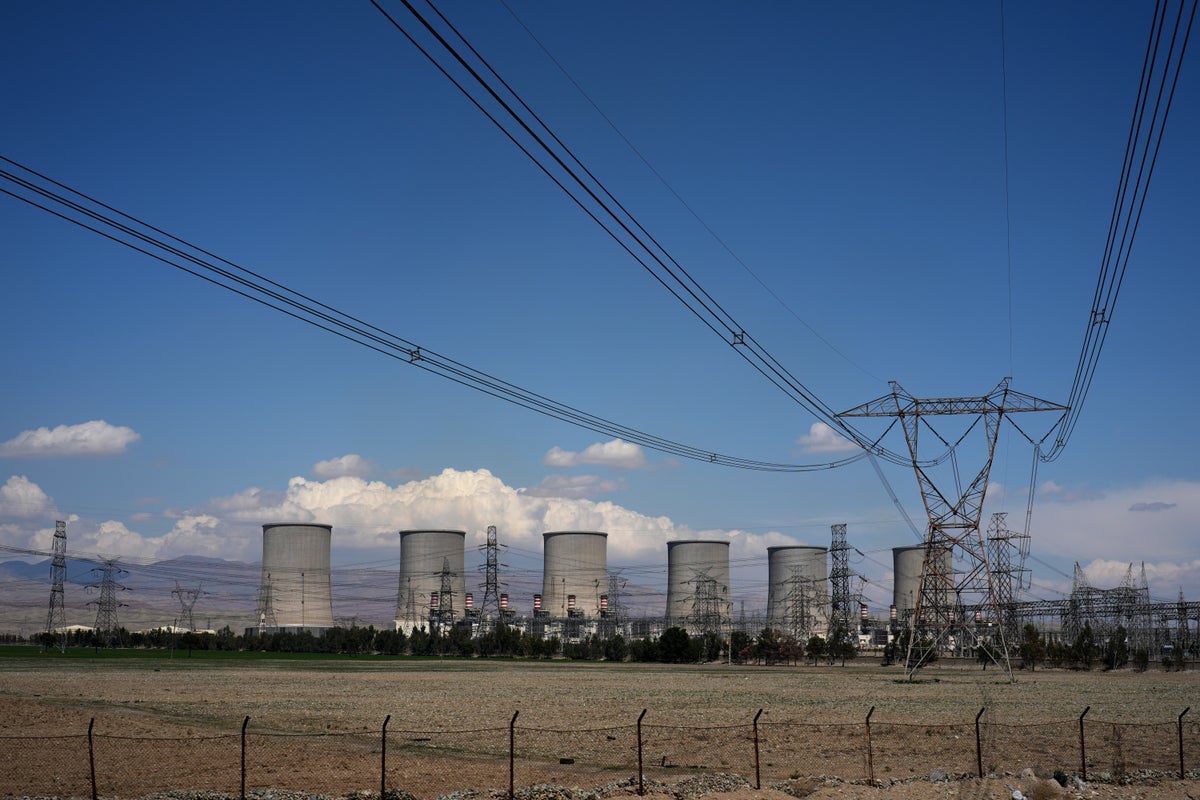
Fear is a low-effort commodity. It’s the easiest thing to sell when Western media looks at Tehran. They paint a picture of a nation trembling at a calendar date, waiting for a "deadline" that will supposedly plunge the country into the Stone Age. They focus on the flickering lights and the shadow of drones. They tell you the Iranian people are terrified of power outages.
They’re wrong. Not because the outages aren't happening—they are—but because they misunderstand the utility of a crisis.
For the Iranian technocracy, a power grid on the brink isn't a failure of governance; it’s a stress test for a post-Western reality. While the consensus focuses on "instability," the actual players on the ground are watching a massive, forced migration of energy and capital that will make the Iranian economy more resilient, not less.
The Myth of the Fragile Grid
The prevailing narrative says Iran is crumbling because it can't keep the lights on. The logic is simple: No power equals no production, which equals civil unrest.
This is amateur-hour analysis.
Iran’s energy crisis is a result of a deliberate, decade-long refusal to kowtow to international credit markets. When you can’t borrow from the IMF to build gas-turbine plants, you learn to manage scarcity as a weapon. The "fear" of outages is actually the final nudge required to decentralize the nation’s industrial base.
I’ve seen this play out in sanctioned economies before. When the central hub fails, the periphery adapts. Small-scale solar, captive power plants for factories, and a massive shift toward energy-efficient manufacturing aren't "goals" anymore—they are survival requirements. Trump’s deadline isn’t a looming disaster; it’s the ultimate accelerator for an energy revolution that would have taken twenty years under "normal" conditions.
Why the Deadline is a Gift to Hardliners
The West loves a deadline. It feels like leverage. In reality, it’s a gift-wrapped PR win for the most radical elements of the Iranian state.
Every time a foreign power sets a date for "consequences," it provides a domestic scapegoat for every internal inefficiency.
- Inflation? The deadline.
- Fuel prices? The deadline.
- Grid failure? The deadline.
The "fear" reported in mainstream outlets ignores the fact that the Iranian middle class has been living under "deadlines" since 1979. They are the most sophisticated sanctions-dodgers on the planet. To suggest they are suddenly paralyzed by a change in the Oval Office is to ignore the reality of a country that has built a parallel financial system out of thin air.
The Bitcoin Battery
Here is the nuance the "stability" experts missed: Iran isn't just losing power; it’s choosing where to send it.
The Iranian power grid is being cannibalized by digital assets. While the "competitor" piece worries about citizens charging their phones, the Iranian state is weighing the value of a kilowatt-hour against the value of a Bitcoin.
Iran has effectively turned its energy crisis into a currency hedge. By allowing (and taxing) massive mining operations, they are converting natural gas—which they can’t export easily due to sanctions—directly into a liquid, uncensorable global asset. When the lights go out in a residential neighborhood in Tehran, that electricity didn't just vanish. It was likely sold for a premium to a data center that’s generating the hard currency needed to buy medicine and machine parts.
It’s brutal. It’s unfair to the average citizen. But it’s not "collapse." It’s a ruthless optimization of resources.
The Attacks That Won't Happen
The media loves the "Imminent Attack" headline. It drives clicks. But look at the math.
A kinetic strike on Iran’s energy infrastructure by a Trump-led administration or its allies is the least likely outcome. Why? Because an energy-blind Iran is a black box.
If you destroy the grid, you destroy the telemetry. You destroy the ability to monitor the very things the West is obsessed with. Furthermore, hitting the grid doesn't stop the centrifuges; those have had dedicated, redundant, underground power sources since before the Stuxnet era.
The real "attack" is the one already happening: the psychological decoupling of the Iranian public from the global economy. Every threat of a strike makes the Iranian population more insular and more dependent on the state’s shadow economy. If you want to see what actual fear looks like, don't look at the guy in Tehran worried about his fridge. Look at the oil trader in London realizing that a "maximum pressure" campaign hasn't taken a single barrel of "grey market" Iranian crude off the water.
Stop Asking if the Lights Will Stay On
The question "Will there be power outages?" is the wrong question. It’s a distraction.
The right question is: "What does Iran look like when it no longer cares about the global grid?"
We are witnessing the birth of a fortress economy. It’s ugly, it’s inefficient by Western standards, and it’s deeply uncomfortable for the people living in it. But it’s also becoming immune to the very levers of power the West thinks it’s pulling.
The High Cost of the Status Quo
Let’s be honest about the downsides. My contrarian view isn't a defense of the Iranian regime. It’s an indictment of the West’s predictable playbook.
The cost of this "fortress" shift is the total erasure of the Iranian liberal class. By making survival the only priority, the West is killing the very demographic that could have actually changed Iran from within. We are trading long-term cultural influence for short-term "deadlines" that don't actually move the needle on the nuclear clock.
You want to disrupt Iran? Stop threatening their power plants. Start offering them a way to sell their energy that doesn't involve a blockchain or a shadow tanker.
The Data They Ignore
While the world watches the "deadline," look at the trade numbers between Iran and the BRICS+ nations.
- China isn't waiting for Trump's deadline. They are doubling down on infrastructure investments that bypass the dollar.
- Russia is swapping turbine technology for Iranian drone tech, creating a closed-loop military-industrial complex.
- Regional neighbors are quietly building electrical interconnections that will allow Iran to "launder" its power through third-party grids.
The "outages" are a local symptom; the global cure is already being built without us.
The Final Miscalculation
The biggest mistake you can make is assuming that "fear" leads to "compliance."
In the history of modern sanctions, it has never worked. Not once. It leads to adaptation. It leads to the creation of new, darker markets. It leads to a population that learns to operate in the dark, literally and metaphorically.
If you’re waiting for the Iranian people to rise up because their AC stopped working, you’ve clearly never spent time in a country that’s been told it’s "months away from collapse" for forty-five years.
Trump’s deadline will come and go. The lights will flicker. Some will go out. And the Iranian state will use every second of that darkness to finish the walls of its fortress.
Stop looking at the outages. Look at who’s holding the flashlight.