The desert wind does not care about treaties. It sweeps across the gravel plains of Anbar and the cracked asphalt outside Baghdad, erasing tracks almost as fast as boots can make them. For two decades, those tracks belonged to America. They belonged to convoys of MRAPs kicking up ochre plumes, to patrols moving with the tense, rhythmic precision of men counting heartbeats, to the heavy iron weight of a superpower parked in the cradle of ancient empires.
Now, the silence is returning.
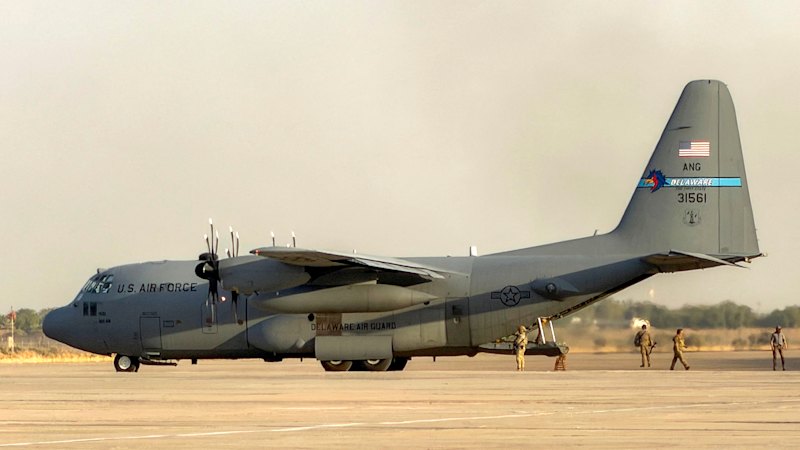
History rarely ends with a sudden explosion. More often, it ends with a closing padlock, the signature on a crumpled manifest, and the quiet click of a ramp folding up against the belly of a C-17 Globemaster. The formal end of the American military presence in Iraq is not just a dateline on a wire service report. It is the final punctuation mark on a twenty-year sentence written in sand, blood, and billions of dollars of national ambition.
To understand what just ended, you have to step back into the blinding heat of March 2003.
Imagine standing on the berm at the Kuwaiti border. The air tastes like copper and fine flour. Above you, the sky is bruised purple-gray from oil fires. Then come the columns—armor stretching past the horizon, an army built for a mechanized war of annihilation, convinced that tearing down a regime would automatically build a democracy in its ashes.
We thought we were writing the first chapter of a new Middle East. Instead, we were stepping into a labyrinth.
The war changed its skin half a dozen times. First came the conventional collapse, swift and intoxicating. Then came the insurgency—the improvised explosive devices buried under dead dogs and highway medians, the sniper fire from minarets, the sectarian civil war that turned neighborhoods like Dora and Amiriya into jagged lines of concrete blast walls and grief.
By 2007, the troop surge brought a different kind of war. It was fought in dusty coffee shops and dusty tribal councils, an attempt to buy time with cash and counterinsurgency doctrine. Entire generations of American service members grew up, deployed, came home, divorced, remarried, and deployed again. For them, Iraq was not a foreign country on a map; it was an eternal climate, a smell of burning diesel and dust, a permanent hum of generators that only stopped when mortar rounds hit the compound.
And then came the drawdown of 2011, hailed by Washington as a mission accomplished, only to watch the vacuum curdle into something far darker. When the black flags of ISIS unfurled across Mosul and swept down toward the outskirts of Baghdad in 2014, the American military was forced to return not as occupiers, but as reluctant architects of a rescue mission.
That was the third act. An advisory role. A shift from kicking down doors to whispering coordinates into the headsets of Iraqi pilots. It was quieter, less televised, but no less lethal for the men and women stationed at Al-Asad or Erbil.
And now, the loop closes.
The formal combat mission dissolved years ago, but the logistical umbilical cord remained—until this final turn of the key. The bases have been handed over. The massive concrete T-walls, known as blast walls, are now part of the Iraqi landscape, serving as foundations for market stalls or leaning drunkenly against ancient ditches.
What remains in the wake of this departure?
To answer that, you have to talk to the people who stayed behind the wire. Not the generals in the Green Zone or the politicians in Washington scoring points on cable news, but the local contractors who cleaned the mess halls, the interpreters who memorized English from bootleg action movies and then spent years hiding their ID cards from neighborhood militias, the Iraqi soldiers who watched American mentors leave and wondered if their logistics chains would hold when the next crisis broke.
War leaves a residue that soap cannot wash off. In Iraq, it is written in the shattered infrastructure of cities like Fallujah and Ramadi, cities that were rebuilt only to face the silent, grinding erosion of corruption, water scarcity, and political exhaustion. The official American footprint is gone, but the ghost of the intervention hovers over every parliamentary session in Baghdad, every protest in Tahrir Square, and every drone strike humming in the northern skies against remnants of extremism.
Critics will call it a retreat. Supporters will call it a transition to normal diplomatic partnership. Both miss the human truth. Empires do not leave vacuums; they leave ecosystems that must learn to breathe on their own.
Consider the young Iraqi infantryman standing guard at a checkpoint outside the international zone today. He was four years old when the first tanks rolled into Baghdad. He does not remember Saddam Hussein, and his primary memory of Americans is not of storming infantrymen, but of advisors sitting in air-conditioned trailers looking at glowing tactical displays. His world is fraught with Iranian influence, domestic factionalism, and the fragile hope that his children might grow up without hearing the concussive thud of indirect fire shaking the windowpanes.
He is alone now, in the way sovereign nations are supposed to be alone—navigating the turbulent waters of the twenty-first century without a foreign hand on the tiller.
In Washington, the departure is framed as a pivot. The Pentagon looks toward the South China Sea, toward cyber warfare and near-peer competition, eager to wash the sand of the Levant from its boots and prepare for the next great-power clash. The Middle East has become yesterday's headline, a chronic ache rather than an acute trauma.
Yet history has a way of refusing our schedules.
The C-17s have lifted off for the last time from the main hubs. The manifest is signed. The last commander has saluted the flag and boarded the aircraft. Down below, on the tarmac of Victory Base Complex and the dusty stretches of Anbar, the desert reclaims its territory. The wind picks up the fine silt, blowing it across the empty pads where helicopters idled for a generation.
The footprints are gone. The story, however, is still being written by those who cannot leave.