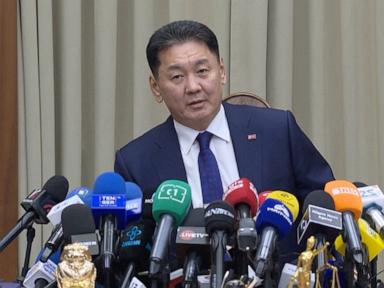
Electoral mandates for systemic change in parliamentary democracies rarely fail from a lack of voter intent; they fail at the intersection of coalition arithmetic and institutional inertia. When evaluating whether former Israel Defense Forces (IDF) Chief of Staff Gadi Eisenkot can translate a public appetite for political transformation into durable governance, standard commentary defaults to personality traits and poll numbers. That approach misses the structural reality. Delivering change inside the Israeli political system requires solving a multi-variable optimization problem constrained by Knesset fragmentation, civil-military friction, and competing ideological veto points.
The Structural Deficit in Israeli Coalition Politics
To understand the execution risk facing any reformist figure in Jerusalem, one must first map the institutional environment. Israel operates under a closed-list proportional representation system with a low electoral threshold. Unlike majoritarian systems that manufacture artificial legislative majorities, proportional representation mirrors societal cleavages directly inside the legislature.
This creates a persistent governance bottleneck. No single party has ever won an outright majority of the 120 Knesset seats. Every governing coalition is an exercise in transaction-cost economics, where smaller, single-issue, or sector-based parties extract disproportionate policy concessions in exchange for the marginal seats required to reach the 61-seat threshold.
Voter demand for "change" in this environment almost always aggregates mutually incompatible preferences. One segment of the electorate defines change as judicial and institutional reform, another defines it as reversing those exact policies to protect democratic checks and balances, and a third defines it purely through security doctrine and economic cost-of-living relief. When a leader like Eisenkot steps into the role of a unifying change agent, he inherits a classic principal-agent problem: the principals (voters) hold contradictory definitions of success, while the agent (the political leader) must govern through coalition partners who actively profit from maintaining the status quo.
Deconstructing Eisenkot’s Strategic Capital
Eisenkot’s political viability rests on three distinct forms of institutional capital, each carrying an equal and opposite operational liability.
1. The Credibility of Institutional Restraint
During his tenure as IDF Chief of Staff from 2015 to 2019, Eisenkot established a reputation for operational pragmatism and adherence to statutory norms. His public defense of military rules of engagement during high-profile domestic controversies signaled to centrist and center-right voters that he prioritizes institutional integrity over populist rhetoric. In a political climate characterized by high polarization, this background functions as a trust signal. Voters exhausted by permanent crisis politics view a technocratic, rules-based operator as a stabilizing force.
The liability attached to this asset is speed. Institutionalists optimize for process, legal defensibility, and consensus-building. However, voters demanding systemic change often expect rapid, disruptive action. Adherence to slow bureaucratic and legislative procedures can be framed by political opponents as indecision or weakness, eroding the exact mandate that brought the leader to power.
2. The "Campaign Between Wars" Doctrine Applied to Politics
Eisenkot is widely associated with formalizing the IDF’s "Campaign Between Wars" (Mabam) strategy—a continuous, low-signature effort to degrade adversary capabilities and prevent escalation without triggering full-scale conflict. Translated into political strategy, this manifests as incrementalism: building broad alliances, avoiding unnecessary ideological skirmishes, and systematically neutralizing veto players before attempting major legislative shifts.
While effective in military deterrence, incrementalism faces severe diminishing returns in Knesset politics. Israeli coalition governments have historically short half-lives. Delaying structural reforms to build broader consensus often means the coalition collapses from external shocks or internal defections before the primary agenda ever reaches a third reading in the plenum.
3. Cross-Bloc Appeal as a Double-Edged Sword
Eisenkot occupies a rare demographic and ideological sweet spot. His personal biography and security credentials insulate him from traditional right-wing attacks that label centrist leaders as weak on defense, while his commitment to state institutions appeals to the center-left. This cross-bloc positioning is essential for assembling a governing majority that does not rely entirely on polarizing fringe factions.
Yet cross-bloc appeal creates acute policy paralysis. To hold together an alliance spanning moderate right-wing nationalists and secular centrists, a leader must practice strategic ambiguity on core existential questions: the future of the West Bank, the framework for judicial-executive relations, and the integration of ultra-Orthodox (Haredi) citizens into military and economic life. Strategic ambiguity wins elections by allowing diverse voters to project their own desires onto the candidate, but it guarantees friction the moment concrete legislation must be drafted.
The Four Bottlenecks to Delivering Change
Even if Eisenkot secures the requisite Knesset seats to lead or anchor a governing coalition, his ability to deliver measurable change depends on clearing four structural bottlenecks.
The Haredi Conscription and Burden-Sharing Impasse
The question of universal military or national service is no longer merely a social equity issue; it is an acute macroeconomic and military manpower constraint. Decades of demographic growth among the Haredi population, combined with sustained operational demands on the IDF, have rendered the historical exemption model unsustainable.
Delivering change here requires breaking a decades-old political equilibrium. Haredi parties act as disciplined bloc voters whose primary existential goal is preserving community autonomy and funding. If Eisenkot demands strict, enforceable conscription quotas with financial sanctions for non-compliance, he locks Haredi parties out of his coalition. That forces him to build a majority exclusively from Zionist center, left, and secular-right parties—a razor-thin mathematical proposition that leaves the government vulnerable to collapse if even two or three backbenchers defect. Conversely, softening the conscription framework to secure Haredi coalition support instantly alienates his core secular-centrist base, destroying his credibility as a reformist leader.
Rebuilding the Civil-Military Boundary
Over recent years, the boundary between political decision-making and professional military execution has blurred. Politicization of military appointments, public clashes between cabinet ministers and the General Staff, and the bypass of established security protocols have degraded institutional trust.
Restoring this boundary requires re-establishing clear lines of accountability: the political echelon sets strategic objectives and defines acceptable risk, while the military echelon maintains autonomy over operational execution and force structure. As a former Chief of Staff, Eisenkot possesses the domain expertise to enforce this separation. However, doing so requires confronting cabinet members who use public friction with the security establishment to rally their partisan bases. Without strict coalition discipline—enforced through the credible threat of firing rogue ministers—institutional boundaries will continue to erode under media and social-media pressure.
Economic Reallocation Under Security Constraints
Delivering tangible improvements in the cost of living, housing supply, and public infrastructure requires substantial fiscal reallocation. Yet Israel faces elevated defense expenditures driven by multi-front security threats, force expansion, and munition replenishment.
In public finance, this is a zero-sum allocation problem. Funding both expanded defense commitments and domestic economic relief requires one of three politically costly mechanisms: raising taxes, increasing the national deficit (which risks credit downgrades and higher borrowing costs), or slashing coalition discretionary funds directed toward sectoral interests. A change-oriented administration must eliminate unproductive transfer payments that disincentivize labor market participation—specifically subsidies that support non-working populations—and redirect capital toward productivity-enhancing infrastructure and education. Executing this fiscal pivot requires overriding entrenched ministerial bureaucracies and interest groups that treat state budgets as patronage networks.
Constitutional Guardrails and Electoral Reform
Without modifying the underlying rules of the game, any policy victory achieved by a reformist government remains temporary, easily reversed by the next 61-seat coalition. True systemic change requires establishing constitutional guardrails—such as a formal Basic Law on Legislation that defines the relationship between the Knesset and the Supreme Court, sets supermajority requirements for altering fundamental laws, and raises the electoral threshold to reduce party fragmentation.
The paradox of electoral reform is that sitting Knesset members must vote to reduce their own future leverage. Smaller parties will naturally block any threshold increase that threatens their survival, while opposition factions will resist codifying constitutional rules if they believe the framework locks in their ideological rivals' advantages. Overcoming this requires leveraging public pressure and tying constitutional stabilization to broader national recovery narratives, a maneuver that demands immense political capital early in a government's term.
Evaluating the Execution Timeline
Political capital is a depreciating asset. In parliamentary systems, a new government’s leverage peaks in its first 100 to 180 days, immediately following the election mandate and before external crises or internal coalition fatigue set in.
If Eisenkot attempts to sequence his agenda sequentially—handling security stabilization first, economic adjustments second, and structural governance reforms third—he risks running out of political runway before reaching the foundational issues. Security crises in the Middle East are non-linear; an escalation on the northern border or a sudden diplomatic rupture can consume 100 percent of a Prime Minister's bandwidth for months, freezing domestic legislative agendas indefinitely.
Delivering change under these conditions requires parallel execution. Structural reforms—particularly regarding burden-sharing, ministerial streamlining, and fiscal reallocation—must be embedded directly into the binding coalition agreements prior to swearing in the government. Once ministers are installed in their respective offices, their incentives shift from collective coalition success to departmental survival and partisan positioning.
The Strategic Play for Durable Governance
Voters can register a desire for change at the ballot box, but they cannot engineer the parliamentary mechanics required to sustain it. Whether Gadi Eisenkot can deliver depends entirely on his willingness to trade broad, fragile consensus for narrow, disciplined execution.
To convert his institutional credibility into lasting structural reform, the optimal strategic play is to reject the pursuit of a bloated, ideological "unity" coalition that paralyzes decision-making through internal vetoes. Instead, the strategy must center on forming a lean, contractually bound coalition anchored by secular-centrist and pragmatic-right factions, locking in three non-negotiable structural bills—universal service enforcement, the codification of a Basic Law on Legislation, and the elimination of sectoral coalition funds—within the first 90 days of governance, while explicitly accepting the risk of early elections if coalition partners attempt to dilute those core terms.