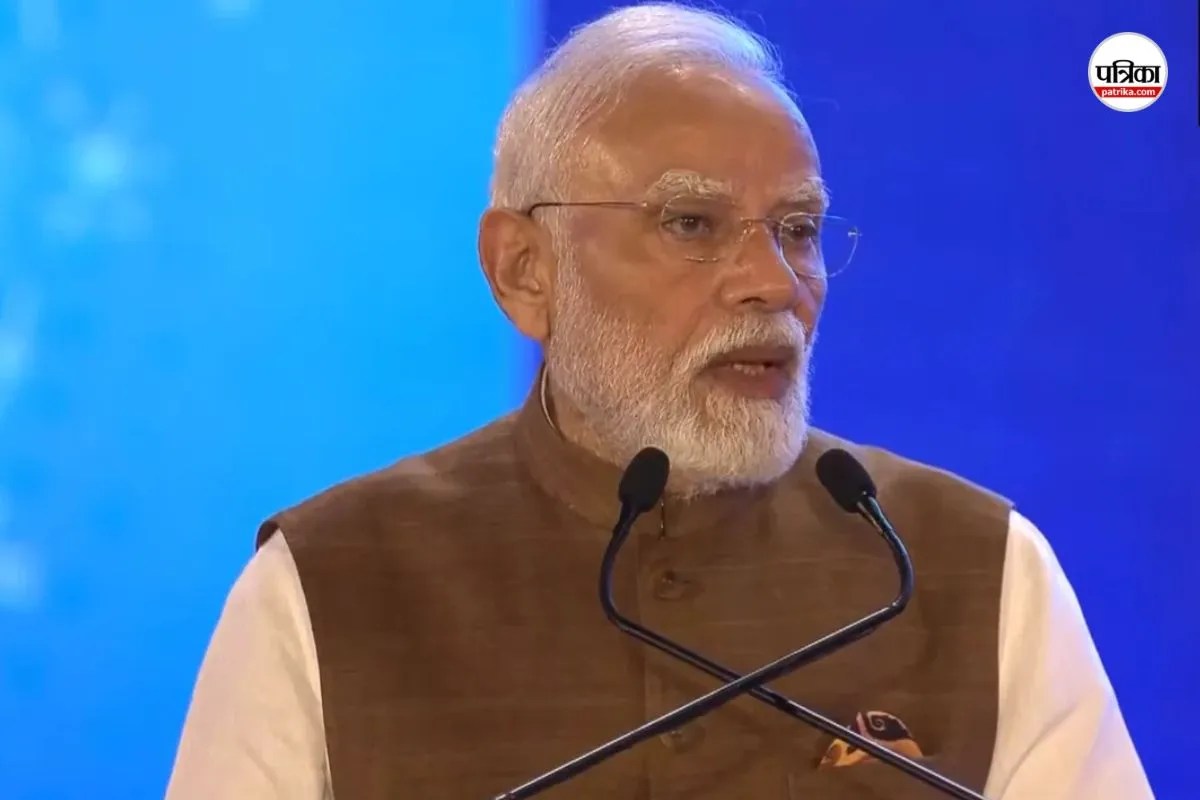
Two years without a face-to-face Quad leaders' summit had skeptics writing the group's obituary. They were wrong. When Prime Minister Narendra Modi, U.S. President Donald Trump, Japanese Prime Minister Sanae Takaichi, and Australian Prime Minister Anthony Albanese walked onto the same stage in Manila on November 17, 2026, they didn't just revive a diplomatic photo op. They planted their flag right on China's maritime doorstep.
Most surface-level news reports treat PM Modi's two-day trip to the Philippines as just another stop on the annual ASEAN calendar. Look closer at the geography, the timing, and the specific agreements signed behind closed doors, and a sharper picture emerges. Holding the first leader-level Quad meeting since September 2024 in Wilmington, Delaware—and doing it in Manila rather than a Quad member capital—sends a message Beijing can't ignore. For a deeper dive into similar topics, we recommend: this related article.
Why Manila Changes the Strategic Math
Location isn't accidental in Indo-Pacific diplomacy. For years, the Quad held its summit-level gatherings safely inside member territories—Washington, Tokyo, Hiroshima, and Wilmington. Moving the table to the Philippines, current chair of ASEAN and a nation locked in recurring maritime standoffs with China in the South China Sea, shifts the diplomatic center of gravity.
Beijing has long dismissed the Quadrilateral Security Dialogue as an "Asian NATO" designed to contain China's rise. Every time the four democracies meet, Chinese state media insists the grouping is sowing division in Southeast Asia. By convening on the sidelines of the 49th ASEAN Summit and the 21st East Asia Summit, Modi, Trump, Takaichi, and Albanese flipped that narrative on its head. They didn't ask Southeast Asian nations to pick sides. They showed up in ASEAN's own backyard to back regional rules. For additional information on the matter, detailed analysis can be read at Associated Press.
Philippine President Ferdinand Marcos Jr. set the tone during the opening session of the 49th ASEAN Summit. He called directly for stronger maritime cooperation and a binding Code of Conduct in the South China Sea anchored in the 1982 United Nations Convention on the Law of the Sea (UNCLOS). When the four Quad leaders echoed that exact legal baseline hours later, the alignment was unmistakable.
What Actually Happened Inside the Manila Quad Meeting
If you've followed the Quad since Trump first revived the dormant 2007 grouping back in 2017, you know its biggest vulnerability has always been the gap between grand summit communiqués and real-world execution. Manila produced concrete operational shifts rather than vague pledges.
1. Real-Time Maritime Eyes Across the Indo-Pacific
The headline security outcome from the White House Quad Joint Press Release is the new Indo-Pacific Maritime Surveillance Collaboration. It's built to plug intelligence blind spots across vast stretches of ocean where "gray-zone" fleets operate with their transponders switched off.
Even more telling is what happens next year. For the first time in a formal Quad context, maritime patrol aircraft from all four nations—specifically P-8 Poseidon and P-3C Orion surveillance planes—will participate together in a coordinated maritime exercise in 2027. That's a major step up from bilateral drills. You don't integrate long-range submarine-hunting and maritime patrol aircraft across four militaries unless you intend to share live operational pictures of contested waters.
2. Breaking China's Chokehold on Critical Minerals
Talk to anyone working in clean energy, defense manufacturing, or semiconductor supply chains, and they'll tell you the same thing. Refining capacity for lithium, cobalt, gallium, and rare earth elements remains heavily concentrated in China.
Building on the Critical Minerals Initiative Framework drafted by Quad foreign ministers in New Delhi earlier in May 2026, the leaders in Manila targeted "economic coercion" and arbitrary export restrictions. Nobody needed to name China in the text. Everyone in the room knew which country has weaponized export controls on critical minerals and semiconductor inputs over the past two years. The four nations are moving to pool financing and off-take agreements so miners and processors outside China don't get crushed by state-subsidized price dumping.
3. Undersea Cables and Trusted AI Infrastructure
Roughly 95% of intercontinental internet traffic travels through fiber-optic cables resting on the ocean floor. Who builds, repairs, and monitors those cables matters enormously.
In Manila, Australia expanded its commitment to the Quad Partnership for Cable Connectivity and Resilience to include undersea electricity cables alongside telecommunications lines, while welcoming upcoming cable builds across the Indian Ocean. Alongside physical infrastructure, the four leaders backed the Super Intelligence Accelerator—an initiative aimed at expanding access to trusted artificial intelligence systems and setting shared technical standards before authoritarian governance models lock in across developing markets.
The Modi and Trump Dynamic Nobody Expected
Let's be honest about the elephant in the room. Heading into November 2026, plenty of foreign policy analysts in New Delhi and Washington worried the Quad was losing steam. India was supposed to host the leaders' summit in 2025, only for scheduling and political headwinds to push the gathering off the calendar. Between U.S. tariff disputes, Washington's attention on conflicts in Europe and West Asia, and Trump's transactional approach to alliances, doubts ran deep.
Yet look at the groundwork laid behind the scenes. U.S. Secretary of State Marco Rubio convened five separate Quad foreign ministers' meetings over two years—including three in the six months leading up to Manila. When Trump and Modi finally sat across from each other in the Philippines, Trump publicly praised Modi as a "tough man" while signaling renewed White House investment in the four-nation format.
For India, this balance is everything. New Delhi refuses to sign mutual defense treaties or outsource its foreign policy to Washington. India still sits at the table with Beijing and Moscow in BRICS and the Shanghai Cooperation Organisation. At the same time, Chinese infrastructure pushes in the Indian Ocean and friction along the Himalayan frontier mean India needs reliable maritime partners. The Quad gives Modi strategic leverage without forcing India into a rigid military bloc.
India's Bigger Play With ASEAN and the Philippines
The Quad meeting wasn't even the whole story of PM Modi's Manila itinerary. Attending his 13th ASEAN-India Summit since taking office in 2014, Modi anchored India's presence during what both sides have designated as the 2026 ASEAN-India Year of Maritime Cooperation.
As Ministry of External Affairs Secretary (East) Rudrendra Tandon pointed out ahead of the trip, India's status as a major Indian Ocean nation sitting directly adjacent to Southeast Asia makes collective maritime stability a core national interest rather than a distant diplomatic hobby. With 2027 marking 35 years of ASEAN-India dialogue relations and five years of their Comprehensive Strategic Partnership, New Delhi is backing up speeches with tangible capacity building—funding development projects in Cambodia, Laos, Myanmar, and Timor-Leste, while deepening defense and BrahMos missile ties directly with Manila.
What Most Commentators Miss About Beijing's Reaction
It's tempting to frame the Manila summit as a simple victory lap against China. That would be a mistake.
Yes, Beijing faces heightened diplomatic pressure when the leaders of the world's largest economy, the most populous democracy, and two major Pacific maritime powers coordinate surveillance and supply chains on China's doorstep. China's Foreign Ministry habitually attacks such gatherings as "exclusive cliques" fueled by a Cold War mentality.
Still, there are real limits to how far the Quad can push before Southeast Asian partners flinch. Countries like Indonesia, Malaysia, and Vietnam depend heavily on trade with China even when they resent Beijing's maritime assertions. If the Quad looks too much like an armed coalition spoiling for a fight, ASEAN states will pull back. Notice also that the Manila joint statement didn't announce a specific date or host city for the 2027 Quad Leaders' Summit—a quiet reminder that keeping four democratic leaders aligned across election cycles and domestic political pressures requires constant maintenance.
How to Track What Happens Next
Don't judge the Manila summit by the speeches made in November 2026. Judge it by three concrete milestones over the next twelve months:
- Watch the 2027 P-8 and P-3C Maritime Exercise: Track whether all four navies and air forces follow through on their first joint Quad-context maritime patrol deployment, and whether patrol routes extend near the South China Sea approaches.
- Follow the Inaugural Quad Business Leaders' Forum: Scheduled to launch in early 2027, this forum will reveal whether private capital actually flows into non-Chinese critical mineral processing and Indian Ocean undersea cables, or if projects stall in bureaucracy.
- Monitor India's Host Announcement: Keep an eye on official updates from India's Ministry of External Affairs for confirmation of when New Delhi will finally host the delayed leaders' summit on Indian soil.
If those three pieces move forward on schedule, Beijing won't just be worried about a single meeting in Manila—it will be facing a permanent, functioning counterweight across the entire Indo-Pacific.