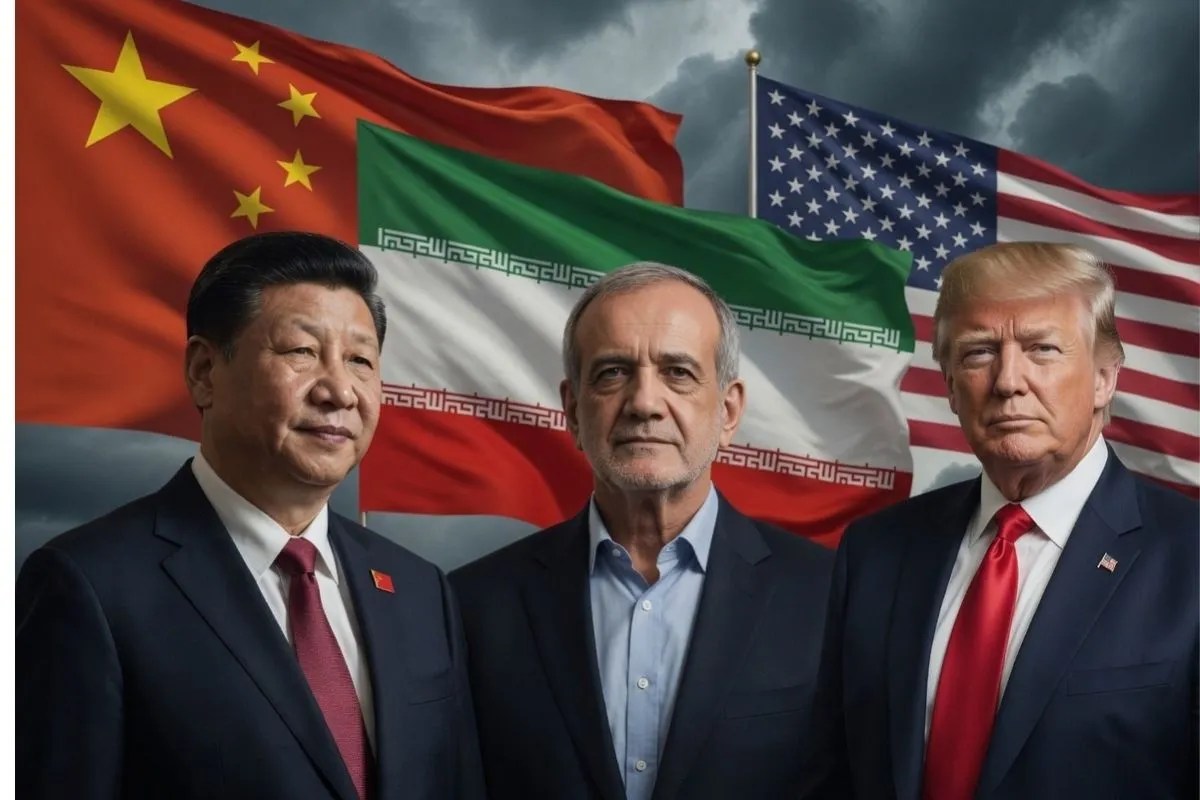
The two-week ceasefire between the United States, Israel, and Iran is not a peace treaty. It is a debt-collection pause. After six weeks of "Operation Epic Fury" saw global oil prices scream past $100 and the U.S. federal debt tick toward $40 trillion, the combatants realized they were fighting a war that none of them could afford to win, let alone finish. On April 8, 2026, the missiles stopped flying over Tehran, but the fundamental friction that ignited this fire remains entirely untouched.
Washington and Jerusalem are calling this a "capital V" victory. They point to the decapitation of Iranian leadership—including the death of Supreme Leader Ali Khamenei on the first day of the campaign—and the mangled remains of nuclear enrichment sites. Tehran, meanwhile, claims it forced a "surrender" from the West by strangling the Strait of Hormuz and proving that even a battered Islamic Revolutionary Guard Corps (IRGC) can still paralyze the global economy. This is the central lie of the current truce: both sides are pretending they have the upper hand when, in reality, they are both gasping for air.
The Economic Shackle on American Power
The United States entered this conflict with a swagger that vanished the moment the Strait of Hormuz closed. President Trump’s administration initially bet on a swift, high-tech air campaign that would trigger a domestic uprising in Iran and force a total capitulation. They miscalculated. Instead of a quick collapse, the war morphed into a grueling attrition of interceptors.
The math of modern warfare is brutal. Every time Iran fired a swarm of $20,000 drones and mid-range ballistic missiles at U.S. bases or Israeli cities, the defending forces spent millions on interceptors. When you are burning $1 billion a day in operational costs while your domestic economy is reeling from $90-per-barrel oil, the clock runs out fast. The ceasefire wasn't born of diplomatic brilliance; it was born of a balance sheet that was bleeding out.
The "10-point proposal" brokered by Pakistan is a desperate attempt to reset the status quo. It asks the U.S. to lift sanctions and accept Iranian uranium enrichment for "peaceful purposes," while Iran is expected to reopen the world's most vital energy artery. It is a trade of geopolitical security for economic survival.
The Lebanon Loophole
While the skies over Tehran are quiet, southern Lebanon is still burning. Prime Minister Benjamin Netanyahu has been explicit: the ceasefire does not apply to Hezbollah. This is a fatal flaw in the agreement.
By excluding the Lebanon front, the deal allows a proxy war to continue that could drag the primary actors back into full-scale conflict within hours. Israel’s objective remains the total neutralization of Hezbollah’s missile threat, a task that has displaced a million Lebanese and killed over 1,500 people. As long as Israeli jets are striking Tyre and Hezbollah is retaliating, the IRGC has every reason to keep its finger on the trigger in the Persian Gulf.
Iran’s military leadership has already signaled that "aggression toward Lebanon is aggression toward Iran." If Israel pushes further into Lebanese territory, the two-week window for a "definitive agreement" will likely shatter before the first week is up.
The Strait of Hormuz Toll Booth
The most galling part of the Pakistani proposal is the "formalization" of Iran’s control over the Strait of Hormuz. Tehran isn't just asking to reopen the waterway; they are proposing a system where they—along with Oman—charge transit fees to every ship that passes.
This would turn the world’s most critical maritime chokepoint into a sovereign toll road for a regime the U.S. just spent six weeks trying to dismantle. It is an admission of failure. If the U.S. accepts this, it concedes that it can no longer guarantee the "freedom of navigation" that has been a cornerstone of American naval doctrine since World War II.
Infrastructure in Ruins
Even if the shooting stops for good, the damage to regional energy infrastructure is catastrophic.
- Qatar’s gas fields: Iranian strikes have inflicted damage that engineers estimate will take three to five years to repair.
- Iranian refineries: Operation Epic Fury successfully degraded Iran’s ability to process fuel, meaning the country is now more dependent on imports than ever.
- Global Supply Chains: The sudden disappearance of Middle Eastern oil and fertilizer has already triggered shortages in Asia and price spikes in Europe that will take months to normalize.
The Nuclear Ghost
We are told the nuclear threat has been "postponed." This is a sanitized way of saying we don't actually know what's left. While joint U.S.-Israeli strikes hit buried bunkers and enrichment halls, the "dig up and remove" operation Trump mentioned is a logistical nightmare.
The material is still there. The knowledge is still there. And now, the Iranian regime has the ultimate grievance to justify a final, secret sprint toward a functional weapon. A two-week pause provides a breather for diplomats, but it also provides a window for the IRGC to reorganize its remaining assets and hide what’s left of its nuclear program even deeper.
This ceasefire is a tactical retreat dressed up as a peace process. The U.S. is overextended, Israel is running low on interceptors, and Iran is broke but defiant. We haven't found a solution; we've just run out of ammunition.
The war isn't over. The bill is just coming due.