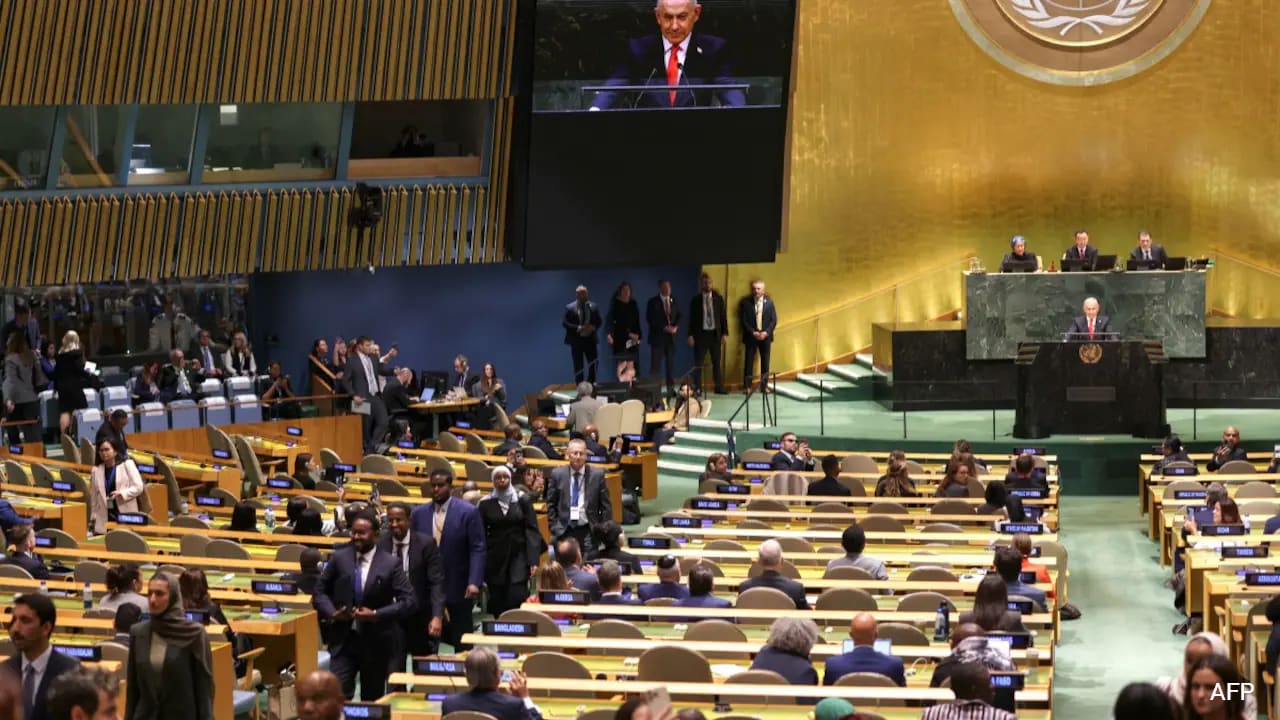
Every single headline coming out of New York and Geneva right now follows the exact same pathetic script. A grim-faced diplomat steps up to a microphone, laments another civilian casualty count, and announces that the United Nations is holding yet another urgent session to debate how to end the war in Ukraine.
Then the press dutifully writes about the diplomatic momentum.
It is all theater. High-stakes, blood-soaked theater designed to comfort desk-bound bureaucrats who cannot bear the reality of structural anarchy.
The lazy consensus in mainstream coverage suggests that peace is primarily a communication failure. The underlying assumption is that if we just find the right combination of ceasefire resolutions, humanitarian corridors, and neutral-party mediation, both sides will suddenly recognize the mutual benefit of laying down their arms. This is not just naive. It is a dangerous misunderstanding of how sovereign states operate under extreme existential threat.
Wars do not end because people hold debates in air-conditioned halls. Wars end when one side loses the capacity or the will to fight, or when the cost of continuation completely outweighs any conceivable objective. Everything else is diplomatic window dressing meant to soothe domestic constituencies thousands of miles away from the front lines.
Let us look at the mechanics of the current diplomatic push. The United Nations Security Council remains structurally paralyzed by the veto power built into its foundation back in 1945. Expecting that same body to engineer a breakthrough in a conflict involving a permanent member is like asking a burning house to provide its own sprinkler system. Yet, cable news pundits analyze every procedural vote as though it holds the secret key to lasting stability.
I have watched international relations analysts spin themselves into knots trying to map out peace formulas that ignore the baseline incentives of the combatants. When eight civilians die in a targeted residential strike, the tragedy is real, visceral, and horrifying. But treating that strike as a diplomatic bargaining chip—something to be hashed out in a General Assembly speech—misunderstands the operational logic of total war. Strikes on infrastructure and urban centers are calculated escalations. They are designed to signal resolve to domestic audiences and break morale. They are not administrative errors that can be corrected with a strongly worded resolution.
If you want to understand why these peace talks keep failing, you have to stop listening to what diplomats say and start looking at what the accountants and logicians see.
Modern large-scale warfare is a brutal math problem. It runs on ordnance production lines, steel supply chains, demographic reserves, and foreign currency access. Until the inputs on both sides shift so dramatically that continuation equals national suicide, no amount of UN parliamentary maneuvering will shift an inch of frontline reality.
Imagine a scenario where every diplomatic summit is instantly canceled for the next six months. No press conferences. No joint communiques. No UN debates over how to end the war. What happens? Does the war instantly escalate into nuclear annihilation, or do both sides finally confront the grim baseline of their actual logistical limits without the comforting illusion that someone else is going to broker an exit strategy for them?
History suggests the latter. Peace is rarely negotiated by outsiders; it is forced upon combatants by exhaustion.
The real question people should be asking is not "How can the international community facilitate a ceasefire?" but rather "Why do we persist in pretending that multilateral institutions have any leverage over a belligerent state willing to absorb catastrophic economic and human costs?"
The answer is simple. Admitting impotence requires courage. It requires the diplomatic corps to acknowledge that their entire professional existence is sometimes completely irrelevant to the outcome on the ground. So they hold meetings instead. They draft resolutions that everyone knows will be ignored. They create the illusion of management.
We need to stop treating diplomatic chatter as a leading indicator of peace. It is a lagging indicator of desperation, and often, not even that.
Stop reading the tea leaves of UN communiques. Stop looking for the magic mediator who will whisper the secret password that unlocks the negotiation table. Look instead at the factories, the treasury reserves, and the casualty replacement rates. That is where the war will actually be decided.
When the shooting stops, it will not be because a committee voted for it. It will be because nobody has anything left to shoot with.