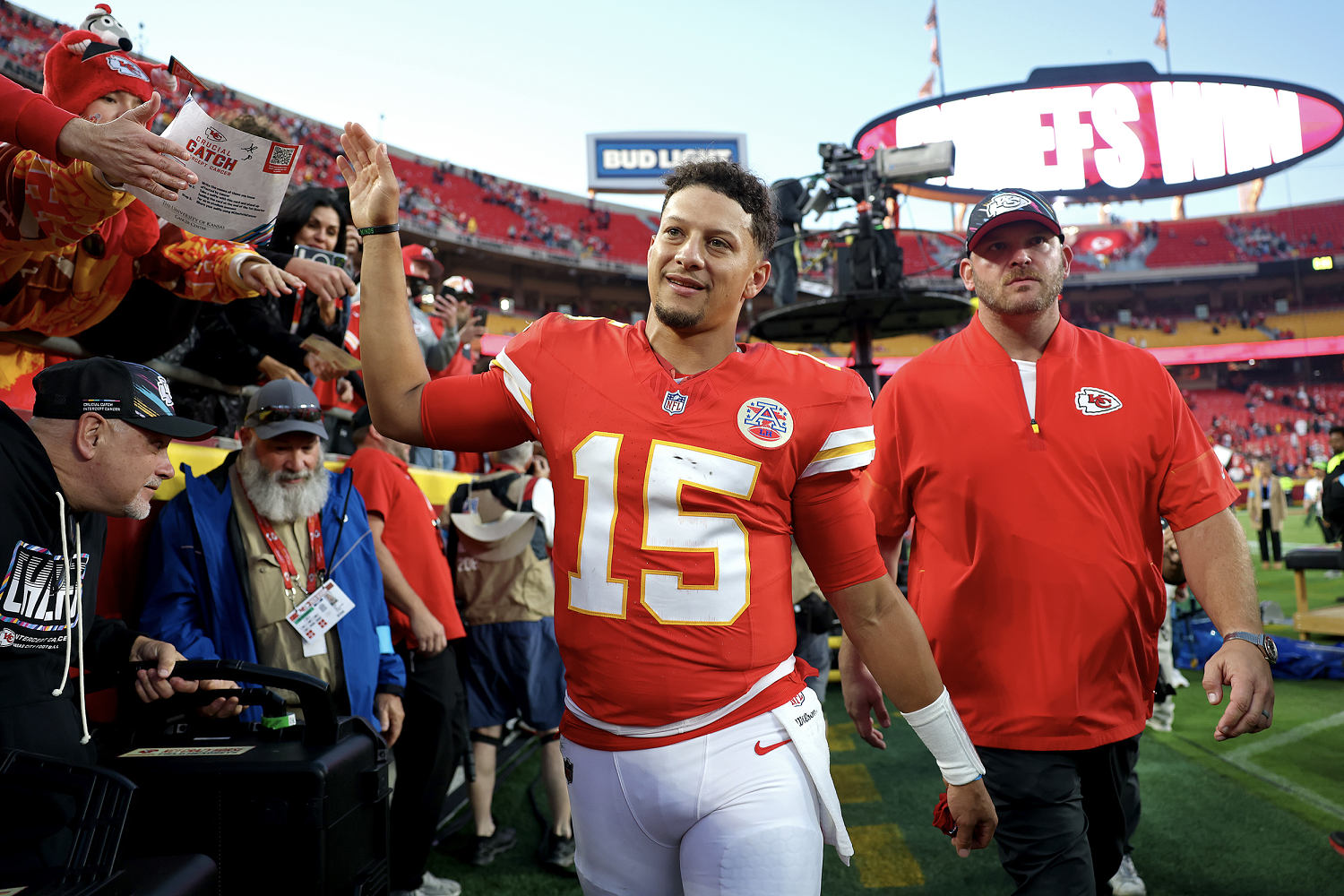
The air in Arrowhead Stadium does not merely carry sound; it hovers, thick and metallic, humming at a frequency that vibrates right through the soles of your sneakers.
October Sunday. Midday sun burning off the morning mist over the Missouri turf. You stand near the tunnel, listening to the collective intake of breath from seventy-something thousand people when the offense jogs onto the field. They are five and zero. The record sits on the ticker like a polished stone, clean and hard. Yet the whispers in the press box are not about the undefeated mark. They are about the machinery. About how the gears are finally catching, meshing with that terrifying, rhythmic precision that used to turn fourth quarters into slow-motion victory laps for everyone wearing red. If you enjoyed this post, you might want to check out: this related article.
For the past year, the story of this offense had been a struggle of inches. A stutter-step here. A mistimed slant there. Defenses figured out the antidote to deep magic: drop seven, squeeze the grass, make the wizard throw into a phone booth. And for a while, it worked. The points came in trickles instead of floods. The wins arrived, but they felt earned through sweat and defensive grit rather than that old, familiar air of inevitability.
Then September turned to October. For another angle on this story, see the latest update from Bleacher Report.
Consider what happens when a quarterback stops guessing and starts remembering. Patrick Mahomes does not just read a defense; he feels the tectonic plates shifting beneath the secondary. On a third-and-seven near midfield during the third week, the pocket collapsed like a folding lawn chair. Most mortals would eat the turf or throw it away. Instead, he drifted three yards backward, flicked his wrist under the arm of a rushing defensive tackle, and delivered a frozen rope forty yards down the hash marks.
It was not just a completion. It was a weather event.
That single throw signaled a deeper shift. The offense is no longer searching for its identity in the playbook. They have stripped away the clutter. The timing routes are sharper. The new wide receivers, once running ghost routes and missing the subtle non-verbal cues that only come from years of shared panic and triumph, are now finishing their cuts a fraction of a second before the ball arrives.
Football at this level is an exercise in geometry played at the speed of a car crash. When five men on the offensive line hold their ground against a coordinated blitz, time slows down just enough for genius to breathe. Watch the interior protection. Watch Creed Humphrey anchoring the middle like a granite piling in a rising river. Because the middle stays clean, Mahomes can hitch step. He can climb. He can survey the horizon.
And when he surveys, the ghosts of dynasties past wake up.
We tend to measure dominance in trophies, but dynasties are built on rhythm. They are built on the terrifying realization by the opponent that no lead is safe, no coverage is airtight, and no mistake goes unpunished. When this team is clicking at its absolute peak, the playbook expands until it covers every blade of grass. You cannot guard the perimeter while the tight end is sliding up the seam, and you certainly cannot ignore the running back leaking out of the backfield into acres of green turf.
Critics argued that the magic was fading. They pointed to the dropped passes, the penalties, the uncharacteristic frustration on the sidelines. They forgot a fundamental truth about competitive sports: excellence is not a straight line. It is a pendulum. You have to swing backward into the dirt before you can generate enough momentum to clear the wall.
Five and zero without playing your best football. That was the scarier reality for the rest of the league during the season's opening month. Now, they are starting to play their best football.
The stadium lights flicker on as the sun dips behind the upper deck, casting long, dramatic shadows across the grass. The crowd roars as another third-down conversion moves the chains. Up in the booth, statisticians click their keys, updating the yards per play, the explosive play rates, the red-zone efficiency numbers that mirror the golden years.
Down on the sideline, a coach does not smile. He simply watches the next play call come in. The machine is humming. The kingdom is waking up. And the rest of the league is running out of time to find an answer.