Diver perception of environmental impact operates under a systematic cognitive bias where self-reported behavioral metrics diverge significantly from empirical observation. When recreational scuba divers estimate their physical contact with fragile marine ecosystems, they consistently underreport incidents. This discrepancy is not merely a matter of poor memory or dishonesty. It stems from a structural failure in feedback loops, inadequate baseline awareness of buoyancy mechanics, and a cognitive disconnect between tactile sensation and structural damage. Resolving this friction requires shifting away from subjective self-assessments toward a systemic analysis of contact vectors, physiological limitations, and behavioral incentives within recreational diving.
The Cognitive Gap Between Perception and Reality
Self-reporting methodologies in environmental impact studies rely on the assumption that individuals possess accurate internal tracking of their physical interactions with surroundings. In the context of SCUBA diving, this assumption collapses.
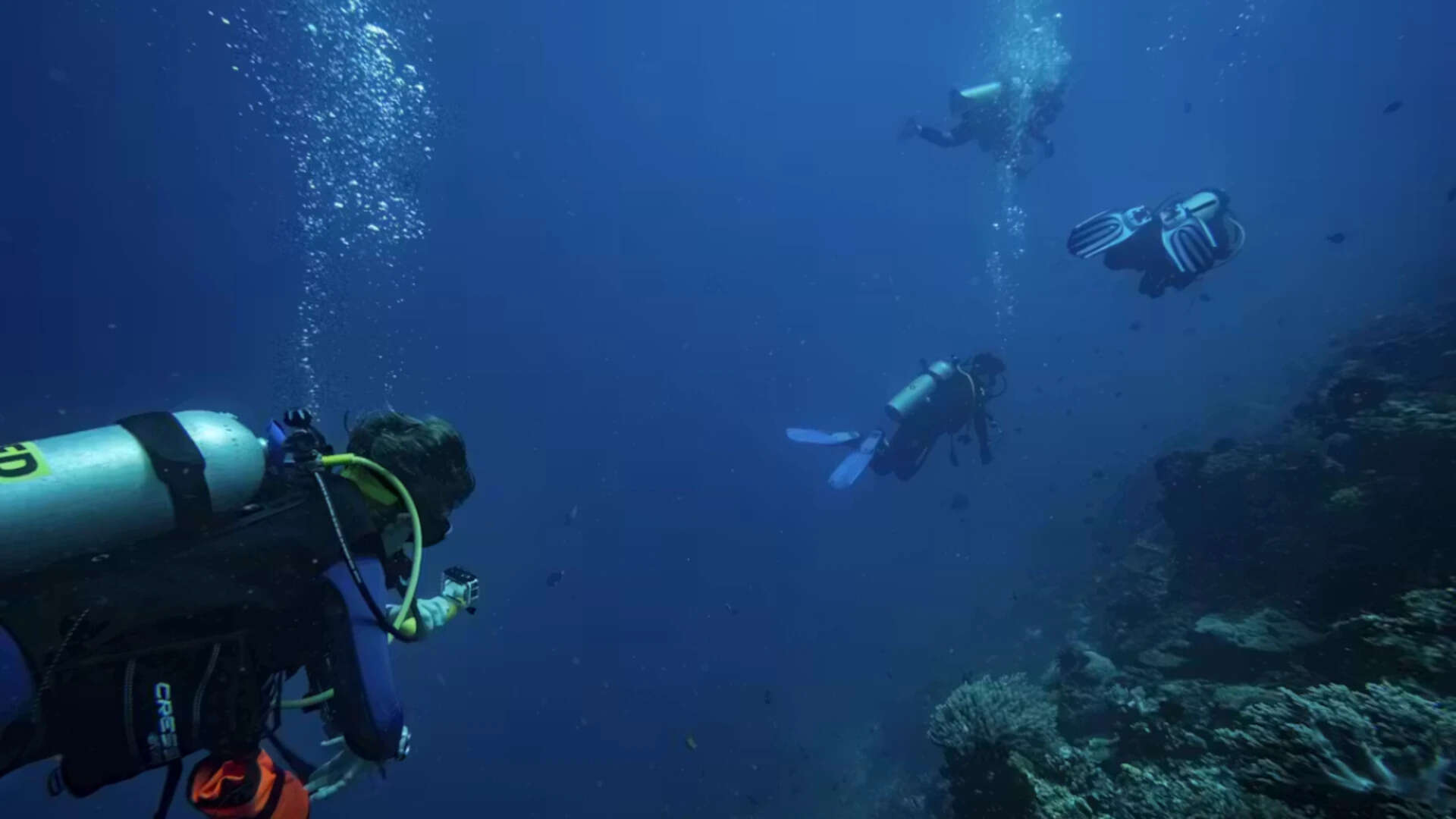
The underwater environment alters sensory processing. Neoprene exposure suits deaden tactile feedback on limbs and torsos. Neutral buoyancy creates a floating sensation where minor collisions with stony corals or delicate sponges often register below the threshold of conscious awareness. A diver brushes a fin tip against a gorgonian fan while focusing on a macro photography subject; the brain registers the photographic target as the primary stimulus, filtering out the low-amplitude tactile event of the fin strike.
Furthermore, psychological defense mechanisms protect recreational participants from cognitive dissonance. Divers view themselves as conservationists or nature enthusiasts. Acknowledging frequent physical damage to the ecosystem threatens this identity. Consequently, memory consolidation subtly erases or minimizes minor infractions, leaving the diver with an honest yet deeply inaccurate conviction of non-contact.
+-----------------------------------+     +-----------------------------------+
|      Sensory Deprivation          | --> |     Suppressed Tactile Feedback    |
| (Neoprene Suits, Weightlessness)  |     | (Fails to Register Minor Contact) |
+-----------------------------------+     +-----------------------------------+
                                                           |
                                                           v
+-----------------------------------+     +-----------------------------------+
|     Cognitive Dissonance Avoidance| <-- |      Flawed Self-Reporting        |
|  (Preserving Identity as Lover    |     |   ("I rarely touch the reefs")    |
|        of the Environment)        |     +-----------------------------------+
+-----------------------------------+
The Three Structural Vectors of Reef Contact
To measure and mitigate physical interactions objectively, contact events must be categorized by their mechanical drivers. Unintentional reef degradation typically stems from three distinct behavioral and physical vectors.
Buoyancy Oscillation
The primary vector of damage is uncontrolled vertical displacement caused by improper weighting or poor breath control. A diver who fails to maintain stable lung volume experiences constant micro-fluctuations in depth. As they sink or rise, corrective fin kicks or hand placements occur automatically.
In confined reef topographies, these corrective maneuvers frequently result in direct impact against substrate. The mechanism is reactionary: the diver attempts to arrest undesired movement by pushing off the nearest stable surface, which happens to be living coral architecture.
Equipment Drag and Appendage Extension
Recreational configurations frequently feature unsecured secondary components, including pressure gauges, alternate air sources, and camera lanyards. These items trail below or behind the diver. Because the diver's focal plane is oriented forward, trailing gear operates outside their visual field.
A tank sweeping past a coral head or a dangling console dragging across a brain coral exerts shear stress on calcified skeletons. The diver remains entirely unaware of the friction, attributing resistance to subtle water currents rather than mechanical entanglement.
Task Saturation and Attention Tunneling
Complex recreational tasks degrade situational awareness. When divers engage in underwater navigation, video recording, or marine species identification, cognitive load spikes. Working memory allocates resources to the primary task, starving the secondary monitoring systems responsible for spatial awareness and body position management.
Under task saturation, spatial margins shrink. A diver backing up to frame a wider shot drifts into a branching coral thicket. The absence of active monitoring transforms a routine observation into a destructive physical interaction.
Quantifying the Damage Function
The ecological cost of these unacknowledged contacts depends on the material properties of the substrate and the frequency of interaction. Stony corals, particularly branching species like Acropora, possess brittle skeletons with high tensile vulnerability. A single unweighted fin strike can shear off decades of vertical growth.
The damage function is non-linear. Repeated minor abrasions remove the protective living tissue layer, known as the coenenchyme, exposing the underlying calcium carbonate skeleton. This exposes the coral to algal overgrowth and bacterial pathogens, triggering localized tissue necrosis that spreads far beyond the initial point of contact.
+-----------------------------------------------------------------+
|                  Task Saturation Event Occurs                   |
+-----------------------------------------------------------------+
                                 |
                                 v
+-----------------------------------------------------------------+
|      Cognitive Resources Diverted to Primary Objective          |
|                 (e.g., Photography, Navigation)                 |
+-----------------------------------------------------------------+
                                 |
                                 v
+-----------------------------------------------------------------+
|         Spatial Awareness and Buoyancy Control Degrade          |
+-----------------------------------------------------------------+
                                 |
                                 v
+-----------------------------------------------------------------+
|    Unconscious Drift Into Substrate / Corrective Fin Strike     |
+-----------------------------------------------------------------+
                                 |
                                 v
+-----------------------------------------------------------------+
| Structural Shearing / Tissue Abrasion (Non-Linear Decay Begins) |
+-----------------------------------------------------------------+
When independent observers track diver behavior using underwater video recording or stationary sampling points, the frequency of contact events routinely exceeds self-reported estimates by an order of magnitude. Observers note that nearly all divers—regardless of certification level or stated experience—make physical contact with the reef during a standard profile, whereas the vast majority of those same divers report zero or near-zero contacts during post-dive debriefs.
The Failure of Current Mitigation Frameworks
Standard industry approaches to reducing reef impact rely heavily on declarative education. Pre-dive briefings universally feature admonitions to "look, but do not touch" and instructions to maintain neutral buoyancy.
These interventions fail because they treat environmental impact as an ethical failing rather than a technical and physiological optimization problem. Telling a diver not to touch the reef does not provide them with the missing sensorimotor feedback loop required to detect when they are already doing so.
Briefings also suffer from optimism bias. Instructors and operators downplay the frequency of contact to maintain a welcoming environment for paying customers. By framing reef damage as the fault of a careless minority rather than an inherent systemic risk of human presence in a weightless medium, the industry evades the need for structural redesign of dive practices.
Operational Redesign for Impact Minimization
Eliminating the divergence between perceived and actual reef contact requires moving from behavioral warnings to strict operational constraints and feedback mechanisms.
Environmental Proximity Thresholds
Dive operators must establish mandatory standoff distances that account for surge, current, and skill variance. Standardizing a minimum clearance buffer of two meters from benthic structures absorbs minor buoyancy errors without resulting in substrate contact.
Active Gear Streamlining
Equipment architecture must be standardized to eliminate trailing elements. Regulators, gauges, and auxiliary accessories require mandatory clip-off protocols (such as bolt snaps and elastic retention bands) to lock all gear flat against the body profile, restricting the physical envelope of the diver.
Objective External Auditing
Relying on diver self-assessment must be replaced by continuous peer-monitoring systems or third-party observer sampling. Dive guides should be trained to provide real-time underwater corrections based on spatial tracking rather than post-hoc discussions on the boat.
Implementing these operational parameters realigns the incentive structures of recreational diving. When contact is measured objectively rather than estimated subjectively, the true ecological cost of underwater tourism becomes transparent, forcing operators and participants to adapt their techniques to match physical reality.
Strategic Execution Protocol
- Audit current pre-dive briefing protocols to eliminate vague ethical appeals and replace them with precise spatial boundary rules.
- Mandate equipment configurations that eliminate all trailing lines and dangling consoles, reducing the physical sweep radius of every diver.
- Integrate third-party underwater observation audits into high-volume dive operations to establish baseline contact metrics and eliminate self-reporting bias.
- Enforce strict minimum clearance buffers based on local surge and current conditions, shifting accountability from reactive correction to proactive distance maintenance.