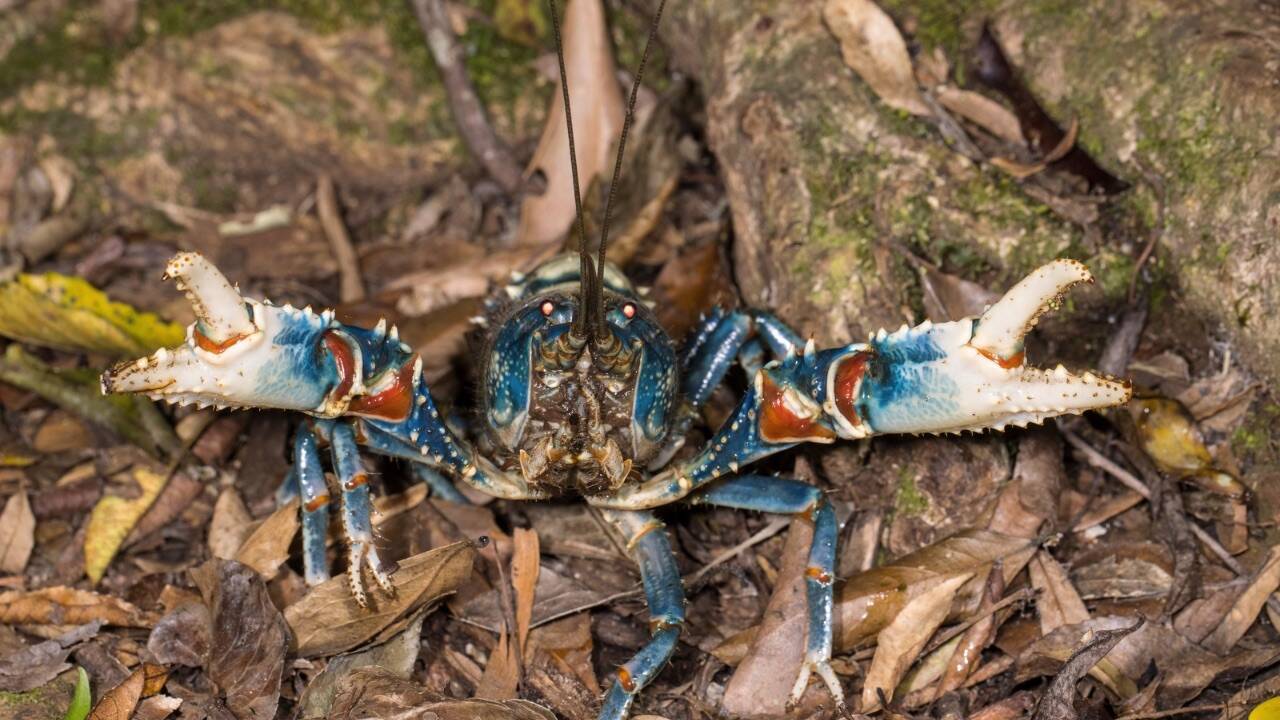
Eleven crayfish. That is the headline number currently making the rounds as a feel-good environmental triumph.
Biologists waded into a blackened creek in Victoria, scooped up 11 endangered alpine spiny crayfish (Euastacus woiwuru or its high-altitude relatives like the Alpine Spiny Crayfish, Euastacus crassus), and whisked them away to safety in captivity after bushfires tore through the surrounding catchment. The mainstream narrative is predictable. Cue the applause. Cue the heartwarming photos of wet buckets and relieved field researchers. Cue the lazy consensus that rushing into a burn scar with nets and aerated coolers equals saving a species. Also making news in related news: What Two Ancient Peruvian Graves Reveal About Medicine and Myth.
It does not. In fact, celebrating emergency wildlife evacuations as a conservation victory is the exact kind of short-sighted thinking that guarantees these species will disappear within fifty years.
I have spent enough time watching ecological budgets burn up in emergency triage to recognize conservation theater when I see it. When a fire sweeps through the Australian Alps, governments and institutions scramble for immediate, photogenic wins. Pulling eleven crustaceans out of a creek makes for an easy press release. Fixing the systemic land-management failures that turned a natural fire cycle into an ash-choked mudslide? That takes decades, political spine, and zero photo ops. Additional information regarding the matter are detailed by Reuters.
The Delayed Kill Nobody Talks About
If you want to understand why scooping eleven animals out of a creek misses the point entirely, you have to understand how bushfires actually kill aquatic species.
Flames do not boil alpine streams. Water has a massive specific heat capacity, and shaded mountain gullies often survive the initial thermal shock with water temperatures barely spiking. When the fire front passes, the crayfish at the bottom of the creek are frequently alive.
The real killer arrives weeks or months later, disguised as rain.
Without vegetation, tree roots, and leaf litter to hold the steep alpine soil together, the first heavy downpour turns the catchment into a conveyor belt of mud, ash, and charcoal. That slurry washes straight into the creek. This creates two lethal mechanisms that completely wipe out benthic invertebrates:
- Hypoxic crash: Ash and organic debris trigger massive microbial blooms that strip dissolved oxygen from the water column.
- Physical suffocation: Fine silt coats the gill filaments of crayfish and smothers the cobble-bed microhabitats where juveniles hide and feed.
Removing eleven individuals from that creek does nothing to stop the sediment plume. Worse, it creates a dangerous illusion of progress. While the public applauds the rescue of a handful of adults, the entire breeding habitat—the gravel beds, the undercut banks, the oxygenated riffles—is being buried under six inches of black sludge. You cannot save a freshwater species if you let its watershed turn into a concrete-hard layer of baked silt.
The Captive Breeding Trap
Let us look closely at what happens to those eleven crayfish once the cameras stop clicking.
Alpine spiny crayfish are not aquarium guppies. Species in the genus Euastacus are evolutionary anomalies built for cold, fast-flowing, hyper-oxygenated mountain streams. They grow at a glacial pace. Some species take up to ten years just to reach sexual maturity. They are fiercely territorial, cannibalistic under stress, and hypersensitive to water chemistry fluctuations.
Placing wild alpine crayfish into captive tanks triggers a cascade of biological problems that rarely make it into the celebratory news articles:
- Genetic bottlenecks: Eleven individuals represent a microscopic fraction of a population's genetic diversity. Even if all eleven survive and breed—a massive statistical gamble—their offspring will suffer from severe inbreeding depression, losing the exact adaptive traits needed to survive wild temperature swings and pathogens.
- Behavioral domestication: Crayfish raised in predator-free tanks with scheduled feedings lose their foraging instincts and territorial aggression. Releasing them back into a wild creek is often just an expensive way to feed local eels, trout, and platypuses.
- Pathogen risk: Captive facilities are notorious incubators for fungal infections and bacterial shell rot. Reintroducing captive-held stock into a stressed wild ecosystem risks introducing novel diseases to whatever wild survivors remained hidden in deep burrows.
The pioneers of Australian freshwater crayfish taxonomy, including researchers like Dr. Gary Morgan and later conservation ecologists studying Euastacus decline, have documented for decades that these animals are narrow-range endemics tied strictly to intact riparian canopies. They do not thrive in plastic tubs. They thrive under tree ferns and alpine ash.
Why We Keep Asking the Wrong Question
Whenever a disaster strikes an endangered population, public discourse immediately defaults to the same flawed question: How many individuals did we save?
That metric is useless.
In conservation biology, counting rescued individuals after an extreme event is like counting how many pieces of furniture you dragged out of a burning house while ignoring that the neighborhood has no fire hydrants. The real question—the one land managers avoid because the answer is expensive and politically toxic—is: Why was the catchment so vulnerable to post-fire sediment collapse in the first place?
Consider a scenario where the same budget spent on emergency extraction, tank infrastructure, specialized chiller units, and multi-year captive husbandry was redirected before the fire season even started.
Where would that money go?
It would go toward aggressive, merciless eradication of feral herbivores in the high country. Feral deer, horses, and pigs trample alpine bogs and compact stream banks long before a single spark hits the ground. A healthy sphagnum bog acts like a giant sponge, filtering water and stabilizing soil even after a severe fire. A bog trampled into mud by invasive hooves collapses instantly when it rains.
It would also go toward installing physical sediment traps and log-jam structures in headwater gullies immediately after a burn, before the first storm hits. You do not need to kidnap the crayfish if you keep the ash out of their gills.
The Uncomfortable Truth About Triage
To be clear, I am not arguing that biologists should sit on their hands while a species goes extinct. If a population is down to its final twenty individuals on the planet and a toxic ash flow is hours away, an emergency extraction is a last-ditch insurance policy. Sometimes, a genetic lifeboat is the only play left on the board.
And yes, post-fire rescues do yield valuable scientific data. Holding wild individuals allows researchers to study thermal tolerances, reproductive triggers, and baseline pathology that cannot be easily observed under rocks in freezing mountain streams.
The downside of rejecting emergency rescues outright is simple: if a freak weather event wipes out 100 percent of a wild creek, having zero individuals in captivity means permanent extinction. Nature does not offer second chances once the last breeding female dies.
But treating an emergency extraction as a primary conservation strategy—or worse, framing it as a success story—is intellectual malpractice. An evacuation is an admission of total systemic failure. It means every preventative measure—fire management, invasive species control, riparian buffer protection, and climate adaptation—has already collapsed.
Stop Applauding the Ambulance
If conservation agencies actually want to keep alpine spiny crayfish alive in Victoria, they need to stop optimizing for heroic rescue headlines and start doing the unglamorous, brutal work of watershed defense.
- Prioritize refugia engineering over captive extraction. Identify deep, spring-fed headwater pools that naturally resist ash accumulation, and physically reinforce them with riparian logs and sediment barriers within days of a fire—before the rain arrives.
- Eliminate invasive predators and soil destroyers. You cannot protect an endangered crayfish in a creek choked with introduced brown and rainbow trout—which relentlessly prey on juvenile crayfish—while feral deer destroy the surrounding bank stability.
- Tie emergency funding to habitat metrics, not animal counts. Stop measuring success by how many crayfish sit in chilled tanks. Measure success by dissolved oxygen levels, benthic silt depth, and juvenile recruitment rates in the wild stream twelve months post-fire.
Eleven crayfish in a bucket is not a victory. It is a symptom. Until we stop mistaking emergency life-support for ecosystem health, we will keep pulling tiny handfuls of survivors out of dead rivers and calling it progress.