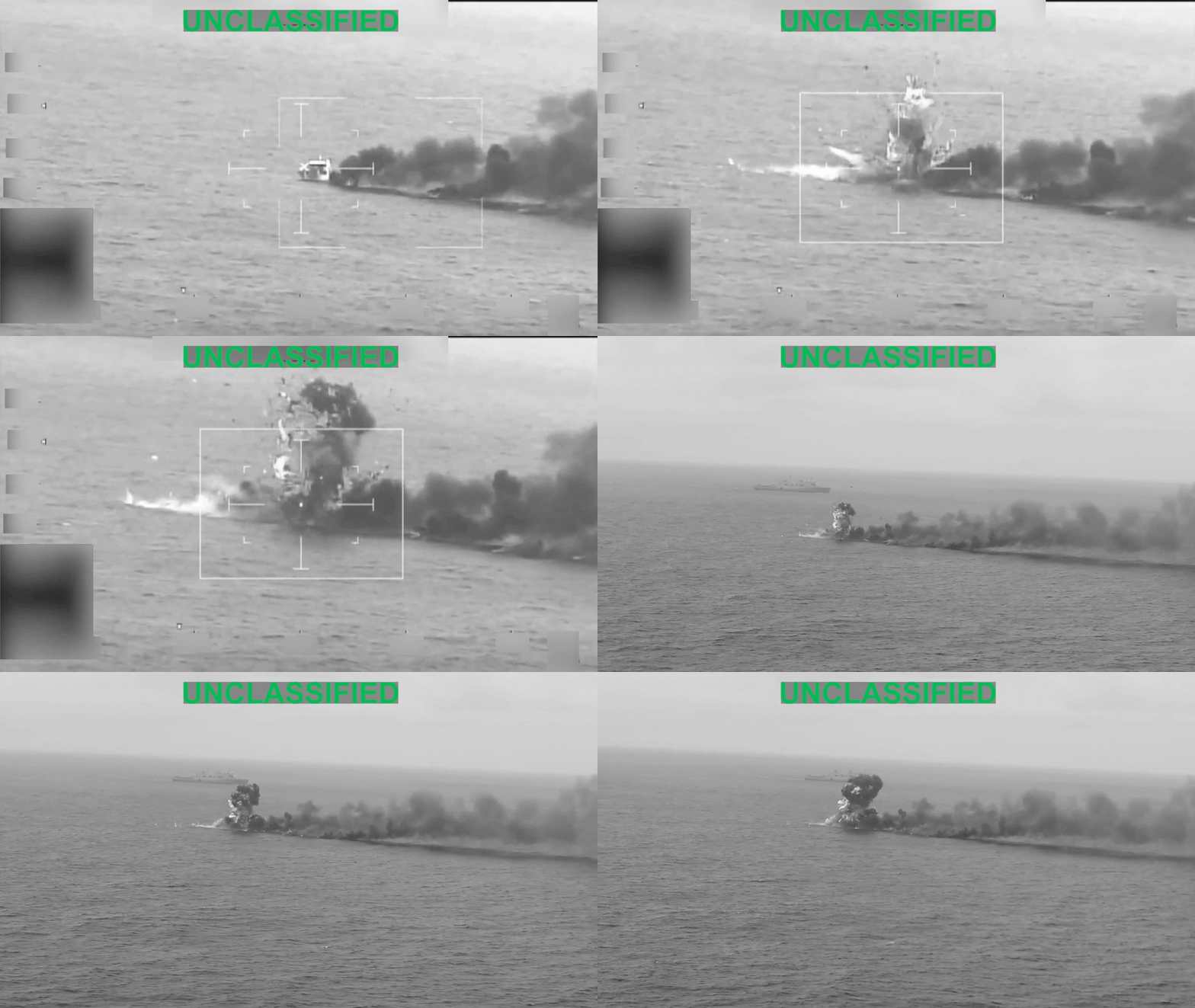
The Pacific approach vector does not feature neon signposts or customs checkpoints. It is an expanse of blue water several hundred miles off the Central American coast where commercial shipping lanes intersect with illicit maritime routes. When United States military forces struck a floating refueling station allegedly tied to transnational narcotics trafficking networks, the operation barely registered on mainstream nightly news broadcasts. It deserved far more attention. This was not a routine counter-narcotics seizure of fifty bales of compressed cocaine or a speedboat chase ending in a fiery wreck. It was a targeted assault on the high seas logistics architecture that keeps multibillion-dollar cartel operations humming.
Maritime drug interdiction has historically focused on the tactical end of the spear. Coast Guard cutters chase go-fast vessels, P-3 Orion surveillance planes track low-profile craft, and Navy warships deploy boarding teams to inspect suspicious freighters. Yet treating the drug trade as a fleet of isolated smugglers ignores the corporate reality of transnational crime syndicates. Cartels operate with the efficiency of multinational logistics firms. They require fuel management, spare parts supply chains, secure communications, and offshore transshipment hubs. Without bunkering capabilities in international waters, small boats cannot sustain the long-range voyages necessary to move product from South American production labs to North American and European distribution markets.
For decades, maritime criminal organizations relied on artisanal smuggling methods. Local fishermen hauled drums of gasoline on wooden skiffs to refuel drug boats under the cover of night. That decentralized model hit a brick wall as military radar coverage expanded and joint interagency task forces improved their pattern-of-life analysis. To scale operations, criminal networks evolved. They adopted the methods of legitimate commercial maritime shipping, utilizing modified fishing vessels, decommissioned supply boats, and floating fuel platforms anchored or loitering in gray zones beyond the territorial waters of any single nation.
A floating refueling station functions as an offshore gas station for illicit trade. These platforms provide heavy diesel fuel, lubricants, and sometimes mechanical repair support to go-fast boats, semi-submersible craft, and motherships. By establishing these hubs in international waters, syndicates eliminate the need for drug vessels to make risky, trackable pit stops at coastal ports for supplies. A go-fast boat loaded with cargo can rendezvous with a floating fuel depot, top off its tanks, and continue its high-speed northward run without ever breaking the chain of movement.
Targeting these logistics nodes represents a profound shift in operational doctrine. Instead of playing a high-stakes game of whack-a-mole with individual smuggling craft, military planners are cutting the throat of the supply chain. When US forces neutralize an offshore refueling platform, they disrupt an entire web of dependent operations. A single destroyed floating depot can strand multiple delivery vessels, force cartels to reroute valuable shipments through heavily patrolled coastal bottlenecks, and inject massive friction into an otherwise streamlined distribution network.
Yet this strategy carries significant geopolitical and legal baggage. International maritime law is a fragile construct built on freedom of navigation and the sovereignty of flag states. Conducting kinetic military operations against infrastructure in international waters requires crossing legal Rubicons. Is a floating barge carrying diesel fuel a legitimate military target under the laws of armed conflict? Governments often stretch the definition of national security threats by designating transnational criminal cartels as asymmetric actors or national security hazards, thereby justifying direct military intervention outside traditional law enforcement frameworks.
This militarization of maritime counter-narcotics introduces dangerous precedents. When naval strike groups engage civilian-configured hulls on the high seas based on intelligence reports of criminal association, the line between law enforcement and military warfare blurs beyond recognition. Transparency becomes the first casualty. Details regarding the exact intelligence used to identify the target, the rules of engagement applied, and the ultimate disposition of any individuals aboard these floating stations are frequently classified under the convenient umbrella of national security.
Beyond the legal ambiguities lies the resilient nature of criminal capital. Cartels do not own these floating assets the way a traditional shipping line owns a container ship. They lease, rent, or repurpose disposable vessels through complex webs of shell companies and maritime front corporations. The loss of a floating fuel platform is treated as a routine operating expense, akin to a warehouse fire for a legitimate distributor. Within weeks of a strike, financial backers in major financial centers simply reallocate capital, purchase another aging fishing vessel or barge, weld additional fuel bladders to the deck, and dispatch it to a new set of coordinates in the doldrums of the ocean.
Understanding the modern maritime drug trade requires abandoning the romanticized myth of lone smugglers navigating by the stars. It is an industrial enterprise driven by cold economic calculation, supply chain optimization, and ruthless risk management. As long as consumer demand remains high and prohibition-driven profit margins stay astronomical, entrepreneurs of the underworld will find innovative ways to keep their fleet fueled. Striking floating refueling stations can disrupt the tactical chessboard for a season, but unless the financial arteries fueling these syndicates are severed with equal aggression, the blue-water logistics war will simply adapt, morph, and continue in deeper waters.