The human ear is a fragile thing. In a crowd of thousands, it filters out the roar of generators, the rustle of banners, and the low, collective hum of anticipation. But for the men and women wearing earpieces on a blistering July afternoon in Butler, Pennsylvania, the ear is a lifeline. It is supposed to be the conduit for a constant, reassuring stream of data. Static. Voices. Directives.
Instead, there was a gap. A massive, terrifying void.
We often think of security failures as cinematic moments—a compromised guard, a bypassed laser grid, a dramatic breach of a perimeter. But real disaster is rarely that loud. More often, it is a quiet, bureaucratic unraveling. It is the failure of a battery, a misconfigured frequency, or a series of digital handshakes that simply never happen.
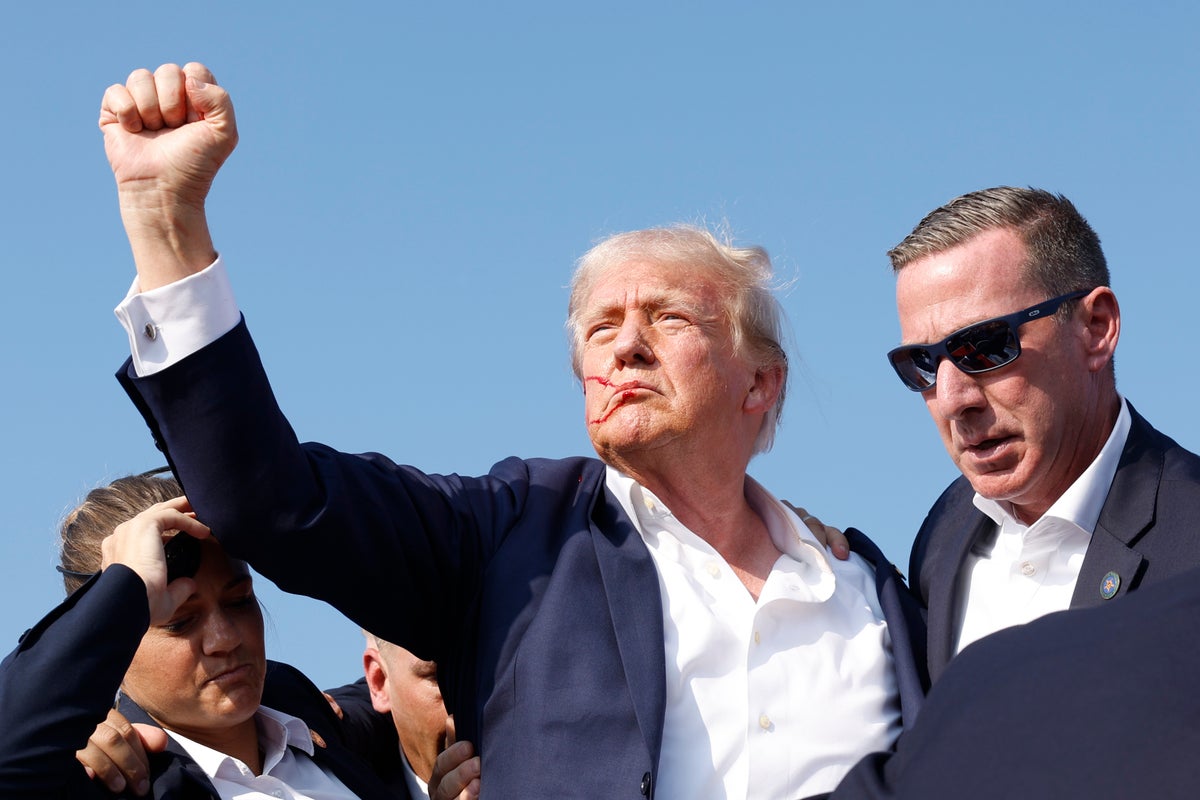
A newly released government watchdog report has pulled back the curtain on the July 2024 assassination attempt on former President Donald Trump. The findings are not just troubling; they are chilling. They reveal that as a gunman climbed onto a roof with a clear line of sight, the primary technical shield protecting the stage was effectively muted.
The Secret Service missed 102 radio calls.
One hundred and two.
In the world of high-stakes protection, a single missed transmission can be fatal. More than a hundred is an systemic blackout. To understand how a mistake of this magnitude happens, you have to look past the official press releases and stand on that hot Pennsylvania asphalt, feeling the panic of a communication network collapsing in real-time.
The Anatomy of a Dead Channel
Picture a local police officer, sweat stinging his eyes, spotting a suspicious man loitering near an equipment shed. He keys his radio. He speaks clearly, urgency sharp in his voice.
On the other side of the fairgrounds, a Secret Service agent stands watch, his eyes scanning the horizon. His earpiece is silent. The local officer’s warning does not vanish into thin air; it hits a digital wall. It bounces off a mismatched frequency, gets swallowed by an unintegrated network, and dies.
The Department of Homeland Security Office of Inspector General detailed this exact breakdown. The issue was not a lack of effort. It was a lack of connection. The Secret Service and local law enforcement were operating on two entirely different technological islands.
Let us use a simple analogy to understand the technical absurdity of that day. Imagine trying to host a vital corporate meeting where half the team is using Zoom and the other half is on Microsoft Teams, but nobody bothered to send a cross-platform link. Everyone is talking into their screens, growing increasingly frustrated, wondering why the other side is ignoring them. Now, raise the stakes. Take away the laptops, replace the corporate agenda with a high-powered rifle, and put a former president in the crosshairs.
The watchdog report revealed that the Secret Service failed to properly set up a unified communications hub. Local police channels were buzzing with frantic observations about Thomas Matthew Crooks a full thirty minutes before he opened fire. They knew he had a rangefinder. They knew he was acting strangely. They were actively looking for him.
But the agents surrounding the podium heard none of it. The 102 missed calls represent a sequence of lost opportunities, a string of digital ghosts pleading for attention that never came.
The Illusion of Safety
There is a psychological trap that security experts call the illusion of readiness. When you see armored SUVs, tactical gear, and sharp-eyed personnel with earpieces, your brain registers total control. You assume that because the display is formidable, the infrastructure behind it is flawless.
It is a comforting lie.
The reality of large-scale security operations is a chaotic jigsaw puzzle. Every time a prominent figure travels, the Secret Service must integrate with local sheriffs, state troopers, and municipal police departments. Each of these entities brings its own equipment, its own terminology, and its own culture.
In Butler, that integration was nonexistent. The technical teams failed to test the interoperability of the radio systems before the event began. They relied on hope rather than verification.
When the first shots rang out, the chaos spiked. Because the radio channels were not linked, local police could not immediately tell the Secret Service detail that the shooter had been engaged or where the fire was coming from. The agents on stage had to rely on raw instinct and physical shielding, operating completely in the blind. They were protecting a target with their bodies while their most basic tool—information—was entirely denied to them.
The Cost of the Silence
What does 102 missed calls actually mean for the culture of accountability?
It means that the system broke down at the absolute baseline. We live in an era of staggering technological sophistication. We can track packages across the globe in real-time, stream high-definition video from orbit, and encrypt communications across continents instantly. Yet, on a field in Pennsylvania, the premier protective agency in the world could not bridge a gap of a few hundred yards to talk to the local police department.
This failure cost a citizen his life, grievously injured others, and came within millimeters of altering the course of American history.
The watchdog report emphasizes that these communication gaps were entirely preventable. They were the result of skipped protocols, rushed setups, and a complacency that has slowly crept into institutional bureaucracy. It is a stark reminder that the most advanced weapons and the most rigorous physical training are useless if the people holding the line cannot speak to one another.
The air in Butler that day was thick with heat, crowd noise, and the sudden, terrifying crack of gunfire. But the most dangerous element on the field was something completely imperceptible. It was the absolute silence in an earpiece that should have been screaming for cover.