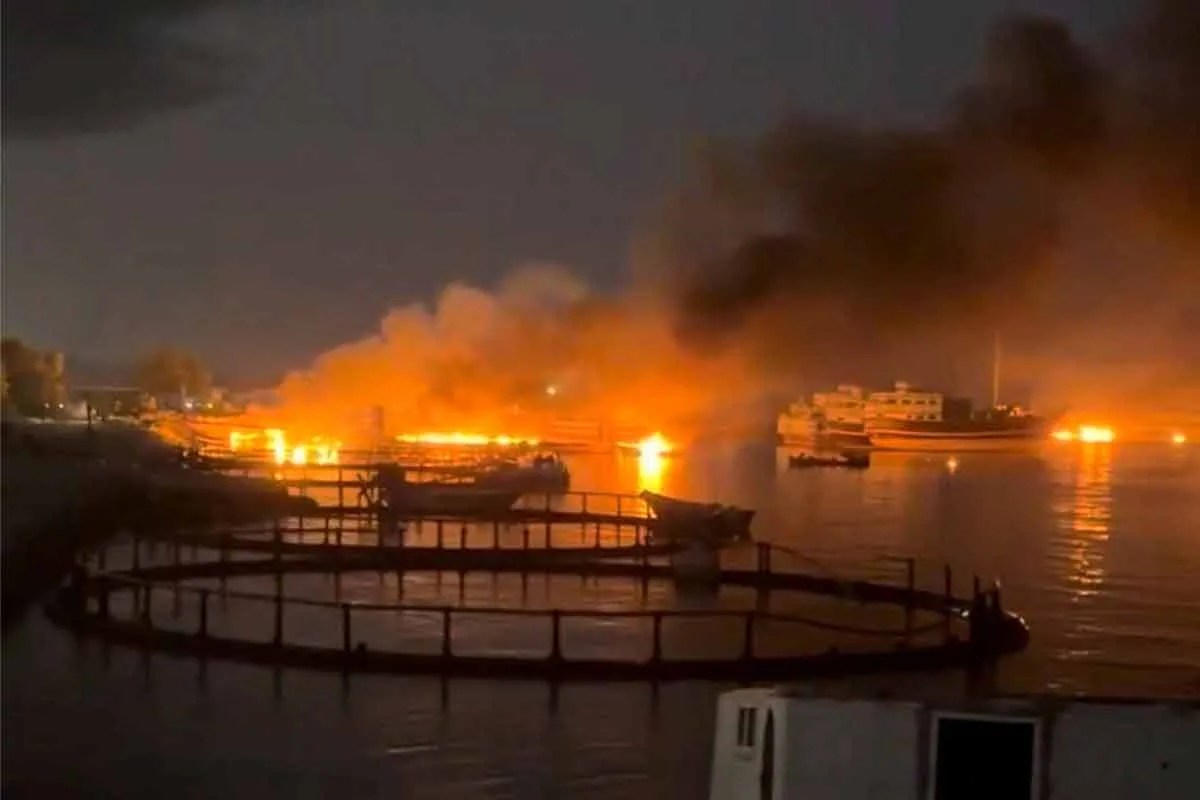
Twelve people are dead in Spain. The media has already drafted the predictable post-mortem: climate change caused record-breaking temperatures, which caused the dry brush to ignite, which caused an inevitable tragedy. It is a neat, linear narrative that absolves everyone except the sun.
It is also a dangerous lie.
The lazy consensus dominating newsrooms and policy boards treats wildfires as purely meteorological events. They blame the heatwave. They point at the thermometer as if it pulled the trigger. But blaming soaring temperatures for wildfire fatalities is like blaming the gravity for a plane crash while ignoring a broken engine.
I have spent years analyzing land management policy and emergency response failures. The brutal truth that mainstream reporting refuses to touch is that these deaths are rarely the result of unpreventable climate anomalies. They are the direct consequence of decades of catastrophic land abandonment, dogmatic fire suppression, and bureaucratic incompetence that traps rural populations in tinderboxes.
We do not have a climate crisis that randomly kills twelve people in the Spanish countryside. We have a management crisis that turns predictable weather patterns into fatal traps.
The Fire Suppression Paradox
For more than half a century, the golden standard of European forestry has been total suppression. See a fire, put it out. It sounds logical to the untrained observer. In reality, this strategy is the primary driver of megafires.
Forest ecosystems are built to burn. Low-intensity, frequent fires clear out the underbrush, recycling nutrients and keeping fuel loads manageable. When global suppression policies eliminate these smaller burns, dead biomass accumulates on the forest floor year after year.
Ecologists refer to this as the "fire paradox." By aggressively extinguishing every minor blaze, we are simply borrowing debt from nature—and nature always collects with high interest. When a spark finally catches during a standard summer dry spell, the fuel load is so immense that the resulting fire bypasses the normal canopy ecosystem and turns into an uncontrollable, high-intensity inferno.
The media focuses on the "soaring temperatures" because it fits a grander, abstract narrative. They miss the fuel. A 40°C day with a clean forest floor results in a manageable brush fire. A 40°C day with thirty years of accumulated deadwood and dense, unmanaged scrubland results in a body count.
The Myth of the Untouched Wilderness
There is a romanticized, urban obsession with leaving nature entirely alone. Environmental groups frequently lobby against logging, controlled grazing, and biomass harvesting under the guise of preserving "pristine" ecosystems.
This philosophy is killing rural Europeans.
Historically, Spain’s landscape was a mosaic. Patches of forest were broken up by agricultural fields, vineyards, and areas heavily grazed by sheep and goats. These human-managed zones acted as natural firebreaks. If a fire started in one valley, it starved of fuel when it hit a cleared pasture or a vineyard.
Over the last forty years, rural flight has left Spain’s interior hollowed out. Millions moved to cities, leaving agricultural land abandoned. Without human intervention, these complex mosaics reverted to homogenous, continuous blankets of highly flammable scrub and pine plantations.
"We have replaced a resilient, working landscape with a monoculture of neglect."
When urban policymakers forbid controlled burns or restrict local communities from clearing brush, they are not protecting nature. They are packing a bomb with gunpowder and waiting for a match. The twelve lives lost in Spain did not die because the atmosphere gained a fraction of a degree; they died because they were surrounded by unmanaged, continuous fuel loads that turned their escape routes into furnaces.
Evacuation Dogma is Killing Citizens
Look at the logistics of recent wildfire fatalities across southern Europe. People frequently die in two places: inside their homes when the structures collapse, or inside their vehicles while attempting a last-minute panic evacuation on narrow, smoke-choked rural roads.
The standard emergency playbook is always the same: mandatory mass evacuations. But this blanket directive ignores the mechanical reality of modern wildfires.
When a megafire moves at speeds exceeding 10 kilometers per hour, tossing embers kilometers ahead of the main front, fleeing on foot or in a car is a game of Russian roulette. Roads get blocked by fallen trees, visibility drops to zero, and vehicles stall as the fire consumes all available oxygen.
We need to dismantle the premise that running away is always the safest option. In many instances, well-prepared "shelter-in-place" protocols—where citizens remain in structures specifically retrofitted with fire-resistant materials and defensible space—yield far higher survival rates than forcing thousands of panicked drivers onto a single two-lane mountain road.
Australia learned this lesson through decades of brutal bushfire cycles, developing the "Stay and Defend or Leave Early" policy. Europe, conversely, remains trapped in a reactive loop, ordering late-stage evacuations that push vulnerable populations directly into the path of the flames.
The Brutal Reality of Decentralized Funding
To solve this, money needs to move away from the cameras.
Politicians love buying water-bombing aircraft. A fleet of Canadair planes scooping up water and dropping it on a raging wall of smoke looks heroic on the evening news. It signals decisive action.
It is also an incredibly inefficient use of capital.
By the time a fire is large enough to require a fleet of water bombers, the battle is already lost. Aircraft cannot extinguish a megafire; they can only douse the edges to assist ground crews. The real work of fire prevention happens in the dead of winter, using chainsaws, matches for prescribed burns, and paying shepherds to let their livestock eat the undergrowth.
But winter brush-clearing doesn't get politicians re-elected. It doesn't generate dramatic footage. Consequently, funding for preventative forestry management has dwindled while budgets for emergency suppression assets skyrocket. We are funding the funeral instead of investing in the cure.
Dismantling the Consensus
Let’s address the inevitable pushback. Critics will claim that ignoring the direct impact of climate change on rising baseline temperatures is irresponsible.
They are missing the point. Acknowledging that the climate is changing does not mean we must accept a flawed causal chain that blames weather for bad policy. If your house has a gas leak, you don't blame the spark plug that ignites it; you fix the leak. The fuel load is our gas leak.
The downside to shifting our focus from climate abstraction to aggressive local land management is that it requires hard work, localized accountability, and confronting powerful environmental lobbies that view any cutting of trees as a sin. It means admitting that humans must actively manage nature if we want to live alongside it safely.
Stop looking at the thermometer. Start looking at the ground. Stop treating these deaths as an unavoidable act of a warming god, and start treating them as what they truly are: a systemic failure of human stewardship.