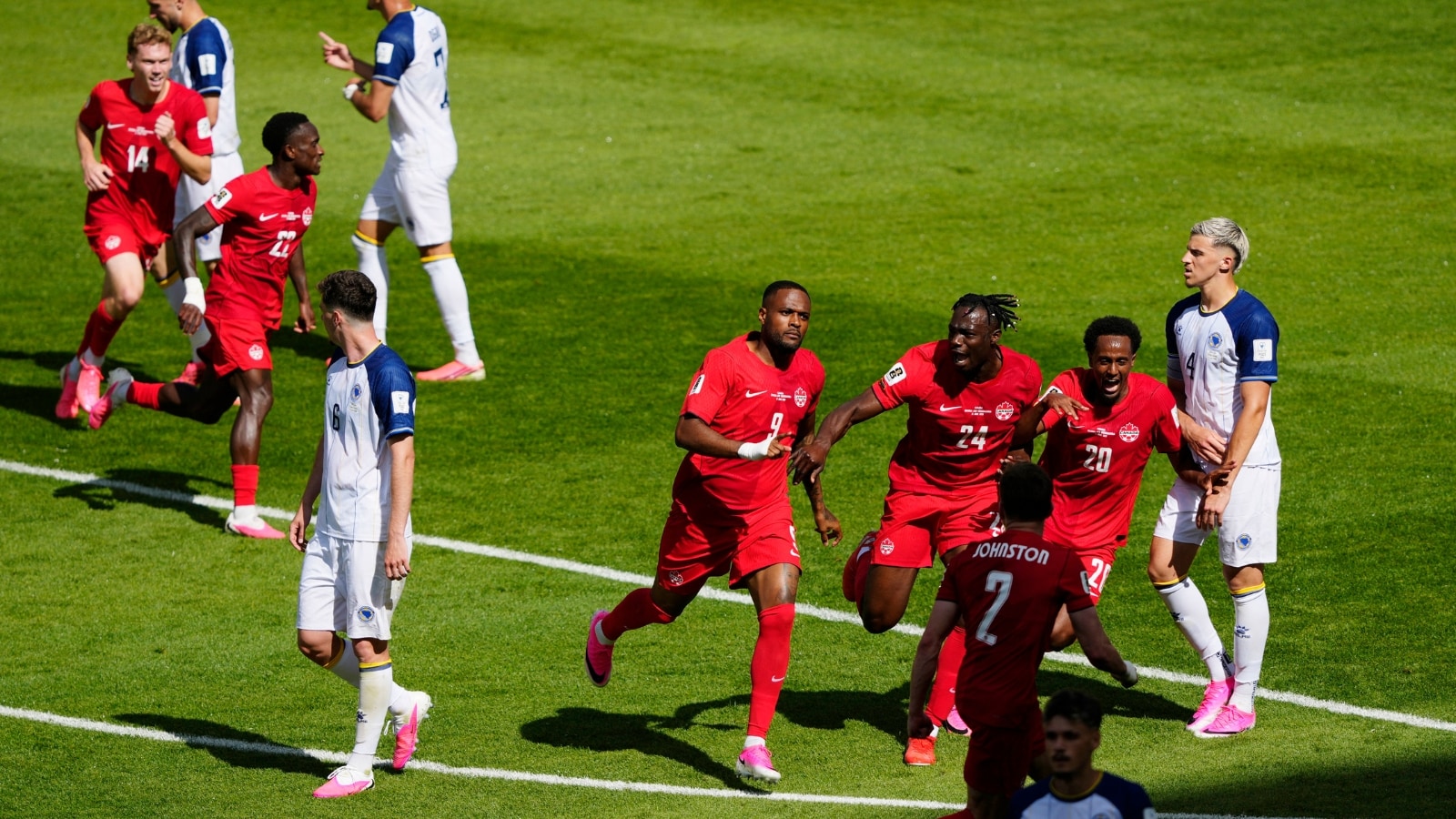
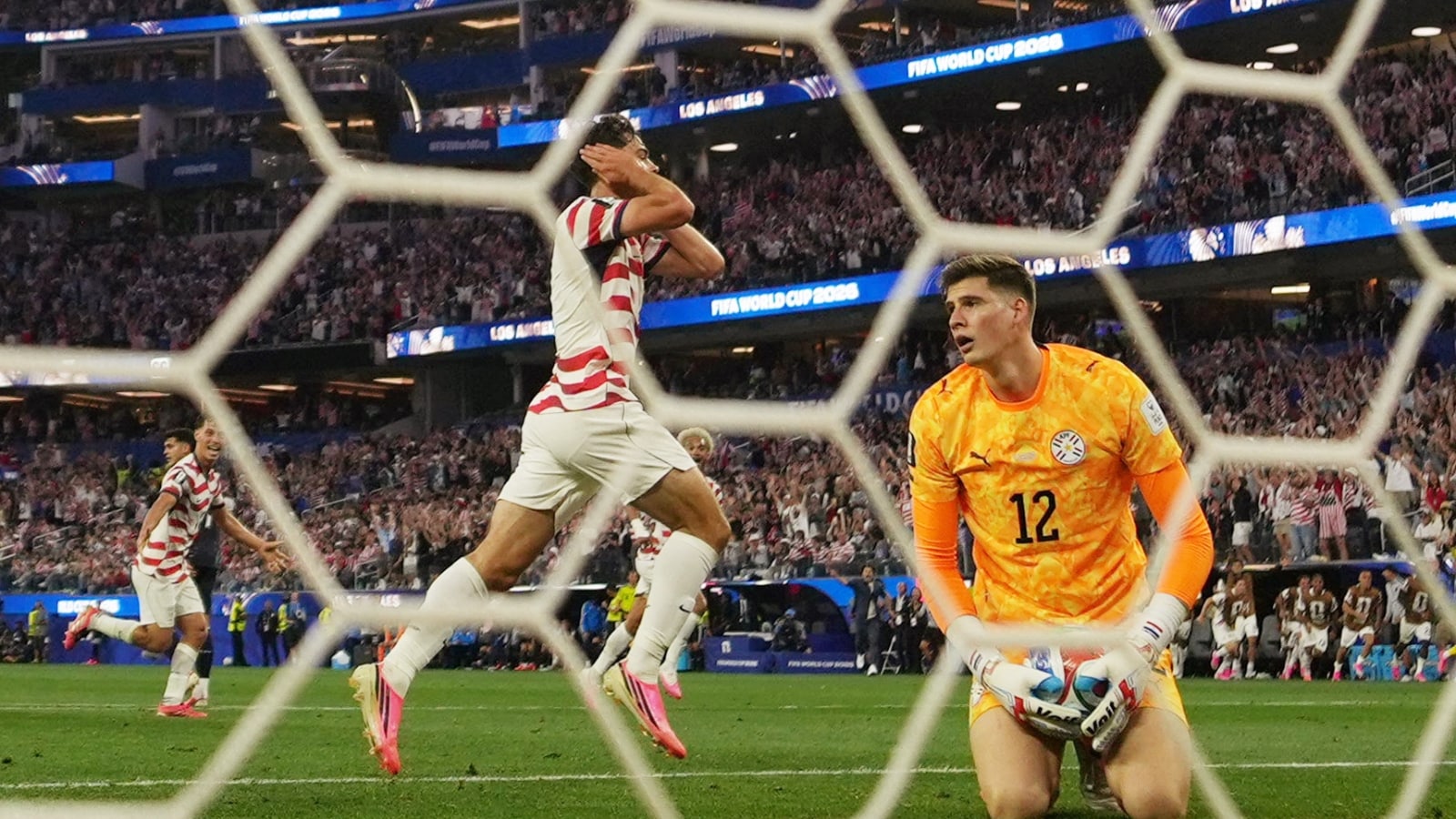
The United States Men’s National Team (USMNT) frequently encounters a specific tactical bottleneck in CONCACAF competitions: the low defensive block. When an opponent retreats into a compact 5-4-1 or 4-5-1 formation, standard possession cycles often degenerate into sterile, horizontal passing circuits. Breaking these blocks requires rapid verticality, third-man combinations, and structural exploitation of the half-spaces. Gio Reyna's specific profile addresses these requirements, converting possession into high-probability scoring opportunities.
Analyzing the fourth goal scored by the United States reveals the underlying mechanics of modern transitional play. It demonstrates how elite individual profiles can systematically dismantle a settled defensive block.
The Three Components of Low-Block Exploitation
To deconstruct how the USMNT manufactured a four-goal margin, the attacking phase must be separated into three distinct, measurable variables.
Structural Disorganization via Vertical Stretching
A low block relies on maintaining tight vertical and horizontal distances between the defensive and midfield lines, usually keeping the space under 12 meters. To disrupt this compactness, the attacking team must employ deep vertical runs from wide areas. This pins the opponent's full-backs and forces the central defenders to drop deeper than their midfield line, creating a temporary gap in the "zone 14" area—the space directly outside the 18-yard box.
The Half-Space Anchor
When the opposition midfield shifts laterally to cover wide threats, spaces open up in the interior channels. Operating in these half-spaces requires a specialized profile. The player must possess a 360-degree spatial awareness and the ability to receive the ball on the half-turn with their back to pressure.
Direct Overload and Blind-Side Runs
The final phase requires a minimum of a +1 numerical advantage in the immediate zone of the ball. While the defensive line focuses on the central striker, secondary runners from deep midfield positions must exploit the blind spots of the recovering center-backs.
Deconstructing the Reyna Function
The inclusion of Gio Reyna in a central advanced midfield role changes the USMNT's offensive geometry. Standard tactical setups often rely on a rigid positional play framework, where wingers hold the touchline and central midfielders occupy static zones. Reyna operates as a dynamic connector, manipulating the opposition's defensive reference points.
[Opposition Low Block]
  CB    CB    CB
    \  /  \  /
     Midfield Line (Shifted)
       ^
       |--- [Reyna in Half-Space] <-- (Ball Received on Half-Turn)
The primary mechanism Reyna utilizes is the progressive carry that forces a defensive decision. When he drops into the right half-space, he presents a tactical dilemma to the opposition's left-sided central midfielder: step out of the defensive block to press the ball, or drop off to protect the space behind.
If the midfielder steps out, the passing lane to the central striker opens up immediately. If the midfielder drops off, Reyna uses the space to drive directly at the backline, turning a slow possession sequence into a high-speed transitional attack inside the final third.
This specific sequence led directly to the fourth goal. The opposition’s defensive block suffered a coordination failure during a lateral shift. As the ball moved from the left flank through the central pivot, the opposition midfield line failed to compress the space between themselves and their central defenders. Reyna identified this pocket of space, positioned himself between the lines, and received the pass with an open body shape, facing the goal before the nearest defender could close the distance.
The Math Behind Modern Transition Offense
Football data shows that the probability of a possession ending in a shot increases exponentially if the ball enters the penalty box via a pass from the central channels rather than a cross from the wide areas. High-value scoring opportunities are created by exploiting high-value real estate.
- Zone 14 Efficiency: Possessions that feature a successful pass from Zone 14 into the penalty area result in a shot assist 41% of the time, compared to just 14% for crosses originating from the wide flanks.
- The Three-Second Rule: Following a turnover or a breakdown in the opposition's mid-block structure, an attacking team has an average window of three seconds to exploit vertical spaces before the low block completely reorganizes its defensive lines.
The fourth goal was a direct result of these metrics. The transition phase moved from the middle third to a shot attempt in 4.2 seconds, bypassing five recovering defenders. By attacking the central corridor rather than settling for a low-risk, low-reward wide cross, the USMNT maximized their expected goals (xG) output for that specific sequence.
Limitations and Structural Risks of Vertical Overloads
While deploying an advanced, fluid playmaker like Reyna offers high offensive output, it introduces specific structural vulnerabilities that top-tier international opponents can exploit. The primary limitation is the exposure of the team's defensive rest-defense structure.
When Reyna vacates a traditional midfield position to operate high between the lines, the remaining central midfielders must adjust their positioning to prevent counter-attacks. If the defensive pivot fails to lock down the center of the pitch, the team becomes highly vulnerable to direct vertical transitions upon losing possession.
The second limitation is the physical demand placed on the wide full-backs. To allow interior playmakers to thrive in the half-spaces, the full-backs must provide maximum width by bombing down the flanks. This constant high-intensity running increases fatigue levels across a 90-minute match, frequently leading to defensive lapses in the final 15 minutes of play when covering opposition wingers.
Strategic Recommendation for International Competition
To replicate this offensive efficiency against elite, non-CONCACAF opposition, the coaching staff must formalize these transitional mechanics rather than relying on individual talent to find space spontaneously.
The immediate tactical priority must be implementing a strict 3-2 rest-defense shape during sustained possession phases. As the advanced midfielders push into the half-spaces to break down low blocks, three designated defenders and two deeper midfield pivots must remain behind the line of the ball. This structure ensures that if a vertical pass fails, the team is mathematically positioned to execute an immediate counter-press, winning the ball back within the opponent's defensive third and sustaining the attacking pressure.