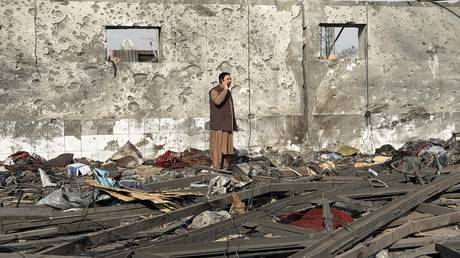
The mainstream consensus loves a neat narrative. Headlines flash about airstrikes wiping out drone launchpads across the Durand Line, framing cross-border kinetic action as a decisive fix for persistent security bleeding. Security analysts nod sagely, treating the border like a fixed membrane between a sovereign state and a lawless wild west.
It is a comforting illusion. And it is completely wrong. Read more on a connected topic: this related article.
Striking static launch sites in Paktia, Khost, or Kandahar does nothing to disrupt an asymmetric network built entirely on fluidity, decentralized logistics, and ideology. Treating a structural insurgency like a conventional military adversary with stationary choke points is a tactical trap.
The Fallacy of Static Retaliation
When Islamabad announces precision strikes on militant infrastructure following cross-border provocations, the public gets a dopamine hit of immediate deterrence. The lazy consensus assumes that blowing up hangars, storage caches, or rudimentary launch platforms starves the Tehreek-e-Taliban Pakistan of capability. Additional analysis by The Guardian highlights related perspectives on this issue.
Look closer at the mechanics. Modern asymmetric warfare does not rely on permanent runways or fixed command posts. A commercial drone frame bought off-the-shelf, a modified guidance module, and a GPS waypoint do not require a military-grade base to operate. They require a Toyota pickup truck, a patch of dirt, and twenty minutes of setup time.
By prioritizing high-visibility aerial hits on static coordinates, conventional forces fall into a classic attrition sinkhole. You are spending thousands of flight hours and expensive ordnance on targets that can be reassembled in a different valley by sundown.
The Geopolitical Blind Spot
The deeper structural failure lies in misreading the posture of the Afghan Taliban regime. Mainstream commentary treats Kabul's denials and condemnations as diplomatic theater, assuming that intense enough military pressure will eventually force the central administration to clamp down on proxy networks.
Imagine a scenario where a government survives decades of total insurgency by weaponizing porous terrain and ideological kinship. To expect that same administration to aggressively root out ideological brothers-in-arms simply because a neighbor drops bombs is geopolitically illiterate.
Pressure without a credible political alternative only hardens alignment. When strikes hit compounds near provincial borders, the collateral friction does not isolate the militants; it localizes civilian resentment and feeds the exact narrative of external aggression that extremist recruitment thrives upon.
Redefining the Border Reality
The Durand Line has never functioned as an effective barrier, yet military planners keep trying to solve a human governance crisis with airspace violations. Real security on a fractured frontier is not achieved by chasing shadows with jets. It is achieved through border management that is suffocatingly meticulous on the home side, combined with economic insulation and intelligence penetration that makes local harboring too expensive to maintain.
Admitting the limits of cross-border air campaigns is uncomfortable for military brass who need to project strength to domestic constituencies. But honesty beats theater. Until defense establishments stop treating symptoms on foreign soil and start sealing domestic vulnerabilities, these retaliatory cycles will remain an endless, bloody loop of Whac-A-Mole.
Stop celebrating the strike statistics. Look at the logistics. The launchpads are not in the mountains of Afghanistan. They are in the failure of imagination at home.