Violence inside a quiet house of worship shatters more than just physical lives. When a 31-year-old Ukrainian national walked onto the grounds of the 17th-century Benedictine Sisters' Abbey in Jarosław, Poland, and launched a sudden knife attack, the immediate fallout went far beyond the bloodshed. Five people—three clergy members and two laypeople—were stabbed before police apprehended the suspect at the scene. Father Stanisław Zbojniewicz later died from his severe injuries, leaving a tight-knit community and a nation searching for answers.
Stabbings at religious sites are extraordinarily rare in Poland, one of Europe's most devoutly Catholic countries. When the assailant struck shortly before morning Mass at the Church of St. Nicholas and St. Stanislaus, the psychological shockwave was immediate.
Inside the Jarosław Monastery Tragedy
The incident unfolded on a Thursday morning that began like any other. According to investigators and local prosecutors, the suspect had entered Poland from Germany overnight and driven toward the border crossing with Ukraine, though he never actually crossed. Instead, he arrived at the abbey grounds in Jarosław—a Christian culture and information center that has spent years providing aid and shelter to Ukrainians displaced by the war.
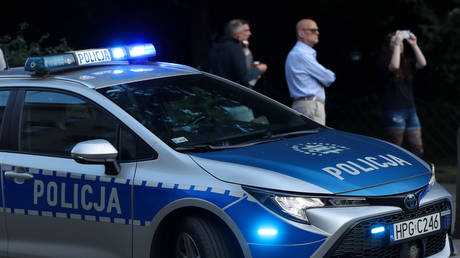
Reports indicate the attacker grabbed a knife from the monastery kitchen before moving through the complex. Witnesses recounted terrifying moments inside the holy site. One woman who had arrived for morning Mass told Polish television that a man suddenly struck a priest in the neck artery. Other victims sustained serious wounds trying to stop the rampage before police arrived around 9:30 a.m.
District Prosecutor Bozena Harasz-Woloszyn confirmed that three priests and two laypeople were targeted. While medical teams rushed the survivors to local hospitals—where several underwent critical surgeries—the community had to grapple with the loss of Father Zbojniewicz and severe injuries sustained by other clergy members.
Political Fallout and National Reactions
High-ranking officials moved swiftly to address the incident, acutely aware of its potential to ignite diplomatic friction. Poland has stood as one of Ukraine's staunchest allies since the full-scale Russian invasion began, welcoming hundreds of thousands of refugees. Yet, lingering historical grievances and the strains of a prolonged war have occasionally tested public goodwill.
Polish Prime Minister Donald Tusk took to social media to state clearly that the perpetrator is a Ukrainian citizen and will be punished to the full extent of Polish law. Tusk condemned the act as brutal murder, offering immediate condolences to the victims' families.
Ukrainian President Volodymyr Zelenskyy echoed those sentiments, labeling the event a "horrific crime" and emphasizing that justice must be served without hesitation. "We are shaken by this evil," Zelenskyy wrote, making it clear that Kyiv expects full accountability rather than trying to deflect or minimize the tragedy.
Local leaders in Jarosław, including Mayor Marcin Nazarewicz, declared a period of mourning and set up crisis management teams. Authorities quickly engaged with young Ukrainians living in the area to maintain calm and prevent retaliatory hostility. Local church officials, including Archbishop Stanisław Budzik and other regional leaders, urged parishioners to choose prayer and solidarity over division, warning against extremists looking to exploit the violence for political mileage.
Navigating the Motive and Community Healing
As of now, a clear motive remains elusive. Investigators and medical professionals are assessing the suspect's mental state, including whether he was under the influence of alcohol or drugs during the attack.
For the residents of Jarosław and the Benedictine community, rebuilding a sense of safety will take time. Sister Barbara Dendor, speaking for the local religious community, admitted that monks and nuns simply couldn't comprehend how a sanctuary dedicated to helping people could become a crime scene. Local schools, preschools managed by the nuns, and neighboring families found themselves forced to confront vulnerabilities they never expected to face.
The focus now shifts strictly to the legal proceedings ahead. The suspect remains in police custody facing severe charges. Meanwhile, local authorities and community leaders continue to foster open communication channels to ensure that a single violent act by an individual does not poison relations between two nations bound together by extraordinary historical circumstances.