Standard political journalism treats Texas midterm voter sentiment as a collection of isolated anecdotes—a diner interview in Midland paired with a campus quote in Austin—while ignoring the structural mechanics that govern ballot behavior across 254 counties. To accurately evaluate how Texas voters approach a federal midterm cycle, analysts must replace anecdotal sampling with a deterministic framework built on four measurable variables: pocketbook elasticity, demographic urbanization gradients, primary-to-general turnout decay, and issue salience asymmetry.
Midterm elections operate under fundamentally different mathematical rules than presidential cycles. Without a national executive race to maximize low-propensity participation, the Texas electorate contracts, shifting power toward older, higher-income, and ideologically consistent voting blocs. Understanding what Texas voters actually communicate during a midterm requires separating media noise from the economic and structural incentives driving turnout across the state's distinct regional economies.
The Four Structural Variables Governing Texas Midterm Behavior
Public opinion polling and street-level interviews frequently misread Texas because they treat the state as a monolithic political unit rather than an interconnected set of regional economic engines. Voter sentiment in the Rio Grande Valley responds to different macroeconomic triggers than voter sentiment in the Dallas-Fort Worth metroplex or the Permian Basin.
1. Pocketbook Elasticity and Energy-Sector Exposure
Texas voter sentiment correlates tightly with localized inflation, property tax assessments, and energy sector employment. Unlike states with diversified service-heavy tax bases, Texas relies heavily on local property taxes and sales taxes to fund municipal infrastructure and public education, creating an immediate, visible link between asset valuation inflation and household tax liability.
- Property Tax Friction: Rapid residential appreciation across Travis, Williamson, Collin, and Harris counties increases appraised values faster than statutory homestead exemptions can absorb. Homeowners experience rising escrow payments directly, transforming local fiscal policy into a primary federal and statewide voting issue.
- Hydrocarbon Price Sensitivity: In West Texas and the Gulf Coast industrial corridor, crude oil and natural gas prices dictate capital expenditure, employment stability, and municipal tax receipts. Voters in these regions evaluate federal regulatory policy through the immediate lens of drilling rig counts and permitting timelines rather than abstract climate targets.
- Consumer Purchasing Power: Across working-class precincts in South Texas and the urban fringes, fuel costs and grocery inflation erode real wage gains. When household liquidity tightens, incumbent parties absorb disproportionate electoral penalties regardless of macroeconomic GDP growth.
2. The Urban-Suburban-Rural Turnout Gradient
Texas electoral geography operates on a three-tier density model where population growth and voter turnout efficiency rarely align.
The Urban Core (Harris, Dallas, Bexar, Travis Counties)
These jurisdictions contain the highest concentration of Democratic-leaning voters, yet they consistently suffer from lower midterm turnout efficiency compared to suburban and rural counterparts. High renter mobility, younger age demographics, and longer polling wait times depress participation rates when a presidential race is absent from the ballot.
The Suburban Ring (Collin, Denton, Fort Bend, Montgomery, Williamson Counties)
Suburban counties represent the true statistical battleground of Texas midterms. These areas exhibit high educational attainment, high homeownership rates, and high midterm turnout propensity. Suburban voters split tickets at higher rates than any other cohort, balancing fiscal conservatism against social moderation and infrastructure demands.
The Rural Interior and Exurbs
Accounting for over 200 counties, rural Texas delivers high-margin, high-turnout majorities for Republican candidates. While individual county populations are small, their collective vote surplus establishes a baseline deficit that urban and suburban margins must overcome before a statewide race becomes competitive.
3. Primary-to-General Electorate Compression
A critical structural flaw in conventional voter analysis is failing to account for the Texas primary system's filtering effect. Texas holds open primaries in March, months before the November general election, during a period when statewide participation frequently drops below 15 percent of registered voters.
Because primary electorates are dominated by high-information, ideologically committed partisans, candidates must calibrate their messaging to survive primary challenges before pivoting toward the median general election voter. This creates a messaging lag:
- Primary Phase: Candidates emphasize ideological purity, border enforcement, or progressive social policy to secure the base.
- General Phase: Candidates attempt to moderate tone to capture independent suburban voters.
- Voter Skepticism: General election voters exposed to primary-season rhetoric discount late-cycle moderation, contributing to lower enthusiasm and higher undervoting down-ballot.
4. Issue Salience Asymmetry
When voters speak about midterm priorities, they do not weight issues equally. Issue salience—the degree to which a specific policy problem dictates vote choice—operates asymmetrically across partisan lines.
- Cost of Living and Inflation: Ranks as the baseline universal concern across all demographic segments, acting as a referendum on the party holding the White House.
- Border Security and Immigration: Functions as both a physical infrastructure concern in border counties (El Paso, Webb, Hidalgo, Cameron) and a cultural-sovereignty issue in interior counties. In South Texas, prolonged strain on municipal resources and border patrol operations has shifted historically Democratic-leaning precincts toward competitive two-party parity.
- Healthcare Access, Education Funding, and Reproductive Policy: Serve as primary mobilization drivers for urban and college-educated suburban women, countering economic headwinds that otherwise favor the opposition party.
Why Anecdotal Voter Interviews Distort Reality
Traditional journalism relies on qualitative interviews to humanize polling data, yet uncalibrated street reporting introduces systematic bias into political analysis. Three cognitive and statistical distortions render standard "voter voice" articles analytically weak.
The Selection Bias of Accessible Venues
Reporters default to high-foot-traffic locations—coffee shops, county fairs, university quads, and diner counters. These venues over-represent retirees, students, and service-sector workers while systematically excluding shift workers, suburban commuters, and high-income professionals who vote at the highest rates. A quote gathered at noon on a Tuesday reflects a demographic slice with fundamentally different economic incentives than the electorate arriving at precincts at 6:30 PM.
Stated Preference vs. Revealed Preference
In interviews and polls, voters frequently articulate idealistic policy priorities—such as bipartisanship, environmental stewardship, or long-term deficit reduction. Behavioral economics demonstrates that revealed preference (actual ballot casting) diverges sharply from stated preference (interview responses). When confronted with a binary ballot choice, voters prioritize immediate personal risk mitigation—such as lower tax burdens, perceived neighborhood safety, or bodily autonomy—over abstract institutional norms.
The Enthusiasm Gap Illusion
Media narratives often equate vocal intensity with electoral scale. A small, highly mobilized faction attending rallies or speaking passionately to reporters generates disproportionate coverage compared to a quiet majority of reluctant, pragmatic voters. In midterm cycles, elections are rarely decided by the loudest partisans; they are decided by which party suffers less attrition among its low-enthusiasm supporters.
Tactical Mechanics of Voter Persuasion and Mobilization
Campaign strategists and policy analysts operating in Texas must treat voter sentiment not as a static opinion to be observed, but as a dynamic conversion funnel governed by friction and activation energy.
Step 1: Segmenting the Persuasion vs. Turnout Universe
Resources allocated to undecided voters in polarized districts yield diminishing returns. Effective midterm operations divide the electorate into three actionable cohorts:
- High-Propensity Partisans (Turnout Floor): Voters who have participated in at least three of the last four midterm primaries or general elections. Messaging here requires zero persuasion; it requires logistical reminders regarding early voting dates and mail-in ballot deadlines.
- Surge Voters (Turnout Ceiling): Registered voters who participate in presidential cycles but skip midterms. Mobilizing this cohort requires connecting local down-ballot offices—such as county judges, district attorneys, and school boards—directly to daily household friction like property taxes and public safety.
- True Swing Voters (Persuasion Target): Concentrated primarily in suburban growth corridors (e.g., Fort Bend, Collin, Williamson, and Hays counties). These voters respond to data-backed economic arguments, infrastructure competence, and candidate temperament rather than partisan grievance.
Step 2: Exploiting the Early Voting Window
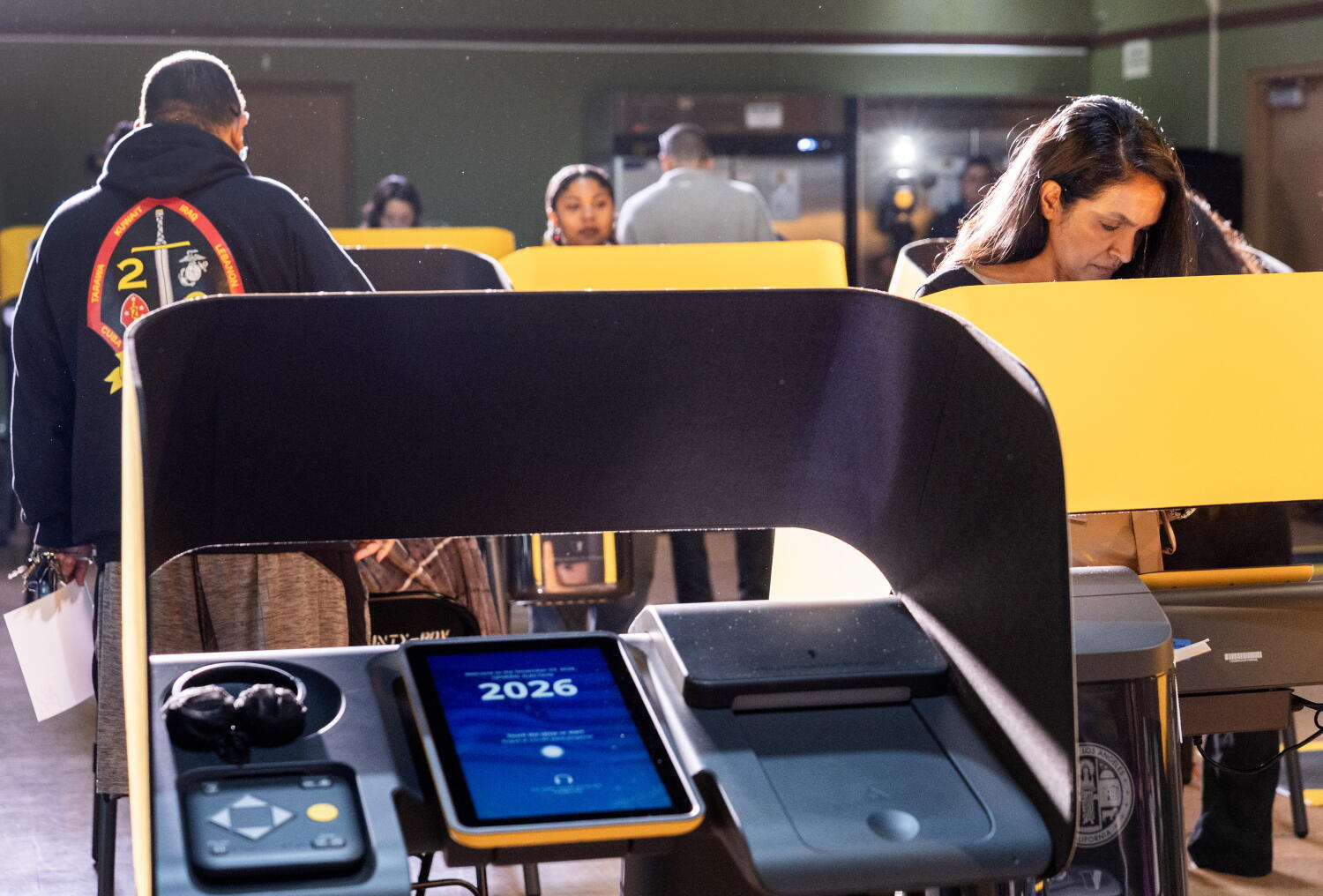
Texas provides a two-week early voting period prior to Election Day, during which over 60 to 70 percent of total ballots are typically cast in major counties. Early voting fundamentally alters the timing of voter decision-making:
- Late-October news cycles reach an electorate that has already largely voted.
- Campaigns must front-load persuasive messaging and field operations before the first day of early voting rather than peaking on Election Day.
- Tracking daily county-by-county early vote returns—specifically comparing age cohorts and historical primary voting records—provides a far more accurate indicator of voter sentiment than late-stage opinion polling.
Step 3: Accounting for Ballot Roll-Off and Straight-Ticket Elimination
Following the elimination of straight-ticket one-punch voting in Texas, voters must manually select candidates down the entire ballot. This structural change introduced measurable ballot roll-off, where voters cast ballots for top-of-the-ticket federal or statewide races (such as U.S. Senate or Governor) and leave judicial, legislative, and county races blank.
Voters expressing frustration with "both parties" during interviews frequently manifest that sentiment not by switching parties, but by selectively undervoting down-ballot races. Analyzing roll-off rates by precinct exposes localized dissatisfaction that top-line race margins conceal.
Analytical Limitations and Forecasting Constraints
No structural model eliminates uncertainty in Texas midterm forecasting. Analysts must account for three systemic blind spots that regularly invalidate pre-election assumptions.
Demographic Determinism Fallacy
For two decades, political commentators predicted that rapid Hispanic population growth would automatically flip Texas into a reliably Democratic state. This hypothesis failed because it treated demographic identity as a fixed partisan proxy rather than a dynamic socioeconomic cohort. As Hispanic households in Texas achieve higher rates of small-business ownership, homeownership, and employment in energy, construction, and law enforcement, their voting behavior increasingly mirrors that of non-Hispanic peers within the same income and geographic brackets.
Non-Linear Turnout Shocks
Midterm turnout models rely on historical baseline participation. External shocks—such as sudden interest rate spikes, severe weather events impacting Gulf Coast infrastructure, or high-profile legislative battles over education and social policy—can trigger non-linear surges among previously dormant voter segments. Historical voting records cannot predict first-time midterm participants activated by a single acute issue.
Polling Weighting Errors
Survey research in Texas faces severe response-rate degradation, particularly among rural voters and non-college-educated working-class households. Pollsters compensate by applying demographic weighting formulas based on past election turnout. If the actual midterm electorate diverges from the pollster's assumed turnout model by even two percentage points across major metro areas, top-line polling averages will systematically misstate the true competitive margin.
Strategic Execution for Political and Policy Analysts
Stop relying on uncalibrated voter interviews or statewide top-line polling averages to gauge the Texas midterm trajectory. Reallocate analytical and operational resources toward county-level early vote tracking, targeting the suburban ring counties—specifically Collin, Denton, Fort Bend, and Williamson—where ticket-splitting and turnout elasticity actually determine statewide outcomes. Measure voter sentiment by tracking revealed economic behavior: county appraisal protest volumes, regional employment shifts, and early-voting ballot roll-off rates across high-growth precincts.