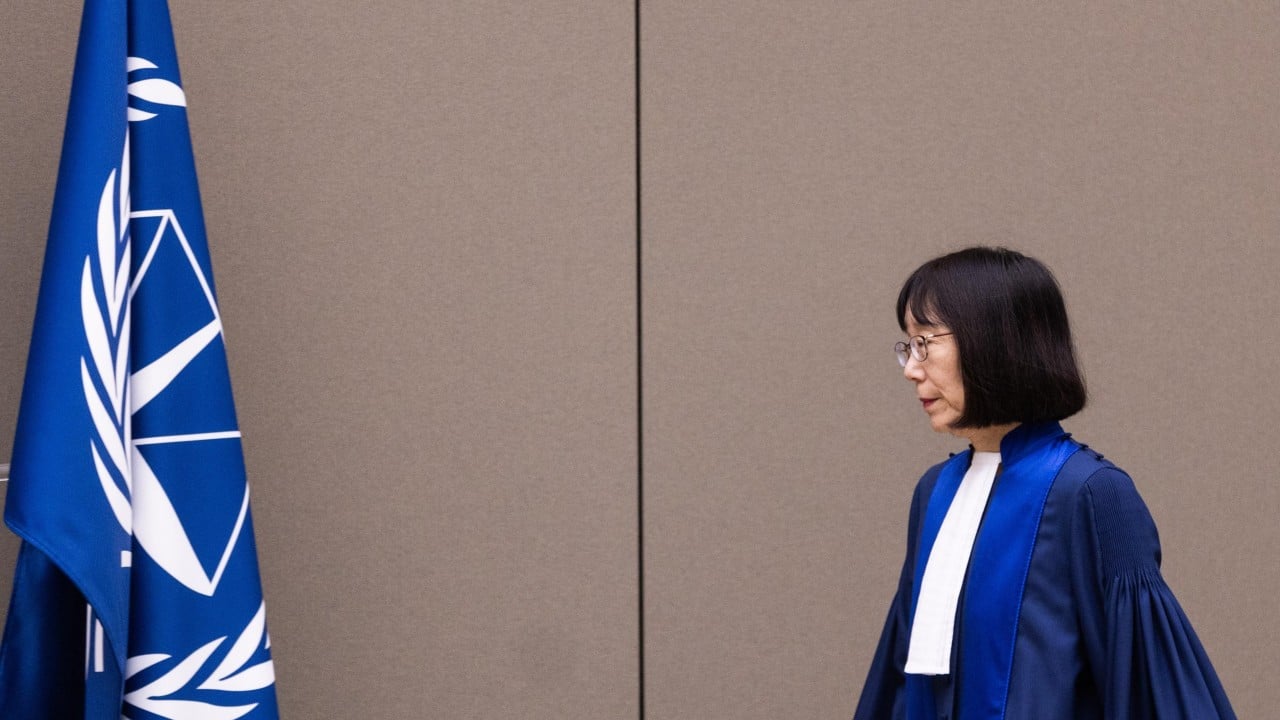
The headlines screamed about diplomatic outrage. Tokyo summoned Moscow's ambassador. Officials expressed profound regret. Media outlets declared yet another rupture in international norms, pointing fingers at Russia for demanding the extradition of the International Criminal Court president who dared issue a warrant that made Washington bristle.
Everyone missed the actual mechanics of the maneuver. Also making headlines lately: What the Marble Hill ICE Shooting Tells Us About Federal Enforcement in New York.
The lazy consensus in international relations analysis is that this is simple geopolitical theater, a tit-for-tat escalation in a frozen diplomatic wasteland. It is not. Tokyo is not defending the sanctity of the Hague because it loves international jurisprudence. Moscow is not pushing extradition because it expects Japan to hand over a high-ranking jurist.
We are watching a high-stakes stress test of sovereignty where middle powers are forced to calculate whether American protection or procedural neutrality is worth more to their survival. More insights regarding the matter are detailed by The Guardian.
Let us look past the performative outrage. Japan's foreign ministry reaction was loud precisely because the quiet part is terrifying. When the International Criminal Court issues warrants that trigger retaliatory legal warfare from superpowers, small and mid-tier nations realize they are caught in the crossfire of a legal arms race.
Tokyo's public fury masks a private panic. For decades, Japanese foreign policy operated under a comfortable illusion: that international institutions provided a neutral shield against predatory neighbors. When Russia weaponizes extradition laws against the head of that very court, the shield looks less like titanium and more like wet cardboard.
To understand why Tokyo’s response is structurally flawed, you have to look at how modern lawfare operates. We are past the era where diplomacy was conducted solely through ambassadors delivering notes on heavy cream paper. Today, legal instruments are kinetic assets. A warrant is a missile. An extradition request is shrapnel.
When Washington initially condemned the court's actions against its allies, it sent an unmistakable signal to every capital from Tokyo to Berlin. The rules-based international order only applies until it inconveniences the hegemon. Once the United States established the precedent that international courts can be fought back with sanctions and legal counter-offensives, it opened the door for every other nuclear-armed state to play the exact same game.
Moscow simply walked through that door.
Japan’s protest is an exercise in protecting a dying fiction. By pretending that the international judicial system functions above the fray of raw power politics, Tokyo avoids confronting the hard reality of its own strategic vulnerability. Japan sits in a neighborhood where international maritime law is routinely ignored, ballistic missiles arc overhead with impunity, and security guarantees are constantly renegotiated in Washington boardrooms.
Relying on a piece of paper from The Hague to deter aggression is like bringing a courtroom stenographer to a knife fight.
Yet, the contrarian truth here is sharper than just pointing out geopolitical hypocrisy. Tokyo’s anger is performative because Japan actually understands the transactional nature of the current global order better than its critics admit. The Japanese state is meticulously calculating its exposure. Every statement of condemnation issued by the Prime Minister's office is an insurance policy. It reassures Washington that Tokyo remains inside the alliance tent, while simultaneously signaling to Moscow that the relationship has a hard floor below which it will not shatter.
Diplomacy at this level is not about being right. It is about managing friction.
When we strip away the moralizing from the press releases, the situation exposes the fundamental fragility of global legal architecture. International courts lack armies. They lack tax collection agencies. They possess zero sovereign territory. Their authority exists purely as a collective hallucination sustained by the willingness of powerful states to pretend it is real.
The moment a superpower—or a determined adversary—decides to puncture that hallucination, the entire structure wobbles.
Washington punctured it first. Moscow exploited the puncture. Tokyo is currently screaming at the wind because it cannot admit that the weather has permanently changed.
Stop looking at international law through the lens of justice. Look at it through the lens of logistics. Treaties are supply chains of political capital. When the supply chain breaks, moral outrage does not restore it.
The next time a foreign ministry issues a stinging rebuke over a legal warrant, ignore the adjectives. Watch where they deploy their diplomats, where they shift their trade credits, and how quietly they update their defense contingencies. Tokyo is not angry about a Russian extradition request. Tokyo is angry that everyone finally noticed the emperor has no legal defense team.