The soccer media is doing exactly what it always does after a high-scoring home friendly. It is selling you a counterfeit product wrapped in shiny paper.
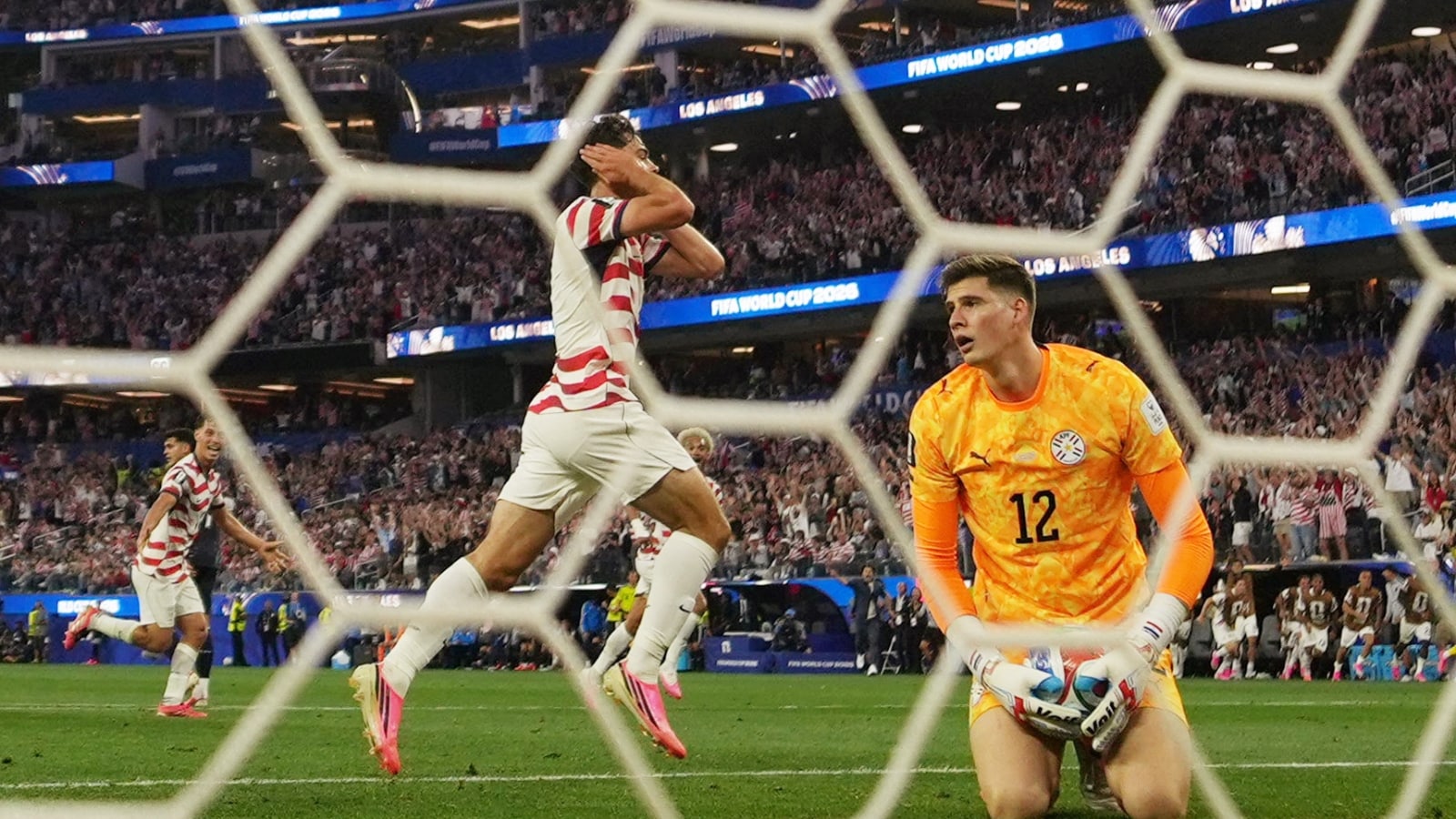
Following a 4-1 victory over Paraguay featuring a Folarin Balogun brace, the consensus narrative solidified instantly. The USMNT is cooking. The offense has clicked. This team is ready to dominate on home soil. It is pure, unadulterated fiction.
If you actually analyze the tactical mechanics of that match instead of just staring at the scoreboard like a casual fan, you see a completely different picture. This was not a tactical masterclass or a sign of systemic growth. It was a chaotic, transition-heavy match where an intellectually bankrupt Paraguay side gifted the United States space that they will never, ever receive in a meaningful knockout tournament match.
Scorelines lie. This one is telling a massive, dangerous lie that hides the fundamental structural flaws still paralyzing American soccer.
The Balogun Fallacy: Why Two Goals Mean Nothing
Let's address the elephant in the room. Folarin Balogun scored twice, so the narrative machine declares him cured. The media wants you to believe this is the definitive breakout performance that unlocks his Monaco form on the international stage.
I have spent two decades analyzing tactical data and watching national teams burn through generation after generation of "savior" strikers. Trust me when I tell you: celebrating Balogun’s performance in this specific environment is a massive mistake.
Look at how the goals actually happened. Paraguay played a suicidal, disorganized high line without applying any pressure on the ball in the midfield. Marcelo Bielsa’s ghost might have inspired their desire to press, but their execution was completely broken. Balogun didn't have to display elite movement, hold-up play, or the ability to break down a low block—the three exact skills required to win games when the stakes are high. He simply ran into vast expanses of open grass.
When the USMNT faces an elite European or South American side in a serious tournament, they will not see fifty yards of open space behind the center-backs. They will face compact, disciplined banks of four and five.
In those tight spaces, Balogun's underlying metrics tell a very different story.
- His touch in tight areas remains heavy.
- His aerial duel success rate is beneath the international average for elite nines.
- His chemistry with the wingers when forced into a slow buildup is practically non-existent.
If you judge a striker's readiness based on how he performs when a disorganized opponent hands him a highway to the goal, you are setting yourself up for heartbreak. The brace was a product of Paraguayan incompetence, not American tactical maturity.
The Midfield Vacancy Nobody Is Talking About
Everyone loves a blowout because the goals mask the structural rot happening beneath the surface. While the casual viewer watched the ball hit the back of the net, any serious analyst was watching the space between the USMNT backline and the central midfield.
It was a complete disaster zone.
Paraguay, despite being utterly toothless in the final third, cut through the American midfield with alarming ease during the first thirty minutes. The defensive transition mechanics were completely broken.
The current system relies entirely on individual athletic recovery rather than positional discipline. Tyler Adams or Yunus Musah are routinely asked to cover absurd amounts of lateral space because the full-backs push high without proper situational cover. Against a team with actual quality—think a healthy Uruguay, Colombia, or any top-tier European side—those transition moments do not result in a harmless goal-kick or a scuffed shot. They result in your center-backs being isolated, exposed, and ultimately sent off or scored on.
Imagine a scenario where this exact tactical setup plays against a team that possesses a genuinely world-class transitional playmaker. The spaces left behind the American advanced midfielders would be exploited within three passes.
We are treating a lack of defensive structure as a minor detail just because the opponent lacked the quality to punish it. That is a loser's mentality.
The Flawed Premise of "Home Field Advantage"
The underlying theme of the current soccer coverage is that playing these matches at home is building an impenetrable fortress. "Estados Unidos ilusiona en casa." It is a comforting thought, isn't it?
It is also completely disconnected from reality.
Playing friendlies in front of highly partisan, curated crowds in climate-controlled NFL stadiums does absolutely nothing to prepare a squad for the psychological warfare of international football. It creates a false sense of security. The officiating is generally lenient, the pitches are often laid-down sod over concrete that alters the true bounce of the ball, and the atmosphere lacks the raw, hostile edge that defines true competitive international tournaments.
When you win 4-1 in an environment like that, you aren't learning how to suffer. You aren't learning how to manage a game when you are down a man in the 70th minute in a hostile environment. You are playing an exhibition match that feels closer to an entertainment spectacle than a gritty football match.
The obsession with stack-decking the friendly schedule with games in friendly domestic markets is actively harming the developmental ceiling of this roster. They need to go play in San José, in San Pedro Sula, or in Montevideo. They need to feel the pressure of a crowd that wants to see them fail. Winning easily in a glitzy domestic stadium teaches this young group precisely the wrong lessons about what it takes to win at the highest level.
Dismantling the "People Also Ask" Delusions
If you look at what fans are actually asking online, the delusion becomes even more obvious. Let's look at the flawed premises driving the public conversation right now.
Is the USMNT ready to compete with the world's elite?
No. Not even close. Winning a wide-open friendly against a rebuilding Paraguay side that sits near the bottom of CONMEBOL qualifying does not move the needle. True elite status is measured by your ability to dictate the tempo of a match against teams that refuse to give you transition space. Until the USMNT can consistently break down an organized low block without relying on a moment of individual brilliance from Christian Pulisic, they belong in the tier-two category of international football.
Has the striker problem finally been solved by Balogun?
Labeling the striker position "solved" after this match is tactical ignorance. The striker position is solved when the player can function as a tactical pivot when the wingers are completely marked out of the game. Balogun has immense talent, but his success in this match was entirely conditional on the specific tactical suicide practiced by Paraguay. The problem is bypassed, not solved.
Does a 4-1 scoreline prove the offensive system is working?
It proves that individual athleticism wins out when a game degenerates into a track meet. A functioning offensive system relies on repeatable patterns of play, third-man runs, and overload mechanics. The goals in this match came from direct long balls and defensive giveaways. That is a viable strategy against desperate teams, but it is not a sustainable offensive system for a tournament knockout run.
The Cost of False Comfort
I have seen this movie before. The federation books a series of home games, the team racks up some impressive-looking scorelines against flawed opposition, the media hypes up the "golden generation," and then the team hits a wall the second they face tactical sophistication.
The downside of my skeptical, analytical approach is obvious: it drains the joy out of a four-goal win. It makes me the cynic at the party. But the upside is that it keeps us grounded in the harsh reality of global football.
If we accept these superficial wins as proof of concept, we stop demanding better. We stop demanding a midfield that can actually control a game's tempo. We stop demanding center-backs who can pass through lines instead of just launching long balls. We stop demanding a manager who installs a rigorous, modern pressing structure instead of relying on raw athletic recovery.
Stop looking at the flashing lights on the scoreboard.
The USMNT didn't take a step forward against Paraguay. They just ran fast through an open gate that a bad team forgot to lock. The next opponent won't leave the key in the door.