The diplomatic condemnation of Israel’s latest expansion into the West Bank has reached a fever pitch, but the volume of the outcry masks a profound lack of leverage. When foreign ministers from Europe and the Middle East issue joint statements "strongly opposing" the legalization of outposts and the acceleration of settlement units, they are reacting to a strategy that has already moved past the point of diplomatic reversal. This isn't just another cycle of friction. We are witnessing the systematic dismantling of the two-state framework by way of administrative reclassification and strategic infrastructure.
The core of the current crisis lies in the transfer of administrative powers from military to civilian hands within the Israeli government. By moving oversight of West Bank land and building permits from the military-run Civil Administration to a newly created "Settlement Administration" under civilian political control, the legal nature of the occupation has shifted. This move effectively treats parts of the West Bank as an extension of Israel proper, bypassing the international legal constraints that govern occupied territory. While the world looks for tanks and soldiers, the real conquest is happening through zoning maps, water rights, and paved roads.
The Administrative Coup
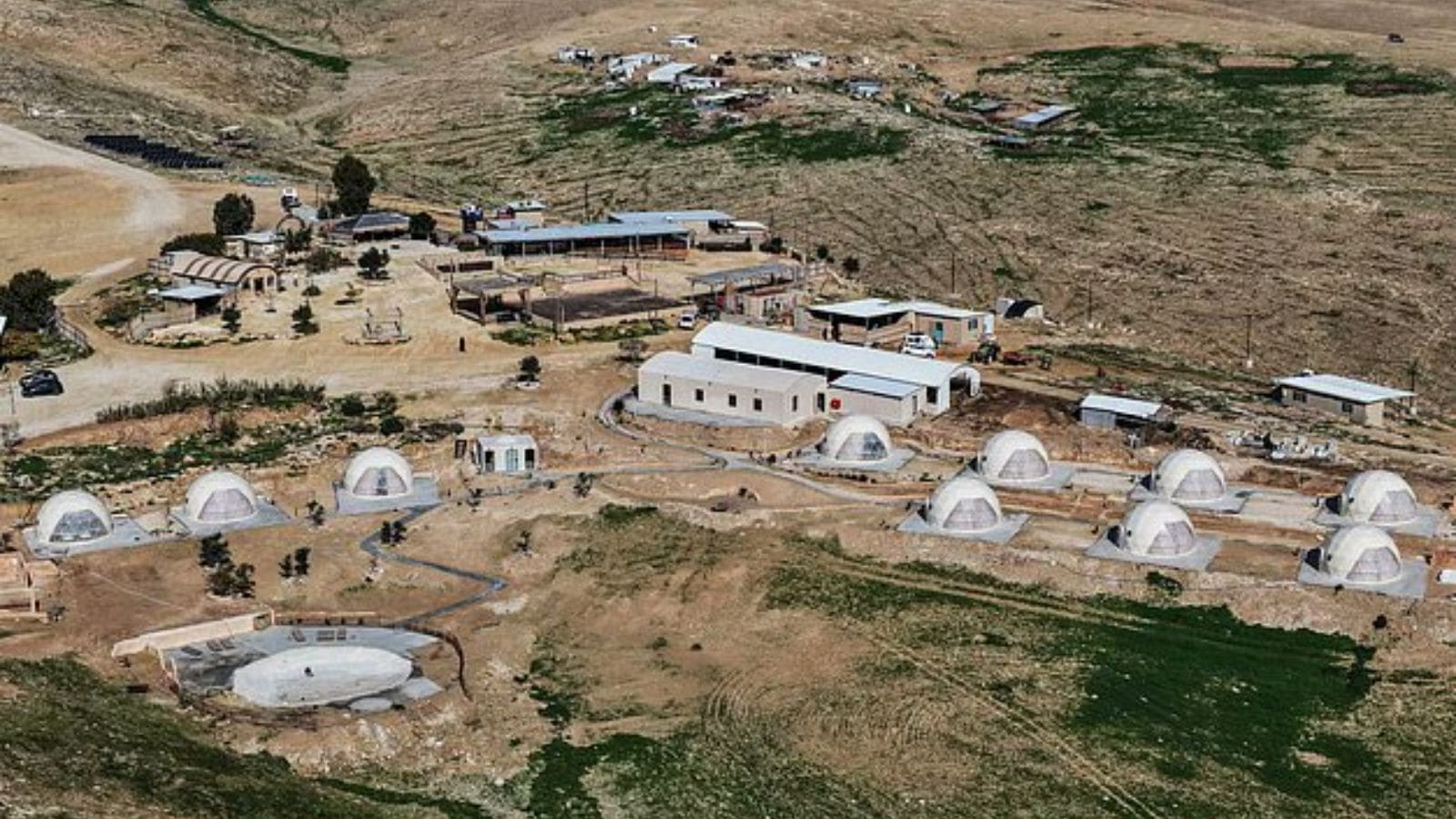
For decades, the West Bank was managed under a thin veneer of military necessity. This allowed Western allies to maintain the fiction that the situation was temporary. That fiction is dead. The current Israeli coalition has moved with unprecedented speed to formalize what was once fringe ideology. By legalizing outposts under Israeli law—outposts that were previously considered illegal even by the Israeli High Court—the government is creating a contiguous block of Israeli-controlled territory that carves the West Bank into disconnected Palestinian enclaves.
Foreign ministers from the United Kingdom, France, Germany, and several Arab nations have pointed to the "serious threat" these moves pose to regional stability. However, these statements rarely mention the financial mechanisms fueling the expansion. Massive budget allocations for "bypass roads" are the true engine of settlement growth. These roads allow settlers to commute to Tel Aviv or Jerusalem without ever seeing a Palestinian village, integrating the settlements into the Israeli economy while physically isolating Palestinian communities. You cannot have a viable state when its basic geography is shredded by a highway system designed to exclude its inhabitants.
Why Verbal Condemnations Fail
Diplomacy relies on the threat of consequences. Currently, there are none. The Israeli government has calculated that the geopolitical cost of expansion is manageable because Western powers are preoccupied with the broader regional conflict and domestic electoral pressures. The rhetoric of "red lines" has become a background hum.
Consider the "Area C" designations. This 60% of the West Bank, which was supposed to be gradually transferred to Palestinian control under the Oslo Accords, is now being treated as a land bank for Israeli domestic housing needs. When a foreign ministry issues a press release against a new settlement, they are protesting a finished transaction. The permits are signed, the bulldozers are fueled, and the demographics have shifted before the ink on the diplomatic cable is dry.
The Strategic Isolation of Jerusalem
A major component of the recent moves involves the "E1" corridor and the encirclement of Jerusalem. By expanding settlements in these specific zones, the possibility of East Jerusalem serving as a future Palestinian capital is effectively neutralized. This isn't an accidental byproduct of housing demand; it is an intentional geographic blockade.
- Ma’ale Adumim Expansion: Connecting this massive settlement to Jerusalem cuts the West Bank in two.
- Givat Hamatos and Har Homa: These developments seal the southern corridor between Bethlehem and East Jerusalem.
- The Wall: Not just a security barrier, but a political border that captures more land on the "Israeli side" than the Green Line ever dictated.
The Arab Response and the Abraham Accords Paradox
The most striking aspect of the current diplomatic flurry is the position of Arab nations that recently normalized relations with Israel. Countries like the UAE and Morocco find themselves in a tightening vice. They sold the normalization deals to their publics as a way to halt annexation. Yet, the current Israeli government has proven that it can pursue "de facto" annexation while maintaining the diplomatic benefits of the Accords.
The joint statements are a desperate attempt to show the Arab street that their leaders have not abandoned the Palestinian cause. But behind closed doors, the realization is setting in that Israel's internal politics are no longer sensitive to regional pressure. The religious-nationalist wing of the Israeli cabinet views the current regional chaos as a once-in-a-century window to finalize the "Greater Israel" project. They aren't worried about a harshly worded letter from Brussels or Amman.
The Legal Transformation of Occupation
We must look at the "Regularization Law" and subsequent legal maneuvers. These allow the state to seize private Palestinian land if a settlement was built there in "good faith"—a term stretched to its breaking point. This turns the previous legal standard on its head. Instead of the state protecting private property in occupied territory, the state is now an active participant in its seizure for the benefit of its own citizens.
This is a structural change that the International Criminal Court (ICC) and the International Court of Justice (ICJ) are currently scrutinizing. The legal defense used by Israel—that the land is "disputed" rather than "occupied"—is being tested like never before. If the administrative powers are entirely civilian, the argument that this is a temporary military occupation becomes legally indefensible.
The Economic Engine of Settlement
Settlements are often discussed as ideological outposts, but they are also massive real estate ventures. The Israeli government provides significant subsidies, tax breaks, and "national priority area" status to West Bank settlements. This makes living in a settlement significantly cheaper than living in the hyper-expensive center of Israel.
- Mortgage Subsidies: Lower interest rates for families moving over the Green Line.
- Education Funding: Higher per-pupil spending in settlement schools compared to those in Tel Aviv or Haifa.
- Industrial Parks: Tax incentives for companies to relocate their factories to settlement zones, creating jobs and "normalizing" the presence of Israeli business deep in the West Bank.
By the time a foreign minister condemns a "new move," the economic reality of that move has already been baked into the Israeli national budget.
The Erosion of the Security Argument
For years, the justification for the West Bank presence was security—maintaining the "high ground" against external threats. Today, the rhetoric has shifted to "historical right." This shift is critical. Security concerns can be mitigated through technology, international monitors, or third-party guarantees. Historical rights, when framed as absolute, are non-negotiable.
The security establishment in Israel—the former heads of Shin Bet and Mossad—frequently warn that this expansionist policy is actually a security liability. They argue that it creates a "one-state reality" where Israel must eventually choose between being a Jewish state or a democratic one. If you absorb three million Palestinians, you cannot remain both. The current government's answer is to simply ignore the question, banking on a permanent state of "temporary" military rule for one group and full civil rights for another in the same geography.
The End of the Statement Era
The international community is reaching the end of the road with collective statements. The repetition of the same phrases—"unilateral actions," "obstacles to peace," "eroding the two-state solution"—now serves as a signal of impotence rather than a deterrent.
True leverage would require measures that no major Western power is currently willing to take. This would include differentiating between products made in Israel and those made in settlements in trade agreements, or ending the tax-exempt status of organizations that fund settlement expansion. Without these concrete steps, the Israeli government will continue to treat foreign ministry statements as a ritualistic tax it has to pay for its domestic policy.
The maps are being redrawn in real-time. Every new outpost legalized is a new border established. While the diplomats talk about a future state, the physical space for that state is being paved over with asphalt and concrete. The "two-state solution" is no longer something that can be preserved; it is something that would have to be painstakingly rebuilt from a pile of rubble.
Governments must decide if they are going to continue managing a process that has clearly failed, or if they are going to acknowledge the new reality on the ground. Acknowledging that reality means dealing with the fact that the West Bank is no longer "in transition." It is being integrated, piece by piece, into a single sovereign entity. The next decade will not be about preventing this reality, but about how the international community responds to a state that has fundamentally changed its own borders and the legal status of the people living within them.
Stop looking at the statements and start looking at the maps. The road to the Dead Sea tells a far more honest story than any press release from a foreign ministry.