Water does not knock.
It does not announce its arrival with a heavy fist against the timber, nor does it wait for an invitation. It slips beneath the threshold like a cold, gray shadow, tasting the dust of the floorboards, tasting the flour in the jar, tasting the quiet life built over forty years in a single, unpardonable gulp.
Ask Ram Maya about the monsoon. Do not ask her for statistics. Do not ask her for the cubic meters of discharge or the precise millimeter reading of the gauge stations along the Karnali. Ask her about the sound. It is a grinding, heavy noise, like stones chewing stones in the dark. It is the sound of an entire valley unmooring itself and sliding south toward the plains.
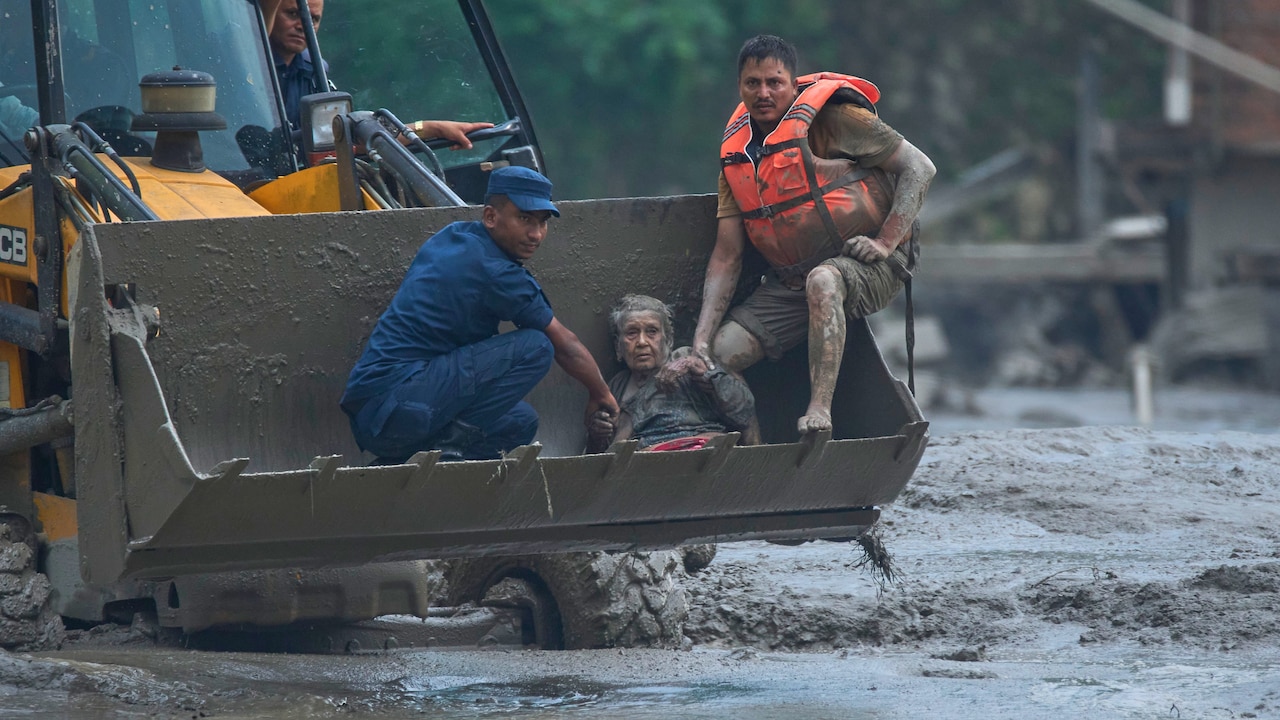
When the sky broke open over Nepal last season, it did not rain. It fell. A solid wall of grey water that erased the horizon, turning the green terraces of the hills into vertical mudslides. Down in the lowlands of the Terai, the rivers swelled beyond their banks, stretching out until they forgot where their channels used to be. They became inland seas, indifferent to property lines, livestock, or the terrified prayers of people clutching their children to their chests on thatched roofs.
This is the backdrop of a crisis that the daily bulletins try to capture with numbers. They tell us of thousands displaced. They tell us of millions allocated in emergency relief funds. They speak of rescue teams deployed with rubber boats and satellite phones.
Numbers are shields. They protect us from the unbearable weight of a single soaked mattress, a child's schoolbook dissolving into pulp, or the smell of wet earth that lingers long after the water recedes.
Consider what happens next: the rain stops. The sun comes out, bright and mocking, baking the mud into a crust as hard as iron. And that is when the real work begins.
We often imagine disaster response as a cinematic sprint. We picture the helicopter blades cutting through the smoke, the hero in a wet suit pulling a weeping toddler from a swirling vortex. But that is the first five minutes. The remaining five months are entirely different. They are made of blisters, damp wool, bureaucratic forms, and the stubborn refusal of human beings to simply vanish.
In the aftermath of the floods, the government machinery ground into gear, slow at first, then with a desperate momentum. Relief funds were activated, moving through tiers of district administration down to the local ward offices. But money in a ledger does not feed a family whose entire rice store has rotted in the silt.
This is where the invisible machinery of survival takes over. It looks like a dozen neighbors standing knee-deep in grey slime, hoisting a wooden beam back onto its stone pillars. It looks like youth clubs in Kathmandu packing plastic bags with lentils, salt, and water purification tablets, loading them onto overloaded Tata trucks that rattle down the Prithvi Highway, praying the bridges holding up the asphalt haven't been sheared away by the current.
To understand Nepal's response to these recurring deluges, you have to understand the geography of resilience. This is a country stitched together by suspension bridges and sheer stubbornness. When the floods tear through the mid-hills and inundate the southern plains, they do not just destroy infrastructure; they test the frayed fabric of community trust.
Take the village of Dumaria, where the local school became an island overnight. The teachers didn't wait for state orders. They became logisticians. They mapped the roof space, organized the distribution of dry puffed rice, and established a crude quarantine protocol to stop waterborne illnesses before they could take root in the damp, crowded classrooms.
That is expertise without a diploma. That is authority earned by staying behind when the water hit the second step.
Yet, relying solely on local heroism is a cruel strategy. Courage does not replace reinforced embankments. It does not dredge silted riverbeds choked by deforestation and erratic climate shifts.
The national response has had to evolve, however painfully. Early warning systems, once non-existent or ignored, now send automated SMS alerts to mobile phones in remote valleys before the crest hits downstream. Meteorological departments speak in real-time, sharing satellite telemetry with local disaster management committees. It is a fragile bridge between ancient vulnerability and modern science.
When the emergency relief funds finally reach the ground, they are split between immediate survival and the long, grinding process of reconstruction. Cash-for-work programs are initiated, putting shovels back into the hands of the displaced, paying them daily wages to clear the very mud that ruined them, turning victims back into builders.
It is easy to look at these cycles of flood and recovery with cynicism. Every monsoon brings the same rising water, the same displaced families, the same televised appeals for international aid. It feels like a loop of Sisyphus, pushing the boulder up the mountain only for the next cloudburst to wash it back down.
But watch Ram Maya again.
She is not weeping anymore. She has salvaged a corrugated iron sheet from the wreckage of her kitchen wall. With a heavy hammer, she is pounding the dents flat against a smooth boulder, her rhythm steady, loud, and rhythmic against the hum of the recovering valley.
The river is still out there, rolling quietly between its muddy banks, heavy with the topsoil of the mountains. But the door is back on its hinges. The floor is swept clean of silt.
The rain will come again next year. And they will be there, hammering the iron back into shape, long before the first drop hits the roof.