Traditional boat anchors tear up marine ecosystems faster than most people realize. Drop a heavy iron anchor into a healthy seabed, drag it across the bottom to catch, and you strip away living organisms with brutal efficiency. Seagrass beds suffer the worst of this destruction. These underwater meadows act as vital carbon sinks and fish nurseries, yet boaters destroy them daily simply by dropping anchor to enjoy a quiet afternoon.
Studland Bay in Dorset, England, faced this exact crisis for years. Heavy anchoring turned fragile seagrass habitats into barren wasters filled with anchor scars. Conservationists grew desperate. Traditional mooring chains scraped the ocean floor in widening circles every time the tide shifted, ensuring the grass never had a chance to recover.
That cycle finally broke when local authorities and environmental groups installed advanced eco moorings. The results stunned skeptics. Replacing traditional hardware with modern alternative systems cut scars in the seagrass by ninety-four percent.
You need to understand why standard anchoring destroys marine life so effectively. Traditional boat setups rely on heavy steel anchors attached to long metal chains. As the boat swings with the wind and tide, that chain sweeps across the seabed in a massive radius, acting like a mechanical scythe. It rips up roots, flattens shoots, and leaves behind white scars of bare sand.
Seagrass does not grow back quickly. Once a scar forms, erosion takes over. Currents expand the gap, turning a small anchor mark into a growing crater of dead sediment.
Marine researchers realized that stopping the destruction required changing how boats connect to the seabed. Traditional blocks rest on the bottom and drag, but modern eco-design relies on helical anchors screwed directly into the sand or specialized vertical elastic lines.
Systems like advanced elastomeric designs absorb wave energy without letting heavy chains drag across the floor. The hardware stays off the bottom entirely when the tide shifts. Seagrass shoots finally get the breathing room they need to spread and fill in old damage zones.
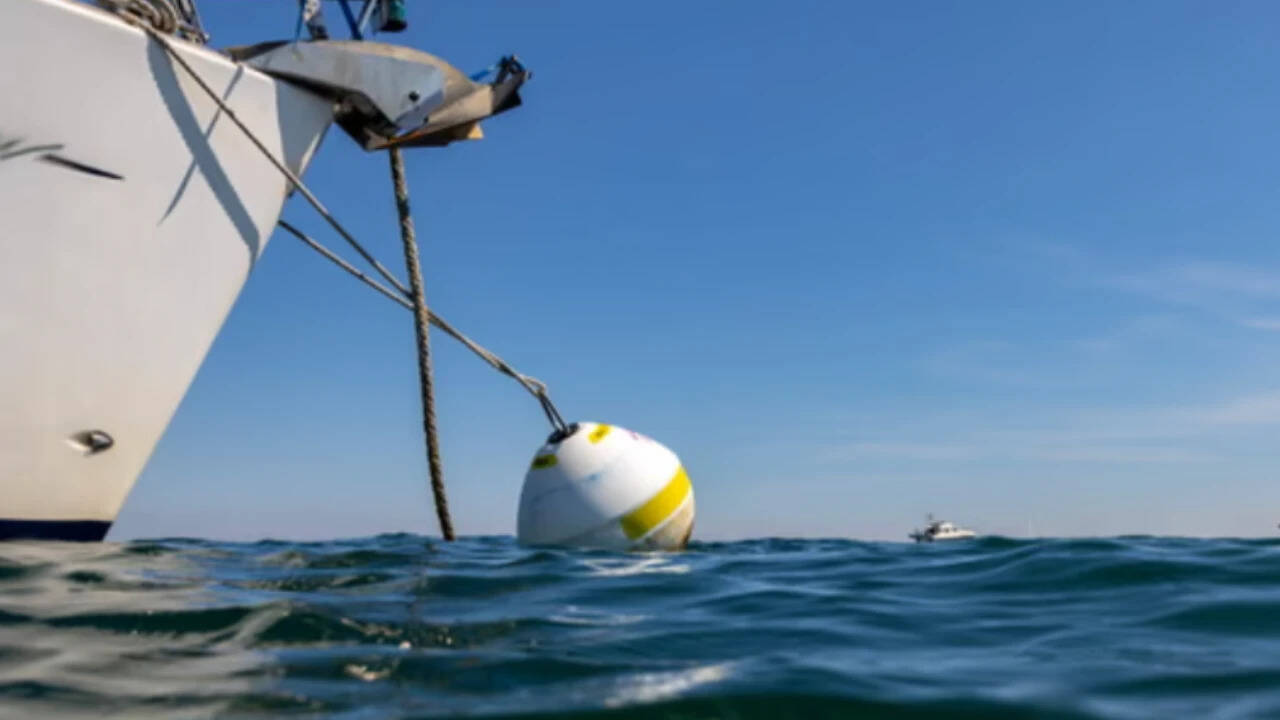
Studland Bay proved this approach works on a massive scale. Before the project, boat anchors chewed up acres of protected habitat inside the Poole Harbour and Studland Bay conservation zones. Local authorities introduced designated eco-mooring buoys to give skippers a safe alternative to dropping anchor in sensitive areas.
Boaters embraced the change once they realized the new buoys held their vessels securely even in rough weather. The reduction in habitat damage reached ninety-four percent within a remarkably short monitoring window. Fish populations bounced back. Seahorses returned to areas they abandoned decades ago.
Many coastal towns resist upgrading their infrastructure because specialized anchoring gear costs more upfront than a concrete block and a rusted chain. Municipalities often drag their feet, waiting for government grants or hoping the problem solves itself.
Skippers also push back against change. Old habits die hard on the water. Boaters who have dropped standard anchors for thirty years often view new rules as an annoyance rather than a rescue mission for marine life.
Overcoming this resistance requires clear communication and proper installation. Marinas that provide clear instructions and hassle-free access to alternative setups see immediate compliance from the boating community.
Protecting coastal ecosystems requires practical steps rather than endless debate. If you run a boat or manage a coastal property, you can support this shift immediately.
Support local conservation groups lobbying for eco-mooring installations in your favorite bays. Choose marinas and anchorages that prioritize marine protection over convenience. If you drop anchor, seek out sandy patches devoid of seagrass rather than cruising blindly over green meadows. Small choices add up when thousands of vessels hit the water every summer weekend.